









Lord Ram is the Embodiment of Simplicity and Naturalness – Swami Sarvanand Saraswati
• Grand conclusion of Ayodhya Parv 2025
• Three-day Ayodhya Parv concludes with dialogue, symposiums, and folk music
New Delhi, 13 April:
The three-day Ayodhya Parv organized at the Indira Gandhi National Centre for the Arts (IGNCA) concluded on 13 April with thought-provoking symposiums, energetic Alha singing, and melodious folk song presentations. This event was held under the joint aegis of IGNCA, Shri Ayodhya Nyas, and Pragya Sansthan.
The final day began with a literary symposium on the topic – ‘Shri Ram in the Essays of Kubernath Rai’. In this session, there was an in-depth discussion on the presence of ‘Shri Ram’ in the literature of renowned essayist Kubernath Rai. Speakers described Shri Ram’s ideals as the foundation of the Indian psyche and called Kubernath Rai’s perspective extremely relevant in the contemporary context. Hindi scholars and litterateurs like Prof. Sudhir Lal, Head of the Kala Kosh Division of IGNCA, Dr. Manoj Kumar Rai, Prof. Devaraj, Dr. Avanijesh Awasthi, Mr. Rakesh Mishra, and Dr. Ramakant Rai participated in the symposium. All speakers described the presence of Shri Ram in Kubernath Rai’s prose as a symbol of intellectual stability and cultural self-awareness.
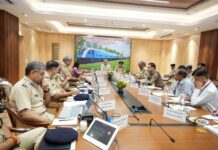
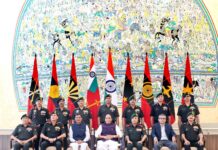
After this, in the closing ceremony, founder of ‘International Bhajan Sukhseva Mission’ (IBS Mission) Swami Sarvanand Saraswati, Central Secretary of Vishva Hindu Parishad Mr. Rajendra Singh Pankaj, Head of the Kala Nidhi Division and Dean (Administration) of IGNCA Prof. Ramesh Chandra Gaur, and artist Dr. Sunil Vishwakarma, who created the image of Ram Lalla of the Shri Ram Janmabhoomi temple, shared their views. On this occasion, IGNCA President Mr. Rambahadur Rai was also present. Speakers presented impactful thoughts on the cultural consciousness of Ayodhya, the eternal ideals of Shri Ram, and the roots of Indianness.
At the end, coordinator of Ayodhya Parv and former MP of Faizabad Mr. Lallu Singh presented framed images of Ram Lalla to all guests and expressed gratitude. All sessions over the three days were scholarly conducted by Ms. Bharti Ojha.
In the closing session, Swami Sarvanand Saraswati said that Ram is not merely a name to be written in books, Ram is the ideal of a moving and living life. Ram is not just the resident of Ayodhya, but of every person, He is omnipresent. Ram is not just a worshipped deity, Ram is a positive force. He said that ego destroys a person. Ravana’s ego led to his destruction. On the other hand, Ram is the embodiment of simplicity and naturalness. Learn humility from Ram, learn dignity from Ram.
Rajendra Singh Pankaj said that politically, India became independent in 1947 itself, but it was not culturally free. We were being asked for proof of Lord Ram’s birthplace. But now the circumstances have changed.
Dr. Sunil Vishwakarma shared the experience of the moment when he was invited to make the image of Ram Lalla. He said, “I am not capable enough to create an image of Ram Lalla. I felt as if someone was holding my hand and making me draw. The painting was completed in just two hours.” He said that Ram is not imaginary; Ram resides in everyone’s heart.


Prof. Ramesh Chandra Gaur shared information about the documentation of various Ramlilas at IGNCA. He emphasized the need to create an online repository by documenting all types of Ramlilas. He stressed the inclusion of manuscripts, books, various kinds of art objects, and performing arts along with Ramlilas in this repository so that they may be accessible to all.
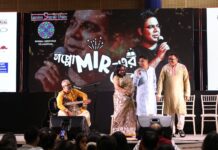
At the beginning of the session, Mr. Rakesh Singh, Secretary of the Ayodhya Parv organizing committee, delivered the welcome address. During the cultural evening, Alha singing by Faujdar Singh and his group filled the atmosphere with vigor. After this, folk singer Vijaya Bharati and her fellow artists mesmerized the audience with sweet folk songs. The musical notes echoing on the stage gave the audience a divine experience of Ayodhya, the city of Shri Ram.
During the three-day event, symposiums on various topics, painting exhibitions, folk dances, devotional songs, mridang and tabla performances, and classical presentations such as Kathak and Bharatanatyam were held. Ayodhya Parv was not only a celebration of devotion and tradition but also a living platform of culture, literature, and public dialogue.
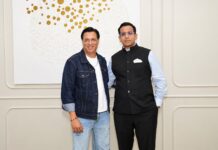
It is noteworthy that the three-day Ayodhya Parv began in the IGNCA premises with the inauguration of an exhibition of Padma Shri Vasudev Kamath’s paintings based on Maryada Purushottam, a Pahari miniature painting exhibition based on the Valmiki Ramayana, and the ‘Badi Hai Ayodhya’ exhibition based on the pilgrimage sites of Chaurasi Kos Ayodhya. Union Minister of Culture and Tourism Gajendra Singh Shekhawat also visited the exhibitions and congratulated IGNCA and Ayodhya Nyas for organizing Ayodhya Parv.
The exhibition was inaugurated by Mahant Pujya Kamal Nayan Das Ji Maharaj of Maniramdas Chhawani, Geeta Manishi Mahamandaleshwar Pujya Gyananand Ji Maharaj, Lieutenant Governor of Jammu and Kashmir Mr. Manoj Sinha, IGNCA President Mr. Rambahadur Rai, and IGNCA Trustee Mr. Vasudev Kamath. After the inauguration of the exhibition, all of them shared their thoughts on the glory of Lord Ram and Ayodhya. During the inaugural session, three books were also released by the distinguished guests.
After the inaugural session, in the series of cultural performances, Rajkumar Jha and his fellow artists Vinod Vyas and Mr. Pankaj enthralled the audience with mridang playing. After this, Pragya Pathak, Vinod Vyas, Saket Sharan Mishra, and their fellow artists mesmerized the listeners with their devotional songs.
On the second day of Ayodhya Parv, during the symposium organized on the topic ‘Temple Management in Indian Society’, Mahant Awadhesh Das Ji of Bada Bhaktamal Ayodhya expressed his views stating that the care of temples should be according to scriptures, not according to the government. In the same session, famous historian and cultural scholar Padma Shri Bharat Gupt advanced this opinion by stating that the sects associated with the temples should be the ones to manage them appropriately.
Mahant Awadhesh Das Ji said that politics can be guided by religion, but politics cannot determine the path of religion. Bharat Gupt said it is a fortunate coincidence that a non-governmental management committee has been formed for the Ram Janmabhoomi. In contrast, most major temples across the country are under government control. This session was also addressed by senior Indian Railway officer Rajeev Verma, Deputy Accountant General in Delhi Government Ashish Singh, and IGNCA Dean (Administration) Dr. Ramesh Chandra Gaur.
The evening session on the second day focused on the topic ‘The Contribution of Tulsidas Ji in Innovation of Indian Culture’. It was addressed by Shri Mahant Mithilesh Nandini Sharan Ji of Hanumannivas Ayodhya, Prof. Chandan Chaubey of Delhi University, art and theatre critic Jyotish Joshi, author Umesh Prasad Singh, and IGNCA Dean (Academics) Prof. Pratapanand Jha. Both sessions were conducted by Bharti Ojha. After this session, beautiful cultural programs were also held.
It is notable that Ayodhya Parv, dedicated to the glory of Ayodhya—the center of Indian culture, art, and faith—hosted several dialogue sessions and sweet cultural presentations. This three-day cultural festival was a confluence of devotion, classical refinement, and dialogue, in which saints, cultural intellectuals, politicians, scholars, and artists from across the country participated.

