














Animal Taxonomy Summit 2026 Concludes as ZSI Marks 111 Years of Scientific Excellence
Union Minister Kirti Vardhan Singh Calls for Strengthening Taxonomy and Biodiversity Research; ZSI Signs Key National Research Partnerships
By Suman Munshi | IBG NEWS
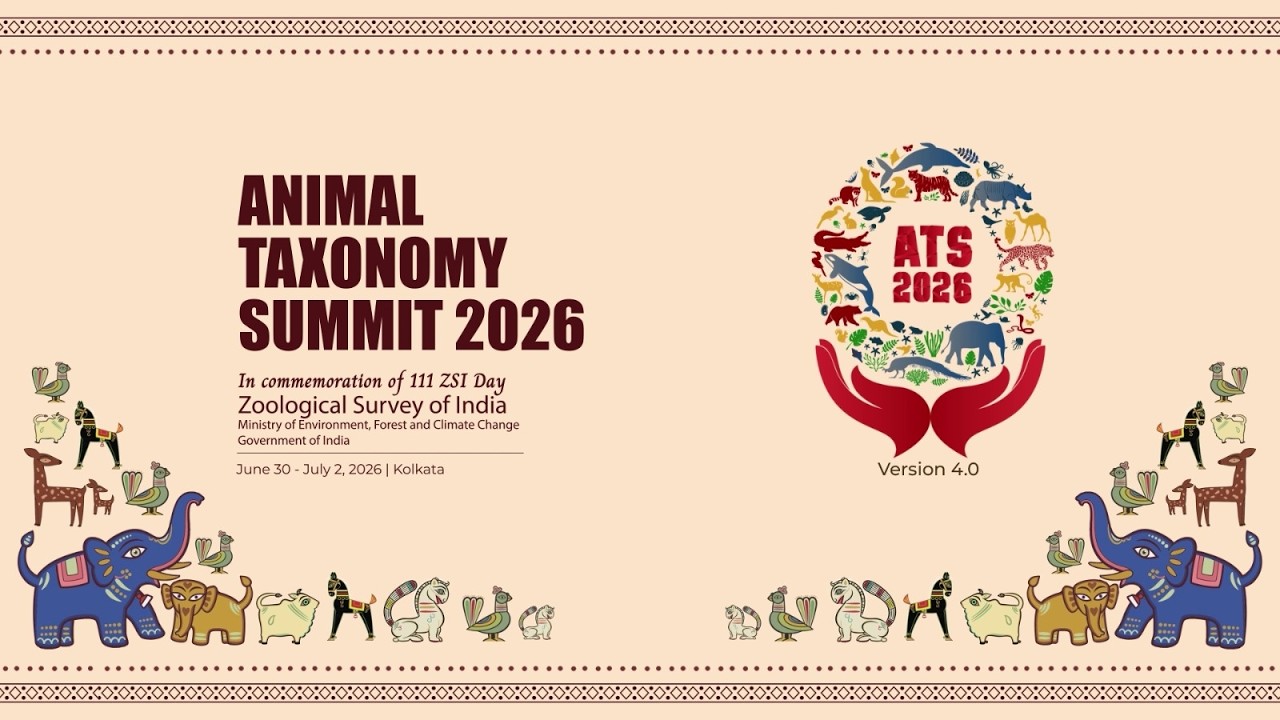
Kolkata, July 2, 2026: The Zoological Survey of India (ZSI) successfully concluded the fourth edition of the Animal Taxonomy Summit (ATS 4.0) in Kolkata, coinciding with the institution’s 111th Foundation Day celebrations. The three-day national summit, held from June 30 to July 2, brought together leading scientists, taxonomists, conservationists, academicians, and research scholars to deliberate on India’s biodiversity, taxonomy, and conservation priorities.
The valedictory session was graced by Shri Kirti Vardhan Singh, Hon’ble Union Minister of State for Environment, Forest and Climate Change and Foreign Affairs, who commended ZSI’s century-long contribution towards documenting India’s faunal diversity and strengthening the nation’s conservation framework.
Joining him on the dais were Dr. K. Ravichandran, Director of the Indian Institute of Forest Management (IIFM), Bhopal, and Shri Ved Prakash Mishra, Joint Secretary, Ministry of Environment, Forest and Climate Change (MoEFCC), Government of India.
Over 500 Experts Deliberate on India’s Biodiversity
More than 500 scientists, researchers, students and delegates from across India participated in the summit. The conference featured 10 technical sessions, poster presentations and expert discussions centred on three major themes:
- Taxonomy
- Systematics
- Faunal Diversity and Conservation
The recommendations emerging from these deliberations will be submitted to the Government of India to support evidence-based policymaking for biodiversity conservation and environmental management.
Five Landmark Scientific Publications Released
A major highlight of the closing ceremony was the release of five important scientific publications documenting India’s rich biodiversity and ecological heritage.
Mapping Wildlife Along India’s Golden Quadrilateral
One of the most significant publications, “Faunal Diversity along the Periphery of Indian Highways – Golden Quadrilateral,” presents the country’s first comprehensive assessment of wildlife along the Golden Quadrilateral highway network.
The study documents 2,359 faunal species across 12 states and one Union Territory, with arthropods representing the largest recorded group, providing valuable baseline data for future infrastructure planning and ecological conservation.
India’s First Comprehensive Fossil Fauna Documentation
Another landmark publication, “Fossil Fauna of India,” offers the first nationwide synthesis of India’s prehistoric animal life spanning more than one billion years. Covering 28 states and eight Union Territories, the publication documents invertebrates, vertebrates and trace fossils, providing fresh insights into India’s evolutionary history.
New Discoveries from Andaman and Nicobar Islands
The publication on the Diptera Fauna of Tropical Evergreen Forest and Coastal Ecosystem from the Andaman and Nicobar Islands records 101 species belonging to 47 genera and 18 families, including several fly species reported for the first time from both India and the archipelago.
Biodiversity Assessment of Amaravati
Researchers also unveiled findings from an extensive biodiversity survey conducted in the proposed Smart City of Amaravati in Andhra Pradesh. The study documented 500 animal species, of which 41 percent were vertebrates and 59 percent invertebrates.
Among its notable findings was the first state record of the endemic freshwater crab Oziotelphusa aurantia, while five species recorded during the survey fall under the vulnerable category.
Scientific Exploration of Antarctica
The summit also witnessed the release of “Amazing Antarctica: First Indian Scientific Expedition to Larsemann Hills (Cyanoprokaryotes and Algae),” authored by Dr. Pratibha Gupta.
The publication chronicles India’s 33rd Antarctic Scientific Expedition and documents the microbial diversity of Larsemann Hills. It also marks the inauguration of India’s first Antarctica Gallery at the Central Botanical Laboratory of the Botanical Survey of India in Howrah.
Young Researchers Honoured
The Union Minister felicitated winners of the ATS 2026 Poster Presentation Competition and congratulated 27 research scholars who successfully completed their Ph.D. programmes under the supervision of ZSI scientists, recognising their contributions to advancing zoological research.
Four Strategic Research Collaborations Signed
To strengthen collaborative research and scientific capacity, the Zoological Survey of India signed four major Memorandums of Understanding (MoUs) and Agreements during the summit.
Marine Biodiversity Research
An MoU with the Centre for Marine Living Resources and Ecology (CMLRE) aims to enhance deep-sea and coastal biodiversity research through the use of the research vessel FORV Sagar Sampada, alongside taxonomic studies and marine biodiversity exhibitions.
Academic Partnership with University of Kalyani
ZSI also entered into a partnership with the University of Kalyani, West Bengal, to promote interdisciplinary research, faculty exchange, doctoral programmes and specialised training workshops.
Collaboration with Sathyabama Institute
A research agreement with Sathyabama Institute of Science and Technology, Chennai, will facilitate joint work in marine ecology, biodiversity assessment, molecular biology, DNA barcoding and scientific capacity building.
Integrated Human and Faunal Research
Another significant collaboration was signed with the Anthropological Survey of India (AnSI) to enable collaborative research involving human and faunal biological samples, laboratory sharing, DNA analysis and ethically guided scientific publications.
Reinforcing India’s Conservation Vision
Speaking during the closing ceremony, Union Minister Kirti Vardhan Singh underscored the importance of modern taxonomy in biodiversity conservation, ecological monitoring and sustainable development. He highlighted that accurate scientific documentation of India’s fauna remains fundamental for conservation planning, environmental governance and addressing emerging ecological challenges.
The summit concluded with a renewed commitment by scientists and policymakers to strengthen taxonomic research, promote collaborative scientific institutions and expand biodiversity documentation across the country.
About the Zoological Survey of India
Established in 1916, the Zoological Survey of India is India’s premier institution for faunal exploration, taxonomy and biodiversity research under the Ministry of Environment, Forest and Climate Change. Over the past 111 years, ZSI has played a pivotal role in documenting India’s animal diversity, discovering new species and supporting wildlife conservation through scientific research, national inventories and environmental assessments.