











Pind Daan in Gaya: An Ancient Religious Tradition of Ancestral Remembrance, Shraddha and Spiritual Liberation for Bengalis
Special Feature | By Suman Munshi | IBG NEWS
The tradition of honouring, remembering and expressing gratitude to ancestors has existed in Bengali Hindu society since ancient times. Seeking the blessings of forefathers at significant stages of life is an integral part of Bengali religious and cultural heritage. Among the sacred pilgrimage destinations associated with prayers for the peace and spiritual well-being of departed ancestors, Gaya in Bihar holds a particularly revered position.
Pind Daan in Gaya is not merely a religious ritual; it represents a profound spiritual connection between the present generation and its ancestors. For generations, Bengali families have followed the tradition of performing Pind Daan in Gaya in memory of their parents, grandparents and other departed family members.
1. Why Is Pind Daan in Gaya So Important?
According to Hindu religious beliefs, Gaya is a sacred place where performing Pind Daan and Shraddha rituals for departed ancestors is considered spiritually significant for praying for their peace and liberation.
The religious importance of Gaya is described in Hindu Puranic literature. The legend of Gayasura is closely associated with the sanctity of this pilgrimage destination. According to traditional beliefs, through the blessings of Lord Vishnu, Gaya became established as one of the most important centres for performing ancestral rites.
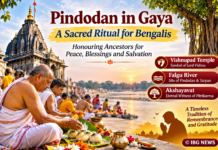
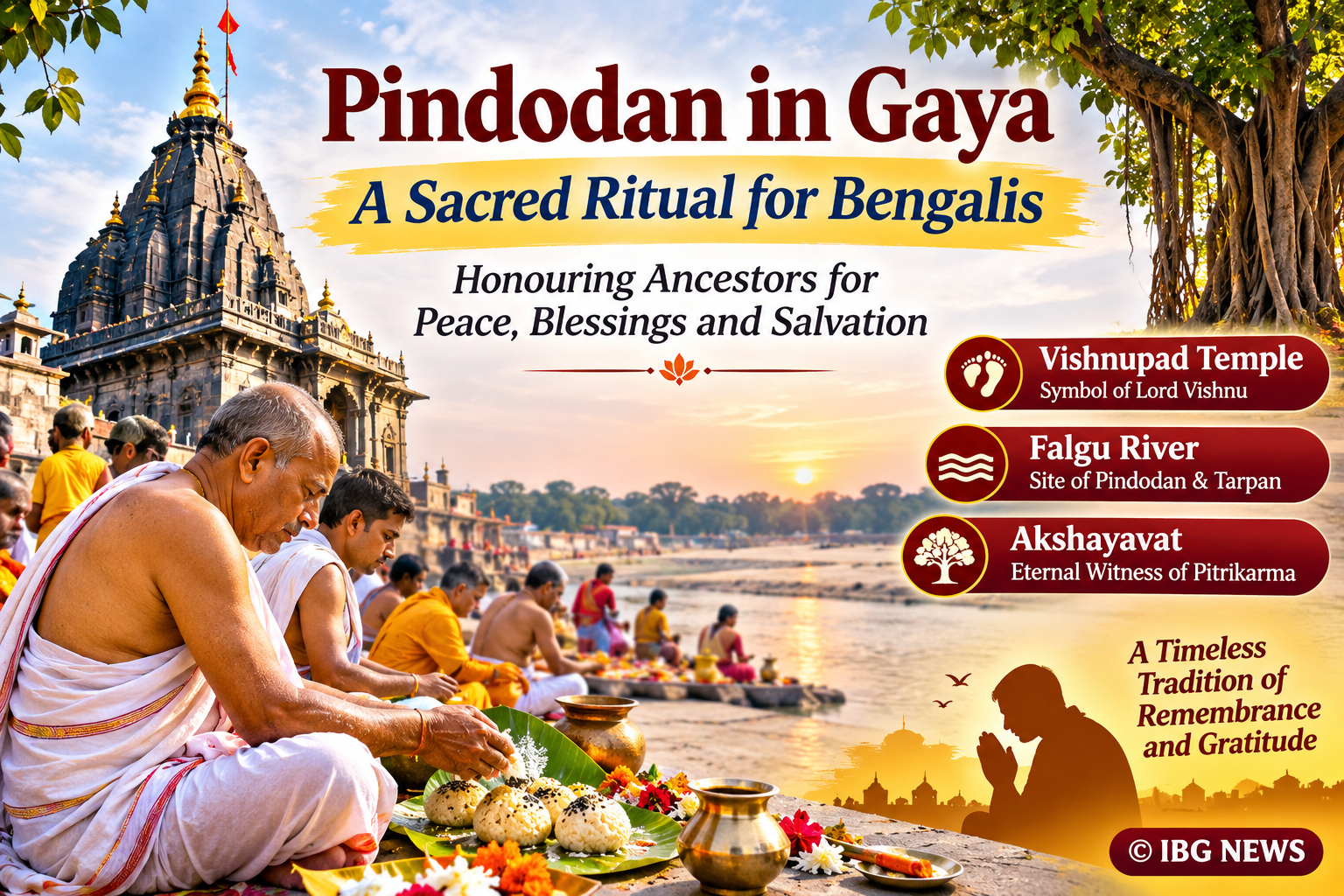
The Vishnupad Temple in Gaya is a major centre of this religious tradition. The sacred footprints of Lord Vishnu, worshipped and preserved within the temple, are among its principal attractions.
For Bengali Hindus, Pind Daan in Gaya carries special significance because it is not limited to annual Shraddha observances. Many families consider it an important religious and familial responsibility during their lifetime.
2. What Is Pind Daan and What Is Its Religious Significance?
The word ‘Pind’ generally refers to a round offering of food prepared using rice, barley or other prescribed ingredients. According to Hindu religious customs, these offerings are dedicated to departed ancestors.
Pind Daan is associated with three important religious concepts:
- Shraddha: Expressing respect and gratitude towards those who gave us life and whose legacy we continue to carry.
- Tarpan: Offering water and sesame seeds to deities, sages and departed ancestors.
- Pitri Karma: Performing religious rituals in remembrance of departed family members and praying for their peace and well-being.
In Hindu tradition, Pind Daan is regarded as an important means of fulfilling one’s ancestral obligations, commonly described as Pitri Rina.
3. The Major Sacred Sites for Pind Daan in Gaya
Gaya has several sacred locations and ritual platforms, known as Vedis, which hold special religious significance for performing Pind Daan. Different ancestral rites are conducted at these locations according to local traditions.
A. Vishnupad Temple
The Vishnupad Temple is one of the most important pilgrimage destinations in Gaya. A sacred footprint of Lord Vishnu, preserved on a stone, is worshipped here.
The present temple was reconstructed in the eighteenth century under the patronage of Maharani Ahilyabai Holkar of Indore.
The temple holds immense religious importance for prayers and Pind Daan rituals performed in honour of departed ancestors.
B. The Falgu River
The banks of the Falgu River are among the principal locations for Pind Daan and Tarpan ceremonies in Gaya.
A famous mythological story involving Goddess Sita is associated with this river. According to traditional accounts, Lord Rama, Lakshmana and Goddess Sita visited Gaya to perform Pind Daan for King Dasharatha.
When Lord Rama and Lakshmana went to collect the necessary ritual materials, Goddess Sita is believed to have performed the Pind Daan alone on the banks of the Falgu River.
This legend has established a special association between the Falgu River and the tradition of Sita’s Pind Daan.
C. Akshayavat
Akshayavat in Gaya is another important sacred location for ancestral rituals. In Hindu religious belief, the Akshayavat is regarded as a symbol of eternity and spiritual purity.
Pilgrims visit this sacred place to perform Pind Daan and offer prayers for the well-being of their ancestors.
D. Sitakund
Located on the opposite bank of the Falgu River, Sitakund is also associated with the mythological account of Goddess Sita’s Pind Daan. Many pilgrims visit this sacred location.
E. Ramshila and Pretshila
Ramshila and Pretshila are among the other well-known ancestral pilgrimage sites in Gaya. These locations are traditionally associated with Shraddha ceremonies and other religious rites performed in memory of departed ancestors.
4. The Traditional Procedure of Pind Daan for Bengalis in Gaya
Bengali Hindu families generally seek the assistance of experienced local Gayawal pandas or priests when performing Pind Daan in Gaya.
The rituals are conducted according to the family’s Gotra, ancestral identities and established religious traditions.
The process generally involves several stages.
First Stage: Sankalpa
Before beginning the Pind Daan ceremony, the person performing the ritual takes a Sankalpa, or religious vow, under the guidance of the priest.
This involves stating the person’s name, Gotra, the identities of the ancestors and the purpose of the ritual.
Bengali families generally remember their father, grandfather, great-grandfather and ancestors from the maternal side. However, the specific rituals and the ancestors included depend on family traditions and religious customs.
Second Stage: Sacred Bath and Tarpan
After taking a ritual bath at a sacred river or designated pilgrimage location, the devotee performs Tarpan.
Water, sesame seeds and Kusha grass are used while chanting prescribed mantras to make offerings to departed ancestors.
The central purpose of Tarpan is to express reverence towards one’s ancestors and pray for their spiritual peace.
Third Stage: Preparation and Offering of Pindas
The most important part of Pind Daan is the preparation of the Pindas and their offering at designated ritual platforms.
According to traditional practices, ingredients such as rice or barley flour, sesame seeds, ghee and honey may be used. The ingredients can vary depending on family customs and the specific ritual being performed.
Under the priest’s guidance, the Pindas are offered to the departed ancestors with the recitation of prescribed mantras.
Fourth Stage: Prayers for Departed Ancestors
During this stage, the names and Gotras of deceased family members are remembered, and prayers are offered for their peace, spiritual well-being and liberation.
For many Bengali families, this is an especially emotional moment. Remembering departed parents, grandparents and other loved ones often brings deep feelings of affection and remembrance.
Fifth Stage: Feeding Brahmins and Charity
In many families, Pind Daan and Shraddha ceremonies are accompanied by feeding Brahmins, donating food and clothing, and offering Dakshina.
These charitable activities are performed according to the family’s financial capacity and religious customs.
The underlying purpose is to fulfil religious responsibilities, practise generosity and undertake meritorious activities in remembrance of departed ancestors.
5. The Connection Between Pind Daan in Gaya, Pitri Paksha and Mahalaya for Bengalis
For Bengalis, Mahalaya is not merely the traditional beginning of the Durga Puja season. It is also a significant religious occasion associated with the conclusion of Pitri Paksha and the beginning of Devi Paksha.
During Pitri Paksha, many Bengali families perform Tarpan in remembrance of their departed ancestors. The tradition of offering water at the banks of the Ganges in the early morning of Mahalaya is particularly well known.
From the ghats of Kolkata to riverbanks across different districts of West Bengal, thousands of people gather to offer water in memory of their ancestors.
At the same time, Gaya receives large numbers of pilgrims from different parts of India during Pitri Paksha for performing Pind Daan and Shraddha ceremonies.
However, it is important to remember that Pind Daan in Gaya is not restricted to Pitri Paksha alone. According to established religious traditions, ancestral rites can also be performed there during other periods of the year.
6. Is Pind Daan in Gaya Only the Responsibility of Sons?
In traditional Hindu society, sons have historically been associated with the performance of ancestral rites. However, in contemporary times, daughters in many families have also begun performing Shraddha and Pind Daan ceremonies for their departed parents and ancestors.
Such rituals are performed according to family traditions, the guidance of the concerned priest and established religious practices.
The most important consideration remains sincere respect, devotion and gratitude towards one’s ancestors.
7. What Should Bengalis Prepare Before Visiting Gaya for Pind Daan?
Before travelling to Gaya to perform Pind Daan, it is advisable to make certain preparations.
- Collect the Gotra and names of family ancestors as far as possible.
- Carry the family details and information about the departed relatives for whom the rituals are intended.
- Discuss the family’s traditional Shraddha procedures with a priest beforehand.
- Seek assistance from an experienced and reliable local priest after reaching Gaya.
- Obtain a clear understanding of the required ritual materials, priestly fees and other expenses before beginning the ceremonies.
- Since Gaya can become crowded during Pitri Paksha, plan accommodation and travel arrangements in advance.
The Bihar Government’s Gaya pilgrimage-related official portal provides information about Pind Daan locations, ritual platforms, priests, transportation and assistance for pilgrims.
8. Pind Daan: Beyond Religious Ritual, a Legacy of Family Heritage
The significance of Pind Daan in Gaya extends beyond prayers for the spiritual peace of departed souls. It is also a means of preserving a family’s history, memories and cultural heritage.
A person receives life from their parents, along with education, values and cultural traditions. Those parents, in turn, had their own ancestors. In this way, a family’s identity and existence are shaped through successive generations.
Through Pind Daan, individuals reconnect with this ancestral heritage and remember their roots.
From a religious perspective, it represents prayers for the spiritual liberation and well-being of ancestors. From a social and cultural perspective, it is a profound tradition of expressing gratitude towards previous generations.
Conclusion
Gaya in Bihar continues to be one of the most important ancestral pilgrimage destinations in Hindu religious culture. The traditions of Pind Daan and Shraddha associated with the Falgu River, Vishnupad Temple, Akshayavat and Sitakund have preserved India’s spiritual and cultural heritage for centuries.
For Bengalis, Pind Daan in Gaya is therefore much more than a pilgrimage. It is a silent expression of gratitude towards parents, grandparents and countless generations of ancestors.
Remembering those whose affection, love and blessings shaped our lives is a deeply meaningful aspect of our cultural heritage, even after they have departed from this world.
To remember our ancestors is to remember our roots. For Bengalis, honouring those roots through Pind Daan in Gaya remains an enduring religious and cultural tradition.
Written by: Suman Munshi
Special Feature | IBG NEWS
References and Further Reading:
- Bihar Tourism – Vishnupad Temple and Pitripaksha.
- Government of Bihar – Pinddaan Gaya Ji Portal.
- District Administration, Gaya – Culture & Heritage.
- INTACH – Gaya’s Intangible Cultural Heritage Documentation.

