














IBG NEWS | Special Political Analysis
West Bengal at the Crossroads
Anti-Incumbency, Welfare Politics and the Battle for Swing Districts
By IBG News Political Desk
After more than a decade in power, Mamata Banerjee and the All India Trinamool Congress (TMC) remain the dominant political force in West Bengal. Yet the political environment is evolving rapidly as anti-incumbency issues, corruption controversies, crime concerns, and opposition consolidation efforts reshape the electoral battlefield.
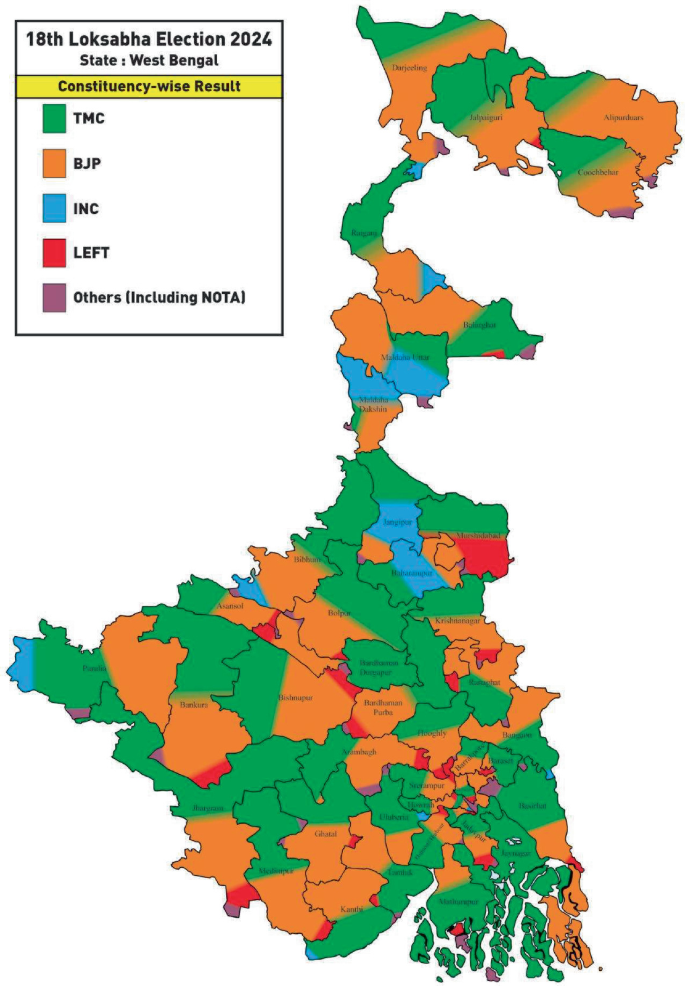
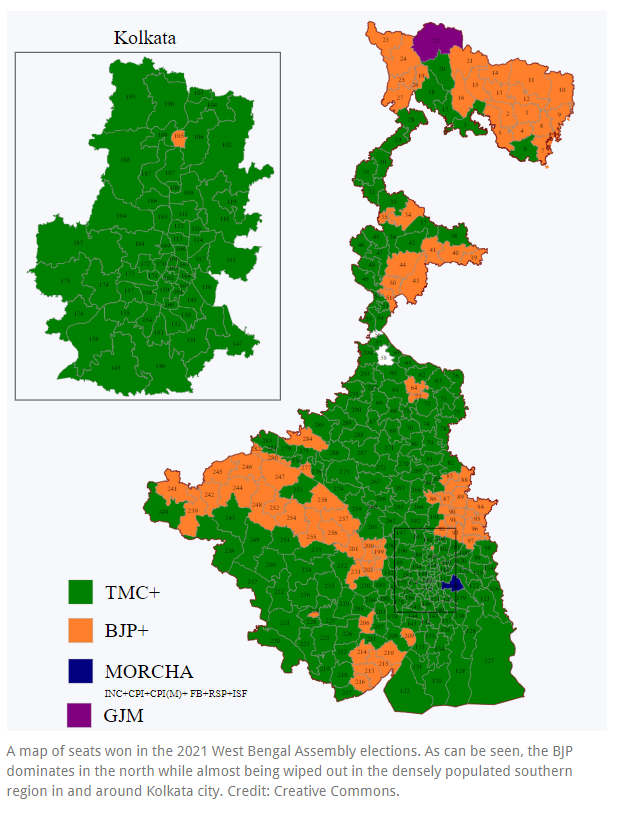
In the 2021 West Bengal Legislative Assembly Election, TMC secured 213 of the 294 seats, while the Bharatiya Janata Party (BJP) emerged as the principal challenger with 77 seats. The Communist Party of India (Marxist)-led Left Front, the Indian National Congress, and the Indian Secular Front (ISF) are attempting to rebuild their influence in several districts.
Political observers suggest the next election may ultimately hinge on around 40-50 swing constituencies and shifting voter sentiment in key regions.
Multi-Party Political Landscape


West Bengal’s politics remains intensely competitive due to the presence of multiple political forces with distinct regional bases.
Key parties shaping the electoral landscape include:
- All India Trinamool Congress (TMC) – ruling party 2011-2026
- Bharatiya Janata Party (BJP) – principal opposition 2017-2026
- Communist Party of India (Marxist) – historic Left Front base, Ex-Ruling Party 1977-2011
- Indian National Congress – influence in Malda and Murshidabad, the ex-ruling party before 1977
- Indian Secular Front (ISF) – emerging minority-belt political force, Newly Founded minority major party
Factors Driving Anti-Incumbency


After more than a decade in office, several issues have contributed to anti-incumbency sentiment among segments of the electorate.
Corruption Allegations
Recruitment controversies and financial scandals have generated criticism and protests in several districts.
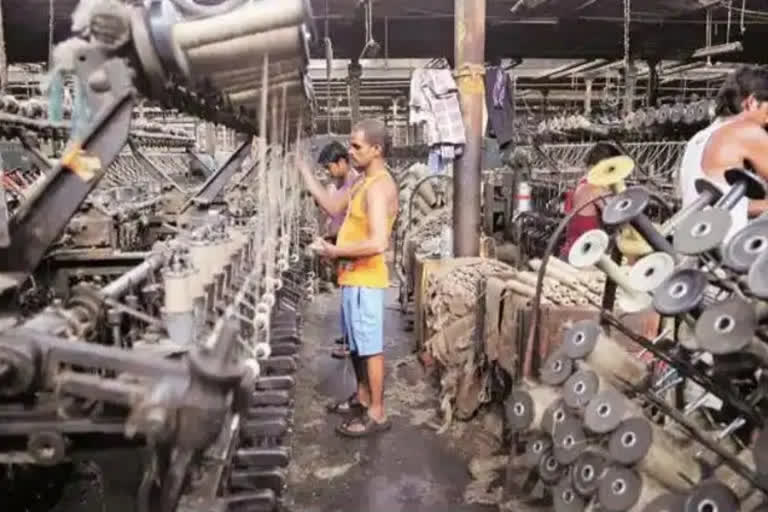
Unemployment and Industrial Concerns
Economic issues include:
- slow industrial expansion
- migration of young workers to other states
- stagnation in industrial belts such as Asansol–Durgapur.
- Education system destroyed
Political Polarization
Frequent clashes between party workers have created fatigue among voters.
Governance Fatigue
Long incumbency itself often creates voter demand for political change.
Rural Economic Pressures
Agricultural income stagnation and rural employment challenges remain concerns in districts such as Purulia and Bankura.
Crime Against Women and High-Profile Cases


Concerns over women’s safety have become an important part of political debate in West Bengal.
Major Incidents Highlighted in Political Debate
| Incident | Issues Raised | Public Impact |
|---|---|---|
| RG Kar Medical College case | Alleged rape and murder of a trainee doctor at R. G. Kar Medical College and Hospital | Nationwide protests by doctors and students demanding justice and workplace safety |
| Sandeshkhali controversy | Allegations by women of harassment and intimidation by local political figures | Became a major campaign issue |
| Law college sexual assault case | Allegations involving students on a Kolkata campus | Triggered protests and debate on campus safety |
Opposition parties frequently cite these incidents to question law-and-order conditions in the state.
Major Corruption Controversies in the Last 15 Years


Several high-profile corruption controversies continue to influence political narratives in the state.
| Year | Case | Key Issue |
|---|---|---|
| 2013–present | Saradha chit fund scam | Ponzi scheme affecting thousands of investors |
| 2015–present | Rose Valley scam | Financial fraud allegations |
| 2016–present | Narada sting operation | Alleged bribery captured on hidden camera |
| 2018–present | Teacher recruitment scam | Alleged bribery in government job recruitment |
| 2020–present | Coal smuggling investigation | Illegal mining and transportation allegations |
| 2021–present | Cattle smuggling case | Cross-border smuggling investigations |
These controversies remain frequent topics in election speeches and media discussions.
What the Opposition Is Offering
Opposition parties have attempted to convert anti-incumbency sentiment into electoral momentum.
Key campaign themes include:
- Governance reform and transparency
- Industrial revival and job creation
- Stronger law-and-order policies
- Restoration of the Education System
- Job creation and creating a mindset to come out of subsidiced DOL based system to a major industrial hub status.
- Possible tactical alliances between Left, Congress, and ISF.
Bengal’s Electoral Geography

Political strategists divide the state into five electoral zones.
| Region | Key Districts | Current Trend |
|---|---|---|
| North Bengal | Cooch Behar, Jalpaiguri, Alipurduar | BJP advantage |
| Minority Belt | Malda, Murshidabad | TMC / Congress / ISF |
| Junglemahal | Purulia, Bankura, Jhargram | Swing region |
| Industrial Belt | Paschim Bardhaman, Hooghly | Competitive |
| Greater Kolkata | Kolkata, Howrah, North 24 Parganas | Mixed |
Political Risk Index (District Flip Probability)


IBG NEWS analysts estimate the districts most likely to change political control.
Very High Risk:
Purulia • Bankura • Paschim Bardhaman • Hooghly
High Risk:
Jalpaiguri • Alipurduar • Nadia • Jhargram
Moderate Risk:
Howrah • Paschim Medinipur • South 24 Parganas
Low Risk:
Murshidabad • Malda • Kolkata • East Midnapore
Seat Projection Model


West Bengal Assembly: 294 seats
Majority mark: 148
| Scenario | TMC | BJP | Left+Congress+ISF | Others |
|---|---|---|---|---|
| Status Quo | 190–210 | 70–90 | 10–15 | 0–3 |
| Moderate Anti-Incumbency | 160–180 | 100–120 | 15–20 | 0–5 |
| Opposition Consolidation | 135–155 | 120–140 | 20–25 | 0–5 |
West Bengal Vote-Share Trend (2016–2021): What was projected

One of the biggest transformations in Bengal politics has been the shift of opposition space from the Left to the BJP.
| Election Year | TMC | BJP | Left Front | Congress | Others |
|---|---|---|---|---|---|
| 2016 | ~44.9% | ~10.2% | ~26% | ~12% | ~7% |
| 2021 | ~47.9% | ~38.1% | ~5% | ~3% | ~6% |
| Projection | 45–47% | 38–41% | 5–7% | 3–4% | 3–5% |


Final Verdict
Why Mamata Banerjee Still Remains a Decisive Factor?


A balanced analysis suggests that while anti-incumbency issues are real, Mamata Banerjee continues to hold several structural advantages.
Key Strengths
Strong welfare network:
Programs like Lakshmir Bhandar, Kanyashree Prakalpa, and Swasthya Sathi have built a large beneficiary base.
Minority and rural support:
Several districts continue to show consolidated support for the ruling party.
Leadership factor:
Mamata Banerjee remains one of the most recognizable regional leaders in Indian politics.
Fragmented opposition:
When multiple opposition parties compete separately, they often split anti-incumbency votes.
How SIR Could Impact the 2026 West Bengal Assembly Election
The Special Intensive Revision (SIR) of electoral rolls conducted by the Election Commission of India could play a significant role in shaping the electoral environment ahead of the 2026 Assembly election in West Bengal. While SIR is primarily an administrative exercise to update voter lists, in a politically competitive state like West Bengal even small changes in the electorate can influence closely contested constituencies.

What SIR Actually Does
A Special Intensive Revision is a detailed verification process of voter lists carried out before major elections. It typically includes:
- Door-to-door verification by Booth Level Officers (BLOs)
- Removal of duplicate entries
- Deletion of deceased voters
- Updating addresses for voters who have shifted
- Addition of new voters aged 18+
The goal is to ensure that the electoral roll accurately reflects the eligible voting population.
Size of the West Bengal Electorate
According to the latest data from the Election Commission, West Bengal has one of the largest electorates in India.
| Indicator | Approximate Figure |
|---|---|
| Total voters | ~7.5 crore |
| Assembly constituencies | 294 |
| Polling stations | ~80,000+ |
| Average voters per constituency | ~2.5–3 lakh |
Because the electorate is so large, even a 1–2% change in voter lists can mean tens of thousands of voters.
Why SIR Matters in West Bengal
West Bengal elections are often decided by very narrow margins.
In the 2021 West Bengal Legislative Assembly Election, many constituencies were decided by less than 5,000 votes, including seats such as:
- Dinhata
- Raniganj
- Balarampur
- Bally
- Dum Dum
In such constituencies, small changes in voter lists can influence the outcome.
Key Areas Where SIR Could Have an Impact
1. Urban Constituencies
Cities like Kolkata, Howrah and Bidhannagar see frequent population movement. Electoral roll revision may significantly affect:
- migrant workers
- students
- temporary residents.
Urban seats are often highly competitive.
2. Border Districts
Districts such as:
- Cooch Behar
- North 24 Parganas
- Murshidabad
often receive closer scrutiny during voter list revisions because of population mobility and demographic changes.
3. Industrial Districts
Regions like Paschim Bardhaman and Hooghly experience workforce migration, which can affect voter registration patterns.
4. Entry of First-Time Voters
Each election cycle adds lakhs of new young voters aged 18–21.
Young voters are particularly influential in:
- urban constituencies
- university towns
- growing suburban districts.
Political parties often design targeted campaigns for this group.
Political Narratives Around SIR
Different political parties interpret electoral roll revision differently.
Ruling Party View
The All India Trinamool Congress emphasizes that voter list revisions must ensure no legitimate voter is excluded.
Opposition View
Opposition parties such as the Bharatiya Janata Party, Communist Party of India (Marxist), and Indian National Congress often call for strict verification to remove duplicate or ineligible entries.
Potential Electoral Impact
The real influence of SIR will depend on how voter lists change in key battleground constituencies.
Possible effects include:
- shifts in voter composition in urban seats
- demographic adjustments in border districts
- increased participation of young voters
- improved accuracy of electoral rolls in swing constituencies.
Analytical Conclusion
From an electoral analysis perspective, the Special Intensive Revision of electoral rolls could influence several closely contested seats in West Bengal.

However, SIR alone will not determine the election outcome. The 2026 contest will ultimately depend on broader political factors including:
- anti-incumbency sentiment
- welfare program support
- opposition alliances
- campaign effectiveness
- voter turnout in swing districts.
In a state where dozens of constituencies are decided by narrow margins, even small administrative changes in voter rolls could become politically significant.
Final Assessment
From a purely analytical perspective, the next election in West Bengal will likely be shaped by the contest between anti-incumbency sentiment and the institutional resilience of the TMC’s political machinery.
If opposition forces succeed in consolidating votes in key swing districts, the contest could tighten dramatically. If fragmentation continues, Mamata Banerjee may once again remain the central figure shaping the political future of West Bengal.
As IBG NEWS analysis indicates, fewer than 50 constituencies could ultimately determine who forms the next government.

