













Baloch Independence Movement Escalates Claims as Debate Over Pakistan’s Control Intensifies
Growing Insurgency, Strategic Competition and Local Grievances Keep Balochistan in Global Spotlight
By Suman Munshi | IBG NEWS
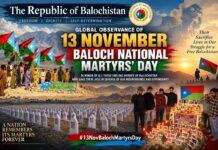
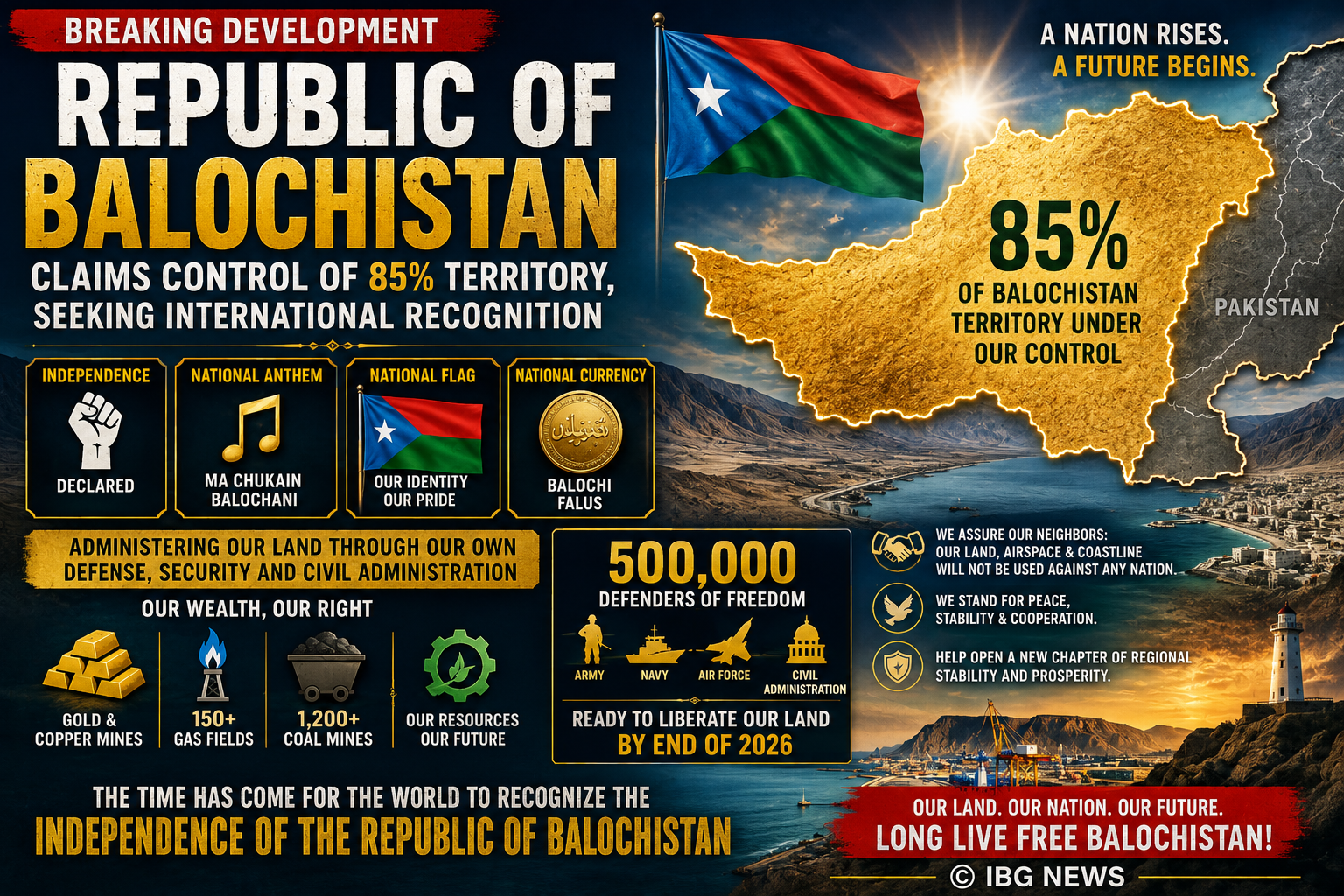
New Delhi, July 17: A freedom fighter group identifying itself as the Republic of Balochistan has issued a declaration claiming it now controls approximately 85% of Balochistan’s territory, has established parallel administrative institutions, and is seeking international recognition as an independent sovereign state.
The declaration includes claims of a national flag, anthem, proposed currency, and independent security forces. These claims have not been independently verified, and the Government of Pakistan continues to maintain internationally recognized sovereignty over the province.
While the statement itself remains disputed, analysts agree that Balochistan has become one of Pakistan’s most challenging internal security and political issues, and are worried about their illegal occupation of Balochistan and the POK allied area.
Why Analysts Say Pakistan Faces Persistent Challenges in Balochistan
1. Long-running Insurgency
Balochistan has witnessed repeated insurgencies for decades. Various separatist organizations have continued armed attacks against Pakistani security forces, infrastructure projects, and, at times, civilians. Pakistan states these groups are terrorist organizations and has conducted extensive counterinsurgency operations.
2. Resource Distribution
Balochistan contains significant reserves of natural gas, copper, gold and coal.
Critics argue that many local communities have not benefited proportionately from these resources, while the federal government maintains that national development projects are designed to improve economic opportunities across the province.
3. Geography
Covering nearly 44% of Pakistan’s land area while having a relatively small population, Balochistan presents major logistical and security challenges. Mountainous terrain and remote districts make governance and security operations more difficult than in many other regions.
4. Strategic Importance
The province’s coastline includes Gwadar Port, a cornerstone of the China–Pakistan Economic Corridor (CPEC). Because of its strategic location bordering Iran and Afghanistan, Balochistan has become central to regional geopolitical competition.
5. Human Rights Concerns
International human rights organizations have repeatedly raised concerns regarding allegations of enforced disappearances, arbitrary detention and restrictions on civil liberties in Balochistan. Pakistan disputes many of these allegations, stating that its operations are directed against militant threats.
6. Political Alienation
Some political observers argue that distrust between sections of the local population and the federal government has contributed to recurring unrest. Others note that electoral politics, tribal dynamics, and development challenges also shape the province’s complex political landscape.
Claims of Parallel Administration
The latest statement issued by the self-described Republic of Balochistan claims:
- Control over extensive territory.
- Administration through its own security and civil institutions.
- Control of major mineral and energy resources.
- Plans to establish independent governance.
IBG NEWS cannot independently verify these assertions.
Pakistan Rejects Independence Claims
Pakistan continues to reject calls for Baloch independence, describing separatist groups as militant organizations seeking to undermine national unity. Islamabad maintains that Balochistan is an integral part of Pakistan and that security operations and infrastructure investments are intended to promote peace and development.
International Position
Despite increasing international attention to developments in Balochistan, no United Nations member state currently recognizes Balochistan as an independent country.
Most governments continue to support Pakistan’s territorial integrity while encouraging respect for human rights, political dialogue, and peaceful resolution of the conflict.
IBG NEWS Analysis
The Balochistan conflict has evolved beyond a purely domestic security issue into a broader geopolitical and humanitarian concern. The province’s strategic location, abundant natural resources, and recurring unrest ensure that it remains closely watched by regional powers and international observers.
At the same time, claims that Pakistan has lost control over most of the province or that a sovereign Republic of Balochistan has been established remain unverified. The actual situation on the ground is contested, and independent reporting is often difficult due to security restrictions. As such, any assessment of territorial control or political authority should be treated with caution until corroborated by credible, independent sources.You can certainly write an analysis of why separatist groups claim Pakistan is losing influence in parts of Balochistan. However, it would not be accurate to present as fact that “Pakistan is losing control over Balochistan” or that an independent Republic of Balochistan controls 85% of the territory, because those claims have not been independently verified and are disputed by Pakistan.
Here’s a balanced news analysis suitable for IBG NEWS:
Baloch Independence Movement Escalates Claims as Debate Over Pakistan’s Control Intensifies
Growing Insurgency, Strategic Competition and Local Grievances Keep Balochistan in Global Spotlight
By Suman Munshi | IBG NEWS
New Delhi, July 17: A group identifying itself as the Republic of Balochistan has issued a declaration claiming it now controls approximately 85% of Balochistan’s territory, has established parallel administrative institutions, and is seeking international recognition as an independent sovereign state.
The declaration includes claims of a national flag, anthem, proposed currency, and independent security forces. These claims have not been independently verified, and the Government of Pakistan continues to maintain internationally recognized sovereignty over the province.
While the statement itself remains disputed, analysts agree that Balochistan has become one of Pakistan’s most challenging internal security and political issues.
Why Analysts Say Pakistan Faces Persistent Challenges in Balochistan
1. Long-running Insurgency
Balochistan has witnessed repeated insurgencies for decades. Various separatist organizations have continued armed attacks against Pakistani security forces, infrastructure projects, and at times civilians. Pakistan states these groups are terrorist organizations and has conducted extensive counterinsurgency operations.
2. Resource Distribution
Balochistan contains significant reserves of natural gas, copper, gold and coal.
Critics argue that many local communities have not benefited proportionately from these resources, while the federal government maintains that national development projects are designed to improve economic opportunities across the province.
3. Geography
Covering nearly 44% of Pakistan’s land area while having a relatively small population, Balochistan presents major logistical and security challenges. Mountainous terrain and remote districts make governance and security operations more difficult than in many other regions.
4. Strategic Importance
The province’s coastline includes Gwadar Port, a cornerstone of the China–Pakistan Economic Corridor (CPEC). Because of its strategic location bordering Iran and Afghanistan, Balochistan has become central to regional geopolitical competition.
5. Human Rights Concerns
International human rights organizations have repeatedly raised concerns regarding allegations of enforced disappearances, arbitrary detention and restrictions on civil liberties in Balochistan. Pakistan disputes many of these allegations, stating that its operations are directed against militant threats.
6. Political Alienation
Some political observers argue that distrust between sections of the local population and the federal government has contributed to recurring unrest. Others note that electoral politics, tribal dynamics, and development challenges also shape the province’s complex political landscape.
Claims of Parallel Administration
The latest statement issued by the self-described Republic of Balochistan claims:
- Control over extensive territory.
- Administration through its own security and civil institutions.
- Control of major mineral and energy resources.
- Plans to establish independent governance.
IBG NEWS cannot independently verify these assertions.
Pakistan Rejects Independence Claims
Pakistan continues to reject calls for Baloch independence, describing separatist groups as militant organizations seeking to undermine national unity. Islamabad maintains that Balochistan is an integral part of Pakistan and that security operations and infrastructure investments are intended to promote peace and development.
International Position
Despite increasing international attention to developments in Balochistan, no United Nations member state currently recognizes Balochistan as an independent country.
Most governments continue to support Pakistan’s territorial integrity while encouraging respect for human rights, political dialogue, and peaceful resolution of the conflict.
IBG NEWS Analysis
The Balochistan conflict has evolved beyond a purely domestic security issue into a broader geopolitical and humanitarian concern. The province’s strategic location, abundant natural resources, and recurring unrest ensure that it remains closely watched by regional powers and international observers.
At the same time, claims that Pakistan has lost control over most of the province or that a sovereign Republic of Balochistan has been established remain unverified. The actual situation on the ground is contested, and independent reporting is often difficult due to security restrictions. As such, any assessment of territorial control or political authority should be treated with caution until corroborated by credible, independent sources.

