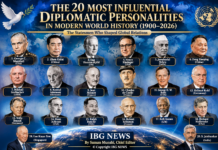







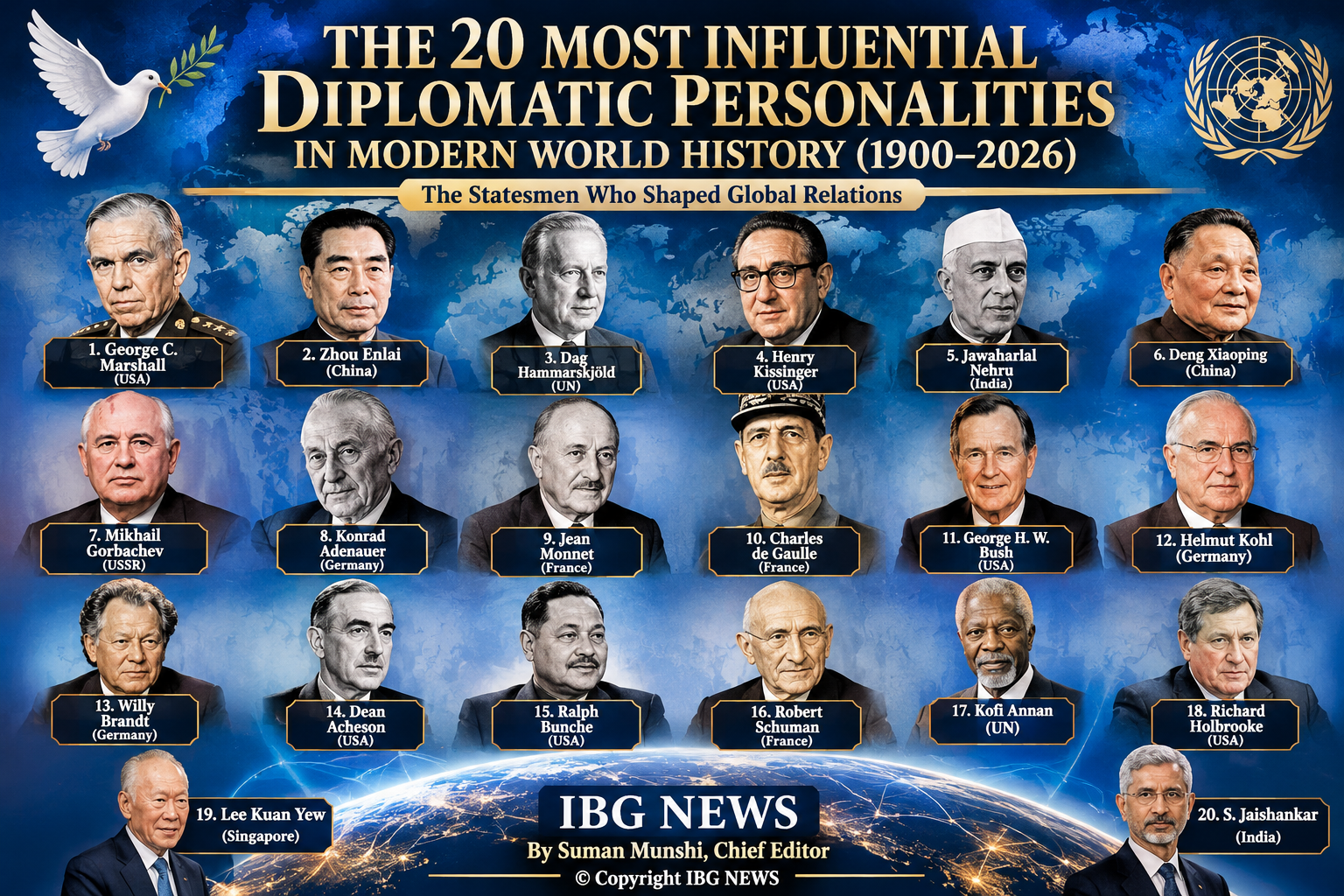

A historical assessment of the statesmen, negotiators and institution-builders who reshaped international relations
By Suman Munshi, Chief Editor, IBG NEWS
Copyright IBG NEWS
Introduction: Diplomacy is more than negotiation
The history of the modern world has been shaped not only by wars, revolutions and economic transformations, but also by the people who negotiated peace, built alliances, prevented conflicts, created international institutions and changed the way nations dealt with one another.
Some were professional diplomats. Others were presidents, prime ministers, foreign ministers or political leaders who used diplomacy as an instrument of national and global transformation. Their influence extended beyond their own countries, affecting the balance of power, international cooperation, trade, security and the political map of the world.
A credible ranking must therefore look beyond the traditional diplomatic establishment. It must recognise leaders such as Jawaharlal Nehru, Deng Xiaoping, Mikhail Gorbachev, Konrad Adenauer and Helmut Kohl, whose decisions had consequences extending across continents.
This revised IBG NEWS assessment examines 20 influential personalities whose principal diplomatic contributions fall within the period 1900–2026. It also acknowledges that diplomatic influence and moral approval are not the same thing: a leader may have transformed international affairs while remaining deeply controversial.
How the ranking was assessed
The ranking is an independent editorial assessment, not an official international ranking. Each personality was evaluated against five criteria:
| Assessment criterion | Weight |
|---|---|
| Influence on the international balance of power | 25% |
| Major diplomatic agreements and negotiations | 25% |
| Contribution to international institutions and cooperation | 20% |
| Geographical and geopolitical reach | 15% |
| Long-term consequences and historical durability | 15% |
The scores are rounded editorial judgements on a scale of 0–10. They measure diplomatic influence, not personal popularity, moral standing or domestic political performance.
The top 20 diplomatic personalities
1. George C. Marshall — 9.7/10
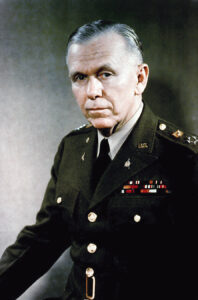
The architect of post-war reconstruction and the Western security system
George C. Marshall’s diplomatic importance extended far beyond his military leadership during the Second World War. As US Secretary of State, he became the principal public face of the European Recovery Programme, widely known as the Marshall Plan. It helped rebuild war-damaged European economies and strengthened the foundations of Western cooperation.
His period in office also saw the Truman Doctrine, the development of NATO and efforts to establish a stable post-war international order. Marshall’s unsuccessful mission to mediate the Chinese Civil War also demonstrated the limits of diplomacy when domestic political divisions become irreconcilable.
Why he ranks first: His contribution helped shape the economic and strategic architecture of the post-1945 world.
2. Zhou Enlai — 9.6/10
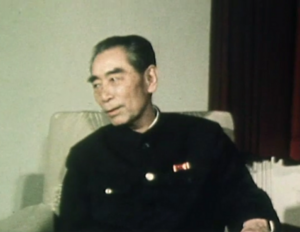
China | 1898–1976
The diplomatic architect of modern China’s international engagement
Zhou Enlai was one of the most consequential diplomatic figures of the twentieth century. He helped establish the foreign-policy foundations of the People’s Republic of China, represented Beijing at the 1955 Bandung Conference and promoted the Five Principles of Peaceful Coexistence.
His negotiations at the Geneva Conference in 1954, efforts to develop relations with Asian and African countries, and role in the opening of relations between China and the United States were especially important. Zhou also helped prepare the ground for President Richard Nixon’s historic visit to China in 1972 and the Shanghai Communiqué.
Why he ranks second: He helped transform China’s diplomatic position and gave Asian and African states a stronger voice in international affairs.
fmprc.gov.cn+1
3. Dag Hammarskjöld — 9.5/10
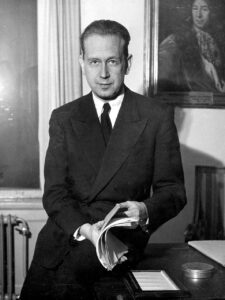
The diplomat who strengthened the independence of the United Nations
As the second UN Secretary-General, Hammarskjöld helped transform the organisation from a forum for governments into a more active instrument of international diplomacy. He strengthened the UN Secretariat, promoted peacekeeping and worked to maintain the organisation’s independence from major-power pressure.
His response to the Suez crisis and his involvement in the Congo crisis demonstrated both the potential and the limitations of international peacekeeping.
Why he ranks third: His contribution established important precedents for the role of the UN Secretary-General in conflict management. He received the 1961 Nobel Peace Prize posthumously.
Nobel Peace Prize
4. Henry Kissinger — 9.4/10
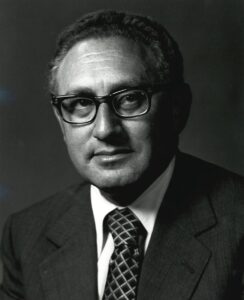
United States | 1923–2023
The strategist of détente and triangular diplomacy
Kissinger played a central role in the diplomatic opening between the United States and China, negotiations with the Soviet Union and the policy of détente during the Cold War.
His shuttle diplomacy in the Middle East after the 1973 Arab-Israeli War produced disengagement agreements between Israel, Egypt and Syria. He also contributed to the negotiations leading to the 1975 Helsinki Accords.
His legacy remains controversial because of US policies and interventions associated with his period of influence, particularly in Southeast Asia and Latin America.
Why he ranks fourth: Few individual diplomats influenced so many major geopolitical negotiations across different regions.
5. Jawaharlal Nehru — 9.3/10
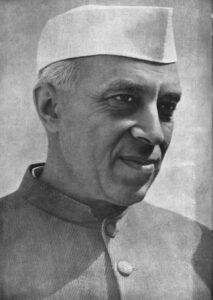
India | 1889–1964
The leading voice of non-alignment and postcolonial diplomacy
India’s first Prime Minister, Jawaharlal Nehru, gave independent India a distinctive international identity during the early Cold War. He opposed the division of the world into rival military blocs and became a leading advocate of non-alignment.
Nehru worked with leaders from Asia and Africa to promote peaceful coexistence, anti-colonialism and greater independence for newly liberated nations. India’s role in the development of the Five Principles of Peaceful Coexistence and the 1955 Bandung Conference reflected this approach.
His diplomatic record was not without failures. The 1962 India-China war exposed serious weaknesses in India’s understanding of Chinese intentions and the limits of Nehru’s approach to bilateral relations.
Why he ranks fifth: He helped establish the diplomatic voice of a large group of newly independent countries and made non-alignment a major international movement.
6. Deng Xiaoping — 9.2/10
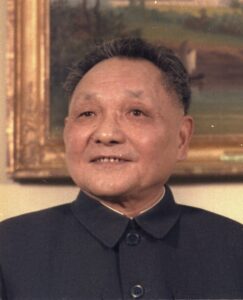
China | 1904–1997
The leader who repositioned China in the global economy
Deng Xiaoping’s importance in diplomacy came from his ability to connect foreign relations with China’s economic transformation. His reform and opening-up policies expanded China’s engagement with Western economies, attracted foreign investment and encouraged international trade.
He built upon the diplomatic opening to the United States initiated in the 1970s and pursued a more pragmatic approach to China’s external relationships. His leadership helped shift China’s international strategy away from revolutionary confrontation towards economic modernisation and wider global participation.
His record also includes the violent suppression of the 1989 Tiananmen protests, a major stain on his political legacy.
Why he ranks sixth: His decisions helped change the global economic balance and laid foundations for China’s later rise as a major world power.
7. Mikhail Gorbachev — 9.1/10
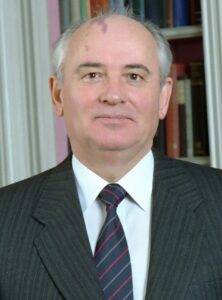
Soviet Union | 1931–2022
The statesman who helped bring the Cold War to a peaceful end
Gorbachev’s policies of glasnost and perestroika changed the Soviet Union’s relationship with its own citizens and with the outside world. His negotiations with American President Ronald Reagan helped reduce nuclear tensions and advance arms-control agreements.
His decision not to use Soviet military force to preserve communist governments in Eastern Europe helped create the conditions for the fall of the Berlin Wall and the end of the Cold War.
His policies also contributed to the collapse of the Soviet Union, a development that remains debated in terms of its consequences for Russia and the international system.
Why he ranks seventh: His leadership changed the strategic environment of the entire world and helped avoid a potentially catastrophic superpower confrontation.
Nobel Peace Prize
8. Konrad Adenauer — 9.0/10
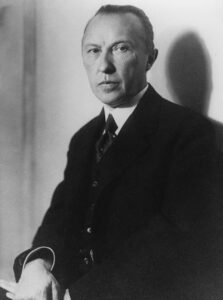
West Germany | 1876–1967
The statesman who anchored post-war Germany in democratic Europe
As West Germany’s first Chancellor, Adenauer led the country’s political and diplomatic rehabilitation after the Second World War. He pursued reconciliation with France, strengthened ties with the United States and supported European integration.
His backing for the European Coal and Steel Community and the wider European project helped transform relations between former enemies into institutional cooperation.
Why he ranks eighth: He helped restore Germany’s international legitimacy and establish the political foundations of post-war Western Europe.
9. Jean Monnet — 8.9/10
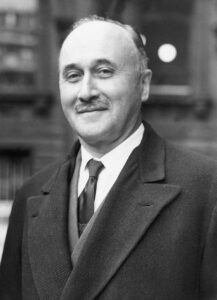
France | 1888–1979
The institutional architect of European integration
Jean Monnet was not a conventional head of government or foreign minister. His influence came from his extraordinary ability to design institutions that made cooperation between countries practical and sustainable.
He was a central figure behind the European Coal and Steel Community, which placed key industrial resources under shared European arrangements. The initiative helped create a framework for reconciliation between France and Germany and eventually contributed to the development of the European Union.
Why he ranks ninth: Monnet demonstrated that durable diplomacy could be built into institutions rather than depend solely on individual political leaders.
10. Charles de Gaulle — 8.8/10
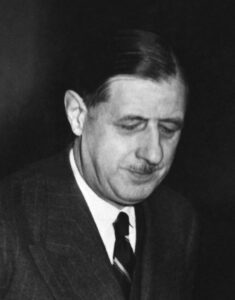
France | 1890–1970
The advocate of French strategic independence
Charles de Gaulle restored France’s international standing after the Second World War and pursued an independent foreign-policy identity during the Cold War.
He questioned excessive dependence on American strategic leadership, withdrew France from NATO’s integrated military command structure in 1966 and promoted the idea of a Europe with greater strategic autonomy.
His 1964 decision to establish diplomatic relations with the People’s Republic of China was a significant move in international relations.
Why he ranks tenth: He reshaped France’s global role and challenged the assumption that Western alliance membership required complete strategic alignment with Washington.
11. George H. W. Bush — 8.7/10
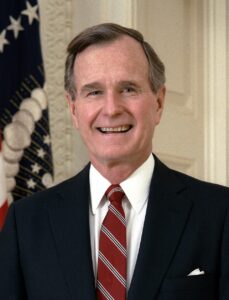
United States | 1924–2018
The president who managed the transition from the Cold War
George H. W. Bush presided over one of the most sensitive periods in modern international relations. The collapse of communist governments in Eastern Europe, German reunification and the dissolution of the Soviet Union created an extraordinary diplomatic challenge.
His administration worked through the Two Plus Four negotiations, which enabled German reunification in 1990 while addressing the security concerns of the former Allied powers and the Soviet Union.
Bush also assembled a broad international coalition following Iraq’s invasion of Kuwait in 1990.
Why he ranks eleventh: His measured diplomacy helped manage a historic change in the international order without a direct military confrontation between the superpowers.
12. Helmut Kohl — 8.6/10
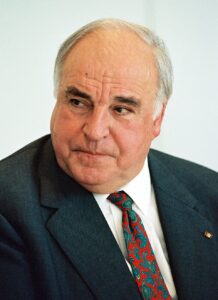
The architect of German reunification
Helmut Kohl’s diplomatic legacy is inseparable from German reunification in 1990. He worked with the United States, Soviet Union, France and Britain to secure international acceptance of a united Germany.
His close relationship with French President François Mitterrand strengthened Franco-German cooperation. Kohl also supported deeper European integration, including the process that led to the Maastricht Treaty and the creation of the European Union.
Why he ranks twelfth: German reunification and European integration were defining geopolitical developments of the late twentieth century.
13. Willy Brandt — 8.5/10
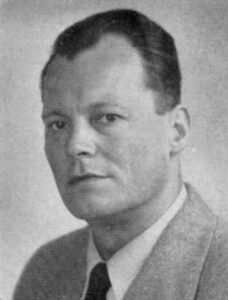
The pioneer of Ostpolitik and reconciliation
Willy Brandt changed West Germany’s approach to Eastern Europe through Ostpolitik, a policy of improving relations with communist states through dialogue, agreements and practical cooperation.
His government negotiated important treaties with the Soviet Union, Poland and East Germany. The 1972 Basic Treaty helped regulate relations between the two German states.
His famous gesture of kneeling at the Warsaw Ghetto memorial in 1970 became an enduring symbol of acknowledgement and reconciliation.
Why he ranks thirteenth: He helped reduce Cold War tensions and prepared the diplomatic ground for later European reconciliation. He received the Nobel Peace Prize in 1971.
14. Dean Acheson — 8.4/10
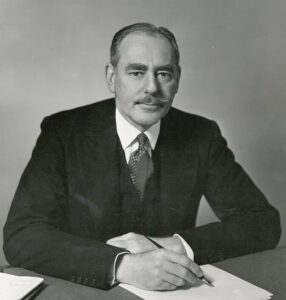
United States | 1893–1971
A principal architect of early Cold War diplomacy
As US Secretary of State from 1949 to 1953, Dean Acheson played a major role in establishing the Western alliance system. He supported NATO, the containment strategy and the integration of West Germany into the Western security framework.
He also contributed to negotiations and institutional initiatives that shaped the post-war international economic order.
Why he ranks fourteenth: His work helped establish the strategic foundations of American foreign policy during the early Cold War.
15. Ralph Bunche — 8.3/10
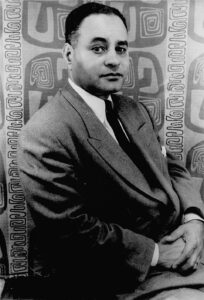
The mediator who demonstrated the power of international negotiation
Ralph Bunche was a pioneering UN diplomat and mediator. His work in the 1949 Arab-Israeli armistice negotiations helped secure agreements between Israel and neighbouring Arab states following the 1948 war.
He later played important roles in UN peacekeeping, including during the Suez crisis and the Congo crisis. He was also a strong advocate of decolonisation and civil rights.
Why he ranks fifteenth: Bunche demonstrated how skilled mediation and international institutions could help contain conflicts. He received the 1950 Nobel Peace Prize.
16. Robert Schuman — 8.2/10
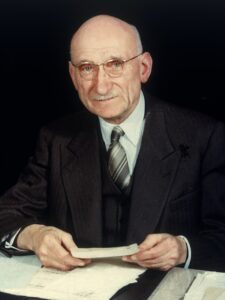
France | 1886–1963
The statesman behind the Schuman Declaration
On 9 May 1950, French Foreign Minister Robert Schuman presented a proposal to place French and West German coal and steel production under a common authority.
The initiative led to the European Coal and Steel Community, one of the institutional foundations of the European Union. It was an innovative attempt to make another major war between France and Germany materially more difficult.
Why he ranks sixteenth: His contribution helped turn European reconciliation into a practical institutional project.
17. Kofi Annan — 8.1/10
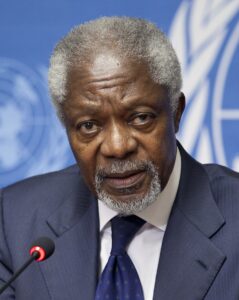
Ghana / United Nations | 1938–2018
The UN leader who championed multilateralism and global cooperation
Kofi Annan served as the seventh UN Secretary-General from 1997 to 2006. He worked to reform the United Nations, strengthen peacekeeping and promote human rights.
His diplomatic initiatives included efforts relating to Iraq, Nigeria, Timor-Leste, Lebanon and the Cameroon-Nigeria border dispute. He also promoted the Millennium Development Goals and the idea of corporate responsibility through the UN Global Compact.
His leadership was also criticised, particularly over the UN’s handling of certain crises and the limitations of international intervention.
Why he ranks seventeenth: He strengthened the international development and multilateral cooperation agenda and received the 2001 Nobel Peace Prize jointly with the United Nations.
18. Richard Holbrooke — 8.0/10
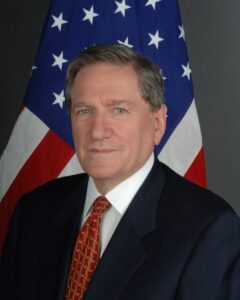
The negotiator who helped end the Bosnian War
Richard Holbrooke was one of the most prominent American diplomats of the post-Cold War era. His most important achievement was his role as chief negotiator of the Dayton Peace Accords in 1995.
The negotiations brought together the leaders of Bosnia and Herzegovina, Croatia and Serbia and produced an agreement that ended the Bosnian War. The settlement was imperfect and left serious political and institutional challenges, but it stopped a devastating conflict.
Holbrooke also served as US Ambassador to the United Nations and as a special envoy for Afghanistan and Pakistan.
Why he ranks eighteenth: His work at Dayton demonstrated the importance of persistent, high-level negotiation in ending a major armed conflict.
19. Lee Kuan Yew — 7.9/10
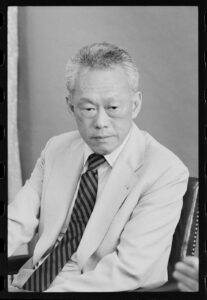
Singapore | 1923–2015
The strategist who made a small nation internationally influential
Lee Kuan Yew served as Singapore’s Prime Minister from 1959 to 1990. His leadership transformed Singapore into a major international commercial and financial centre.
His foreign policy focused on maintaining constructive relations with major powers, strengthening regional cooperation and protecting Singapore’s independence and security. Singapore’s role in ASEAN and its wider economic diplomacy reflected his belief that a small country could achieve influence through strategic partnerships and international credibility.
His domestic governance record remains debated, particularly concerning political freedoms.
Why he ranks nineteenth: He demonstrated how a small state could build substantial diplomatic and economic influence through strategic positioning and effective international engagement.
20. S. Jaishankar — 7.8/10
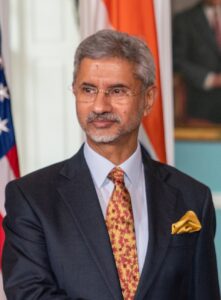
India | Born 1955
A leading contemporary voice in India’s strategic diplomacy
S. Jaishankar represents the modern phase of Indian diplomacy. A career diplomat who served as India’s Ambassador to the United States and China, and later as Foreign Secretary, he became External Affairs Minister in 2019.
His diplomatic approach has emphasised strategic autonomy, diversified international partnerships, engagement with competing global powers and India’s growing role in the Global South. His public articulation of India’s foreign-policy priorities has also made him a prominent international voice.
His position in this ranking is necessarily provisional. His long-term historical importance will depend on how India’s international relationships, strategic partnerships and regional role develop over the coming decades.
Why he ranks twentieth: His influence on contemporary Indian foreign policy is substantial, but his full historical legacy is still being written.
The historical foundation: Klemens von Metternich
The architect of the Congress of Vienna and the European balance of power
Metternich is one of the most important figures in the history of modern diplomacy, but he does not belong in a ranking restricted to 1900–2026.
Following Napoleon’s defeat, he played a leading role in the Congress of Vienna of 1814–1815. The settlement sought to restore political stability, establish a balance of power and prevent another single power from dominating Europe.
The diplomatic system associated with Metternich influenced European international relations for decades. His methods also relied on conservative political control and suppression of revolutionary movements.
Editorial decision: Metternich is included as a historical precursor, not as a ranked personality in the twentieth- and twenty-first-century list.
India’s diplomatic legacy: From Nehru to Jaishankar
India’s diplomatic history deserves particular attention because its influence has extended beyond its military and economic strength.
-
Jawaharlal Nehru: Established non-alignment as a major foreign-policy approach and helped build solidarity among newly independent countries.
-
V. K. Krishna Menon: Played a prominent role in India’s international advocacy, particularly at the United Nations.
-
P. V. Narasimha Rao: Helped redirect India’s foreign relations during the post-Cold War period and strengthened engagement with East and Southeast Asia.
-
Atal Bihari Vajpayee: Managed significant diplomatic challenges, including the aftermath of India’s 1998 nuclear tests, while pursuing dialogue with Pakistan.
-
S. Jaishankar: Has represented India’s contemporary approach to strategic autonomy, diversified partnerships and engagement with major powers.
These leaders belong to different political and historical periods. Their contributions should be assessed in the context of the international conditions they faced rather than through direct comparison alone.
What makes a great diplomat?
The personalities in this ranking reveal that diplomatic success can take many forms.
1. Preventing war: Negotiations and agreements can avert military confrontation and reduce the human cost of conflict.
2. Building international institutions: Marshall, Monnet, Schuman and Hammarskjöld demonstrated that lasting cooperation often requires institutions rather than temporary political arrangements.
3. Reconciliation between former enemies: Adenauer, Brandt and Kohl helped transform European relationships that had been shaped by generations of conflict.
4. Managing great-power competition: Zhou Enlai, Kissinger, Gorbachev and George H. W. Bush operated at the centre of major international power shifts.
5. Giving smaller and developing countries a voice: Nehru, Lee Kuan Yew and Annan demonstrated different ways of increasing international influence beyond traditional military power.
6. Ending armed conflicts: Bunche and Holbrooke showed how mediation can produce agreements even when the parties involved have deeply conflicting interests.
The next generation of diplomatic challenges
The international environment of 2026 is more complex than the traditional Cold War framework. The next generation of diplomats will have to deal with:
-
Great-power rivalry: Managing relations among the United States, China, Russia, Europe and emerging powers.
-
Artificial intelligence: Establishing international norms for AI, cybersecurity and technology governance.
-
Climate and energy security: Negotiating cooperation on emissions, renewable energy, critical minerals and energy supply chains.
-
Maritime security: Addressing tensions in the Indo-Pacific, Indian Ocean and other strategically important sea routes.
-
Global South representation: Reforming international institutions to reflect the growing influence and needs of developing countries.
-
New forms of conflict: Managing cyberwarfare, economic sanctions, disinformation and the growing use of autonomous weapons.
Future diplomatic leaders may be judged not only by the treaties they sign, but also by their ability to manage technological, economic and environmental challenges that cross national borders.
Conclusion: Diplomacy shapes the world beyond borders
The history of diplomacy is not simply a record of meetings, treaties and official statements. It is the story of how political leaders and negotiators have attempted to manage competing national interests, prevent conflict and establish systems of international cooperation.
George C. Marshall helped shape the post-war Western order. Zhou Enlai expanded China’s international engagement. Hammarskjöld strengthened the United Nations. Nehru gave the newly independent world a diplomatic voice. Adenauer, Monnet, Schuman, Brandt and Kohl helped transform Europe. Deng Xiaoping and Gorbachev contributed to changes that reshaped the global balance of power.
The inclusion of Richard Holbrooke, Lee Kuan Yew and S. Jaishankar also illustrates that diplomatic influence is not confined to the leaders of the largest countries.
Ultimately, the greatest diplomatic personalities are those whose decisions continue to influence international relations long after they have left office.
References and further reading
The following institutional and historical sources provide a foundation for the profiles and the editorial assessment:
Editorial note: This ranking is an independent historical assessment. The numerical scores are not official measurements, and reasonable historians may disagree about the order. Contemporary leaders, particularly S. Jaishankar, should be reassessed as their long-term impact becomes clearer. The portraits are illustrative; images used from public domain for reference.
Suman Munshi
Chief Editor, IBG NEWS
Copyright IBG NEWS

