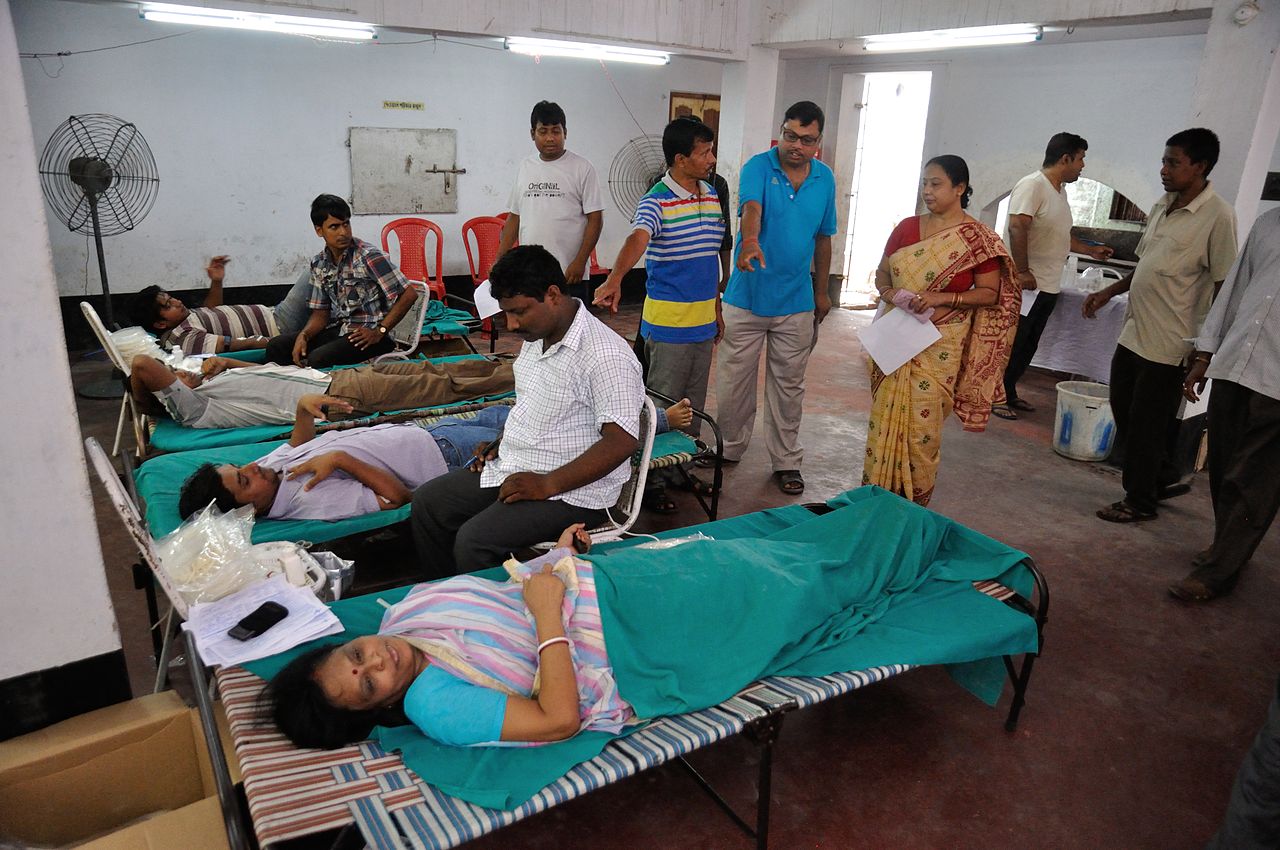
Blood Donation is not just another donation or help to a poor or needy person;it’s the ultimate help to a person whose life is at danger. If not supported by donated blood a person may die and there could be irrecoverable damage.
So when ever a medical emergency occurs it is the prime concern for people to get blood on time. Every one looks for the source of safe blood.
It is the responsibility of the society that we must encourage people for blood donation.
Every year our nation requires about 5 Crore units of blood, out of which only a meager 80 Lakh units of blood are available.
The gift of blood is the gift of life. There is no substitute for human blood.
Every two seconds someone needs blood.
More than 38,000 blood donations are needed every day.
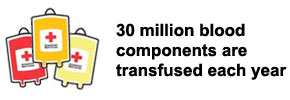
A total of 30 million blood components are transfused each year.
The average red blood cell transfusion is approximately 3 pints.
The blood type most often requested by hospitals is Type O.
Sickle cell patients can require frequent blood transfusions throughout their lives.
More than 1 million new people are diagnosed with cancer each year. Many of them will need blood, sometimes daily, during their chemotherapy treatment.
A single car accident victim can require as many as 100 units of blood
Facts about the blood supply
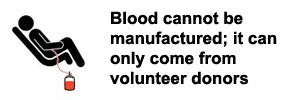
Blood cannot be manufactured – it can only come from generous donors.
Type O-negative blood (red cells) can be transfused to patients of all blood types. It is always in great demand and often in short supply.
Type AB-positive plasma can be transfused to patients of all other blood types. AB plasma is also usually in short supply.
Facts about the blood donation process
Donating blood is a safe process. A sterile needle is used only once for each donor and then discarded.
Blood donation is a simple four-step process: registration, medical history and mini-physical, donation and refreshments.
Every blood donor is given a mini-physical, checking the donor’s temperature, blood pressure, pulse and hemoglobin to ensure it is safe for the donor to give blood.
The actual blood donation typically takes less than 10-12 minutes. The entire process, from the time you arrive to the time you leave, takes about an hour and 15 min.
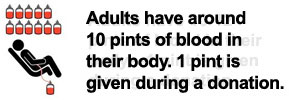
The average adult has about 10 units of blood in his body. Roughly 1 unit is given during a donation.
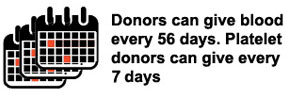
A healthy donor may donate red blood cells every 56 days, or double red cells every 112 days.
A healthy donor may donate platelets as few as 7 days apart, but a maximum of 24 times a year.
All donated blood is tested for HIV, hepatitis B and C, syphilis and other infectious diseases before it can be transfused to patients.
Facts about blood and its components
Blood makes up about 7 percent of your body’s weight.
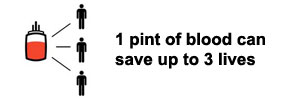
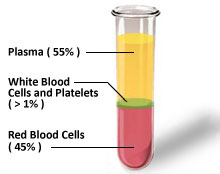
There are four types of transfusable products that can be derived from blood: red cells, platelets, plasma and cryoprecipitate. Typically, two or three of these are produced from a unit of donated whole blood – hence each donation can help save up to three lives.
Donors can give either whole blood or specific blood components only. The process of donating specific blood components – red cells, plasma or platelets – is called apheresis.
One transfusion dose of platelets can be obtained through one apheresis donation of platelets or by combining the platelets derived from five whole blood donations.
Donated platelets must be used within five days of collection.
Healthy bone marrow makes a constant supply of red cells, plasma and platelets. The body will replenish the elements given during a blood donation – some in a matter of hours and others in a matter of weeks.
Facts about donors
The number one reason donors say they give blood is because they “want to help others.”
Two most common reasons cited by people who don’t give blood are: “Never thought about it” and “I don’t like needles.”
One donation can help save the lives of up to three people.
If you began donating blood at age 18 and donated every 90 days until you reached 60, you would have donated 30 gallons of blood, potentially helping save more than 500 lives!
Only 7 percent of people in India have O-negative blood type. O-negative blood type donors are universal donors as their blood can be given to people of all blood types.
Type O-negative blood is needed in emergencies before the patient’s blood type is known and with newborns who need blood.
Thirty-five percent of people have Type O (positive or negative) blood.
0.4 percent of people have AB-blood type. AB-type blood donors are universal donors of plasma, which is often used in emergencies, for newborns and for patients requiring massive transfusions.
There are four main blood types: A, B, AB and O.
In 1901, Karl Landsteiner, an Austrian physician, discovers the first three human blood groups. On his birthday i.e June 14th “World Blood Donors Day” celebrates. On October 1st ‘National Blood Donation Day’ celebrates in India.
Used to determine whether a user is included in an A / B or Multivariate test.
18 months
_ga
ID used to identify users
2 years
_gali
Used by Google Analytics to determine which links on a page are being clicked
30 seconds
_ga_
ID used to identify users
2 years
_gid
ID used to identify users for 24 hours after last activity
24 hours
_gat
Used to monitor number of Google Analytics server requests when using Google Tag Manager
1 minute
__utma
ID used to identify users and sessions
2 years after last activity
__utmt
Used to monitor number of Google Analytics server requests
10 minutes
__utmb
Used to distinguish new sessions and visits. This cookie is set when the GA.js javascript library is loaded and there is no existing __utmb cookie. The cookie is updated every time data is sent to the Google Analytics server.
30 minutes after last activity
__utmc
Used only with old Urchin versions of Google Analytics and not with GA.js. Was used to distinguish between new sessions and visits at the end of a session.
End of session (browser)
__utmz
Contains information about the traffic source or campaign that directed user to the website. The cookie is set when the GA.js javascript is loaded and updated when data is sent to the Google Anaytics server
6 months after last activity
__utmv
Contains custom information set by the web developer via the _setCustomVar method in Google Analytics. This cookie is updated every time new data is sent to the Google Analytics server.
2 years after last activity
_gac_
Contains information related to marketing campaigns of the user. These are shared with Google AdWords / Google Ads when the Google Ads and Google Analytics accounts are linked together.
90 days
Marketing cookies are used to follow visitors to websites. The intention is to show ads that are relevant and engaging to the individual user.
A video-sharing platform for users to upload, view, and share videos across various genres and topics.
This cookie stores your preferences and other information, in particular preferred language, how many search results you wish to be shown on your page, and whether or not you wish to have Google’s SafeSearch filter turned on.
10 years from set/ update
YSC
Registers a unique ID to keep statistics of what videos from YouTube the user has seen.
Session
DEVICE_INFO
Used to detect if the visitor has accepted the marketing category in the cookie banner. This cookie is necessary for GDPR-compliance of the website.
179 days
LOGIN_INFO
This cookie is used to play YouTube videos embedded on the website.
2 years
VISITOR_PRIVACY_METADATA
Youtube visitor privacy metadata cookie
180 days
GPS
Registers a unique ID on mobile devices to enable tracking based on geographical GPS location.
1 day
VISITOR_INFO1_LIVE
Tries to estimate the users' bandwidth on pages with integrated YouTube videos. Also used for marketing