












Linguistic Research Unit (LRU) of the Indian Statistical Institute (ISI), Kolkata, is organising a
2-Day Symposium on Bharatiya Bhasha Pariwar under the aegis of Bharatiya Bhasha Samiti,
Ministry of Education, Government of India, on the 9th and 10th of December, 2025.
The symposium aims to discuss and promote the recently released books, Bharatiya Bhasha Pariwar:
A New Framework in Linguistics and Collected Studies on Bharatiya Bhasha Pariwar:
Horizons and Perspectives. These two volumes elaborate on the concept of “Bharatiya Bhasha Pariwar”
holds great contemporary relevance, as being promoted by the Bharatiya Bhasha Samiti,
Ministry of Education, GoI. It advocates for a perspective of shared cultural roots, aligning with
India’s National Education Policy (NEP 2020).
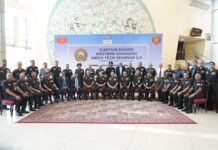
The inaugural programme was held on 9th December, Tuesday, from 11.00 AM-12:00 PM, in the
Seminar Room (8th Floor) of the Applied Statistics Unit, S.N. Bose Bhavan, ISI. The program
commenced with the lamp-lighting ceremony and the welcome address by Prof. Niladri Sekhar
Dash, Head, LRU, ISI, Kolkata. The session was graced by the presence of Prof. Sanghamitra
Bandyopadhyay, Director, ISI, Kolkata (Chair); Prof. Biswabrata Pradhan, Dean of Studies, ISI,
Kolkata (Chief Guest); and the special guests Prof. Shailendra K. Singh, North-Eastern Hill
University, Shillong; Prof. S. Arulmozi, University of Hyderabad, Hyderabad; Prof. Naresh
Annem, University of Hyderabad, Hyderabad; and Prof. Varaprasad Kolla, Amity Institute of
Biotechnology, Raipur.
Prof. Dash briefly mentioned the outcomes of the workshop on “Transcreation of Uniform
Scientific and Technical Terminology for Indian Languages (TUSTTIL): Challenges and
Opportunities previously conducted by LRU from 1st to 3rd September, 2025, from which
academic papers are being published in renowned journals.
Prof. Sanghamitra Bandopadhyay, Director, highlighted the role of ISI in the field of linguistic
research. She made special mention of the role of Prof. Dash in the ongoing process of the
translation of technical texts in Indian languages. She emphasised on the importance of
translating terminologies in a way that is easy to adopt. She drew a connection between the
theme of the symposium and the logo of ISI which reflects unity in diversity, thereby opening the
floor for discussion.
Prof. Biswabrata Pradhan, Dean of Studies, talked about the various research areas pursued in
ISI. He appreciated the role of LRU over the years in nurturing scholars and facilitating research
in the field of linguistics. He emphasised on the relevance of the symposium and the concept of
unity in diversity. He touched upon topics like the importance of the mother tongue in learning and
NEP. He also encouraged thinking about scientific ways for an easier transition from mother tongue
instruction to learning in a lingua franca like English in higher studies.
Prof. Shailendra K. Singh spoke of the publication of the two volumes and the landmark journey
of linguistic research, quoting lines from Tulsi Das’s ‘Ramayana’. He underscored the
importance of the concept of “Bharatiya Bhasha Pariwar” in the linguistic discourse in the 21st
century, by touching upon landmark events in history from Sir William Jones’ 1786 famous
discourse on the common ancestry of languages, INC’s Dadabhai Naoroji’s proposal of ‘Swaraj’,
and the concept of ‘Viksit Bharat’. He focused on the importance of independence, “baudhik
swaraj”, unity in diversity, and serving the nation.
Prof. S. Arulmozi thanked LRU for the book release and talked about unity in diversity and
Polysemy in Bangla.
Prof. Naresh Annem talked about NEP 2020, promotion of Indian languages, Bharatiya Bhasha
Samiti, Bharatiya Bhasha Pariwar, ASMITA project, and SVASTIK-CSIR NIScPR. He
underlined the pioneering role of LRU in the field of linguistics. He elaborated on the importance
of translation, various types of translation from literary to audio-visual translation, and how it is
a connecting bridge.
Prof. Varaprasad Kolla talked about Kolkata’s glory, which has engulfed past, present and future
in it. He spoke of the knowledge and science embedded in every language. He asserted that
today’s youth should be proud of their languages, and indicated the guiding role of the released
volumes.
Dr. Mendem Bapuji, LRU, closed the inaugural session by proposing the vote of thanks. It is
hoped that the books being released in this symposium will engender discussion about the topics
and make a positive impact on India’s linguistic diversity.


