








“We do not seek to establish any form of imperialism; rather, we aim to promote inclusivity.”- Dr. Sachchidanand Joshi
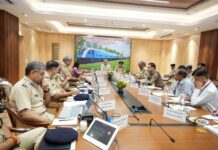
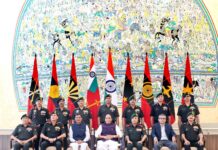
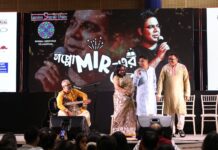
19th February, New Delhi: The two-day international conference titled ‘Cultural Interflow between India and Mongolia’, organised by the Department of Brihattar Bharat and Area Studies Division of the Indira Gandhi National Centre for the Arts (IGNCA), an autonomous institution under the Ministry of Culture, Government of India, concluded with a dignified closing ceremony. Held on 18–19 February, the conference brought together scholars, researchers, cultural experts, academicians, and policy-makers from India and Mongolia to engage in extensive deliberations on the multidimensional cultural relations between the two countries.
Giving his Chair Remarks during the Valedictory Session of the International Conference titled ‘Cultural Interflow between India and Mongolia’, Dr. Sachchidanand Joshi, Member Secretary, Indira Gandhi National Centre for the Arts, observed that hosting an international conference within a government framework is never easy, but our collective commitment made it possible. He reiterated that the idea of Brihattar Bharat is not imperialistic; it is inclusive an effort to trace cultural footprints and shared civilisational elements with our neighbouring regions.
Dr. Joshi noted that while much has been said about how much of India exists in Mongolia, it is equally important to understand how much of Mongolia exists in India. He observed that our academic gaze has long remained Eurocentric, often overlooking neighbouring cultures with deep historical and spiritual linkages to us. He further reiterated that our cultural ties with Mongolia are over two thousand years old, far older than our modern diplomatic relations. The transmission of Buddhism, the presence of Sanskrit in the Mongolian language, and the early translation of Panini’s grammar, he noted, are powerful reminders of this shared past.
He stated that this conference is a beginning; an invitation to document, study, and communicate these connections to younger generations, and to build concrete action plans through research, academic exchange, exhibitions, and manuscript studies. He noted that the quality of scholarship presented assures that the conference proceedings will become a landmark publication and a foundation for future studies on India–Mongolia relations. He concluded by observing that the bonds forged during this conference must grow stronger in the years ahead, guiding both sides as old cultural companions walking together towards shared understanding, development, and prosperity.
In her valedictory address, Prof. Nirmala Sharma, Trustee of the Indira Gandhi National Centre for the Arts and Convenor of the conference, highlighted the conclusions drawn from the two-day deliberations. She observed that cultural relations between India and Mongolia have been grounded in spiritual proximity and sustained historical dialogue. Emphasising future directions, she stressed the need to advance joint projects in the areas of manuscript preservation, Buddhist studies, cultural research, and educational exchange.
During the conference, various sessions engaged in in-depth discussions on themes such as the historical, cultural, and civilisational links between India and Mongolia; the shared heritage of Buddhism and spiritual traditions; conservation of manuscript and textual traditions; art and performing traditions; folk culture; education and academic exchange; cultural diplomacy; and the possibilities of contemporary collaboration. Scholars particularly emphasized the urgency of preserving the shared cultural and intellectual heritage of both countries and transmitting it meaningfully to younger generations.


In the valedictory session, several delegates from India, Mongolia and other countries shared their reflections and experiences. At the conclusion of the programme, Prof. Dharm Chand Chaubey, Head of the Department of Brihattar Bharat and Area Studies, IGNCA, presented the vote of thanks, expressing gratitude to all distinguished guests, speakers, participants, and organisers. He stated that the conference would further strengthen India–Mongolia relations and pave the way for future joint research and cultural initiatives.
It is noteworthy that the conference was inaugurated on 18 February by Shri Gajendra Singh Shekhawat, Union Minister for Culture and Tourism. Describing the conference as more than a purely academic exercise, he characterised it as being inspired by shared spiritual and artistic traditions and a continuous flow of cultural exchange. Referring to historical interactions between India and Mongolia, he noted that alongside spiritual exchange, scientific knowledge had also travelled between the two civilisations. He described the Mongolian Kangyur as a sacred bridge connecting the peoples of both countries.
Thus, the two-day international conference infused renewed energy into the ancient cultural ties between India and Mongolia.

