















“When a Woman Smiles, It Is Not Merely the Family That Smiles; Society and the Nation Smile with Her” — Smt. Lata Gupta
20th August, New Delhi:
The Janapada Sampada Division of the Indira Gandhi National Centre for the Arts organised ‘Hariyali Teej’ as part of its annual programme on 20 August 2026. The festival of Teej holds special significance in Indian folk traditions, the cycle of seasons, and cultural life. It expressed the living relationship between nature, folk faith, and community celebration, while providing an opportunity to engage with the diverse traditions of Indian folk culture.
On the occasion, the ‘Paddy Culture of India’ exhibition, a special lecture and cultural programme, and a ‘Teej Bazaar’ were organised. The programme aimed to present the folk traditions, cultural expressions and ways of life associated with Teej within a wider context, while encouraging awareness towards their preservation and promotion.
Smt Lata Gupta, Chairperson of the Delhi Commission for Women, attended the programme as the Chief Guest. Prof Nandini Sinha Kapur of IGNOU delivered the special lecture as the Keynote Speaker, while Smt Malvika Joshi attended as the Distinguished Guest and Prof Rashmi Sinha, IGNOU, as the Guest of Honour. The occasion also featured the exhibition, special lecture and cultural programme, along with the ‘Teej Bazaar’.
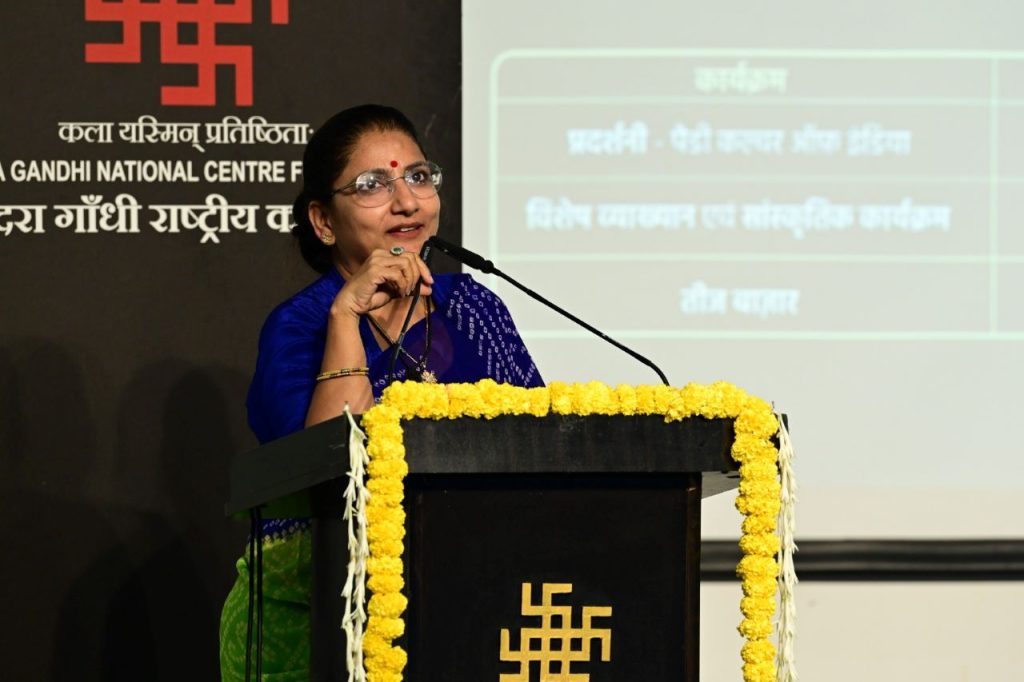
Speaking on the occasion, Smt Lata Gupta said that the Janapada Sampada Division reminds us of India’s rich cultural heritage. She observed that no festival in India is celebrated without the participation and contribution of women. Festivals are carriers of culture, and Hariyali Teej is a significant expression of this cultural continuity. She emphasised that the festival also reminds us of and celebrates Mother Nature.
She further noted that women are the carriers of the country’s culture and heritage and stressed the need to change the perception that women are one another’s adversaries. Women, she said, are sensitive to the needs of other women and play an important role in nurturing families and society. Reiterating the cultural ethos that where women are respected and worshipped, prosperity prevails in the household, she highlighted the central role of women in sustaining India’s cultural traditions and social harmony. She further said that when a woman smiles, it is not merely the family that smiles; society and the nation smile with her. She also highlighted the central role of women in sustaining Indian cultural traditions and fostering social harmony.
Smt Malvika Joshi said that there are deep scientific reasons behind each of our festivals. Other speakers observed that Indian festivals are not merely religious rituals, but important cultural mediums that express the collective memory, folk traditions, art, music, cuisine and social relationships of society. Festivals such as Teej play an important role in carrying folk traditions forward to the younger generation and keeping them alive.
Prof. Nandini Sinha Kapur said that Hariyali Teej is a living cultural tradition that brings together ecology, gender, community and the continuity of India’s intangible heritage. Rooted in seasonal rhythms, agrarian life and women’s collective traditions, Teej offers an important lens through which to understand India’s cultural history beyond conventional, male-centred historical narratives. Its evolution through oral memory, folk songs, rituals, visual traditions, and community practices reflects the dynamic interaction between great and little traditions. From intimate, women-centred domestic observances to larger public celebrations, Hariyali Teej demonstrates how traditions continuously adapt and acquire new forms while retaining their cultural significance.
Prof. Rashmi Sinha said that Hariyali Teej is an occasion to reaffirm women’s self-reliance and recognise that standing on one’s own also means remaining connected with society. Just as Parvati found her purpose with Shiv, women too can pursue their own goals with determination. The festival also invites us to listen to diverse perspectives and renew our awareness of ecology, environmental conservation and our responsibility towards nature.
Prof. K. Anil Kumar said that Janapada Sampada is committed to documenting, preserving and disseminating India’s diverse indigenous knowledge systems, oral traditions and living cultural practices. On this occasion, he also presented a report on the work and major activities of the Division during the past year. He noted that the exhibition on the Paddy Culture of India highlights the country’s rich agricultural heritage, while the Teej Bazaar celebrates the colours, crafts and festive traditions of living folk culture. On this occasion, five books and three documentary films were released.
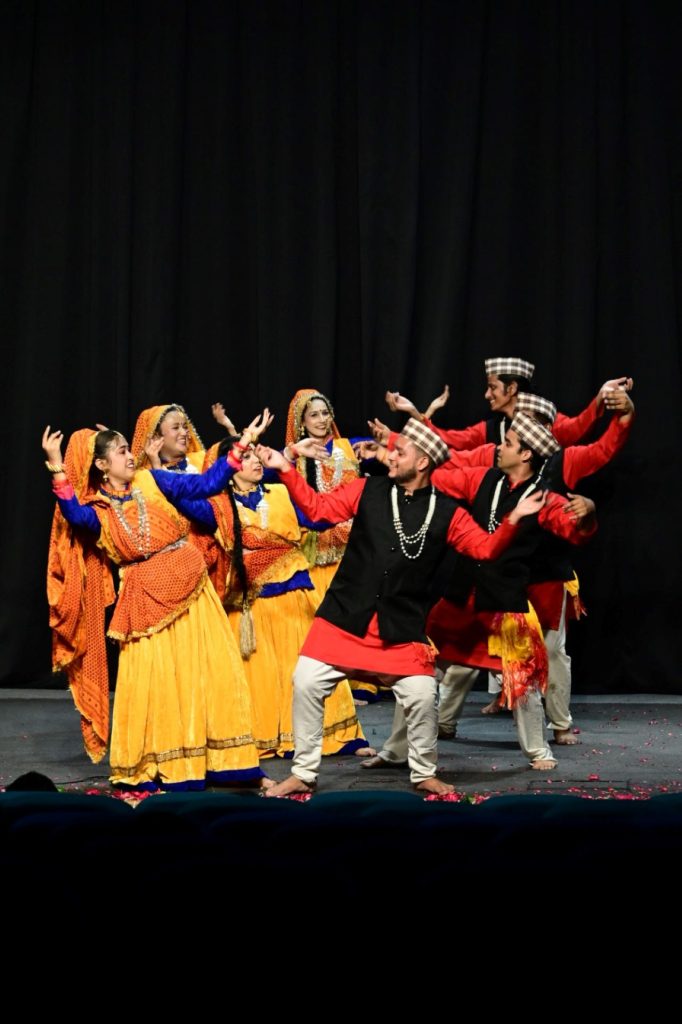
The cultural presentations organised during the programme brought alive the traditional folk spirit and festive exuberance of Teej. Artists from the Manila Cultural Group of Uttarakhand presented captivating dances to the region’s folk songs, delighting the audience. The programme witnessed the participation of a large number of people interested in art, culture, and folk traditions.

