













IGNCA Round Table Conference Reinterprets the Sindhu Sarasvati Civilisation
1st October, New Delhi:
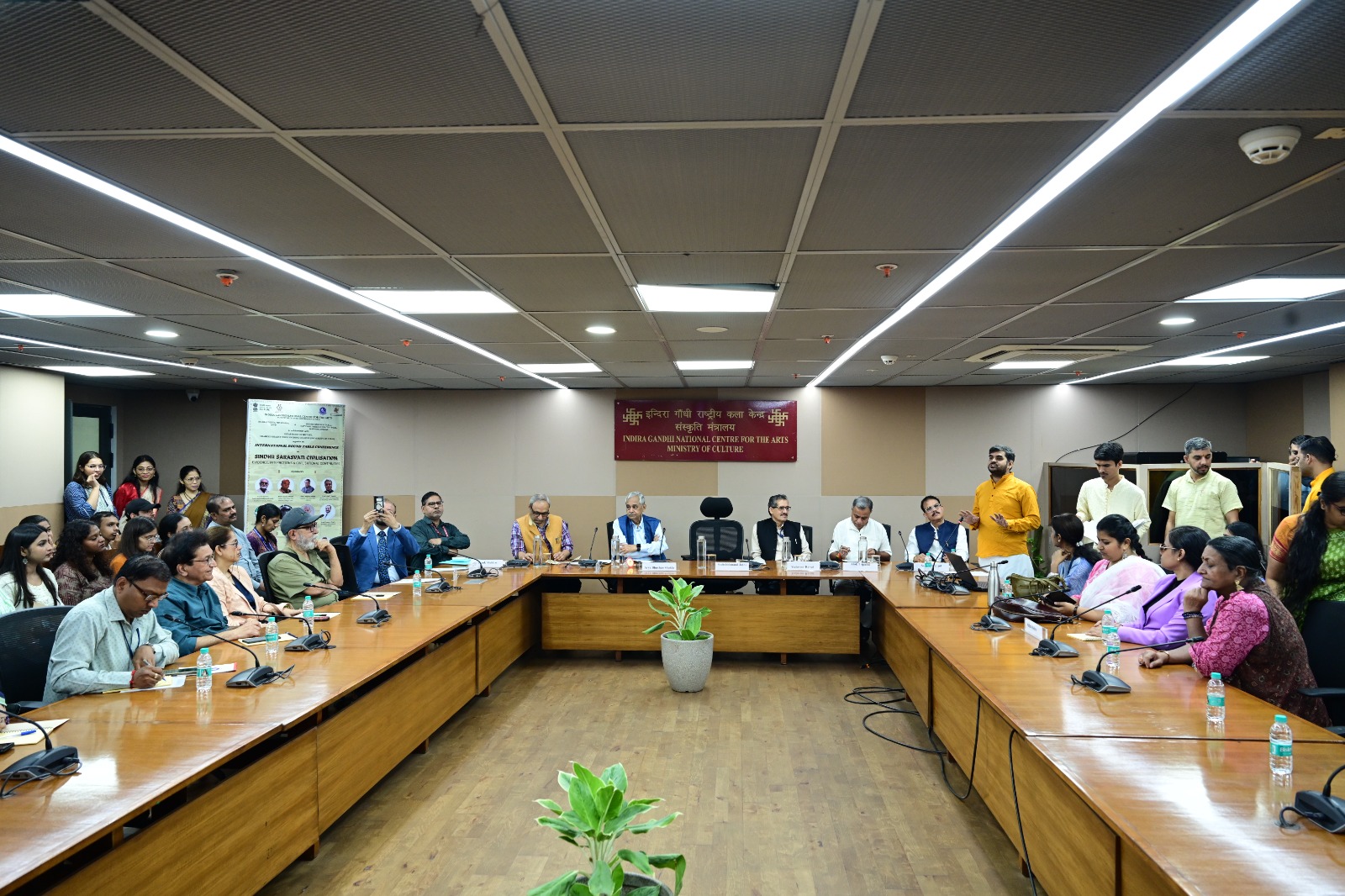
The Indira Gandhi National Centre for the Arts (IGNCA), through its Bharata Vidya Prayojana and the Sindhu Sarasvati Cell of the National Mission on Cultural Mapping, in collaboration with the Department of History, Shaheed Bhagat Singh Evening College, University of Delhi, organised an International Round Table Conference on “Sindhu Sarasvati Civilisation: Evidence, Interactions & Civilisational Continuities” at IGNCA, New Delhi. The conference brought together archaeologists, historians, epigraphists, palaeographers, geologists and scholars of Indian knowledge traditions for an evidence based and interdisciplinary discussion on the Sindhu Sarasvati Civilisation, its cultural networks and the question of civilisational continuity in the wider history of the Indian subcontinent.
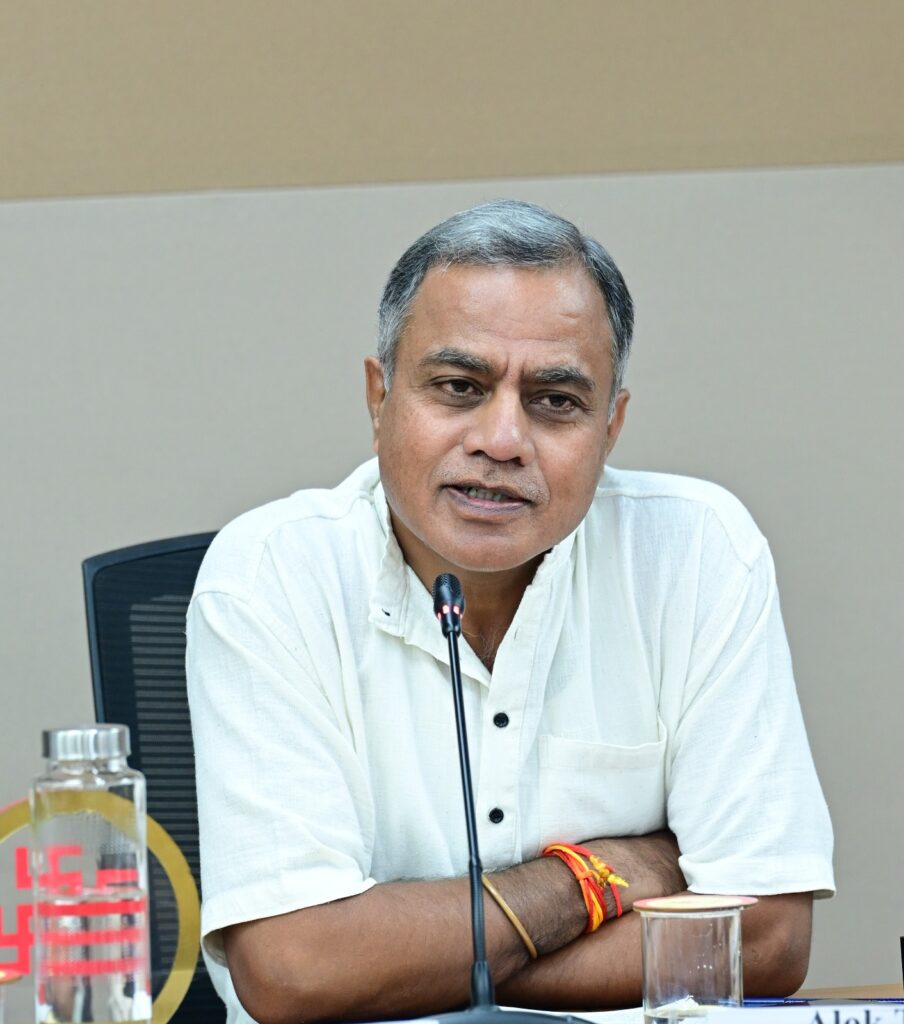
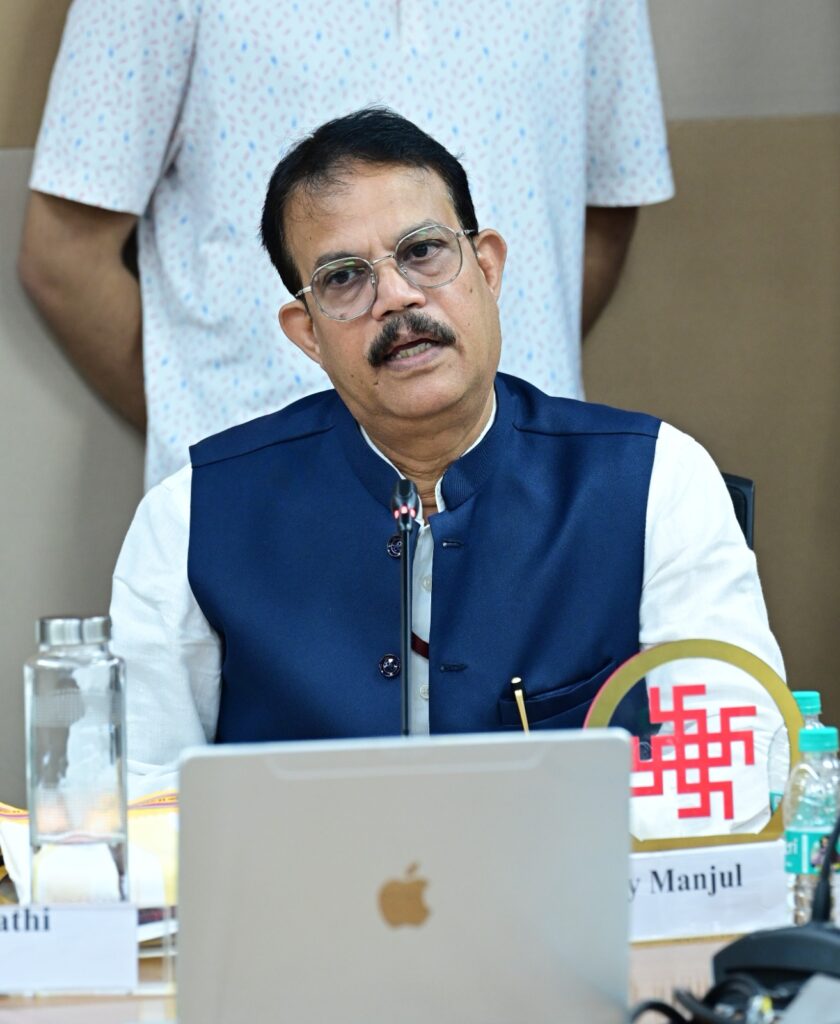
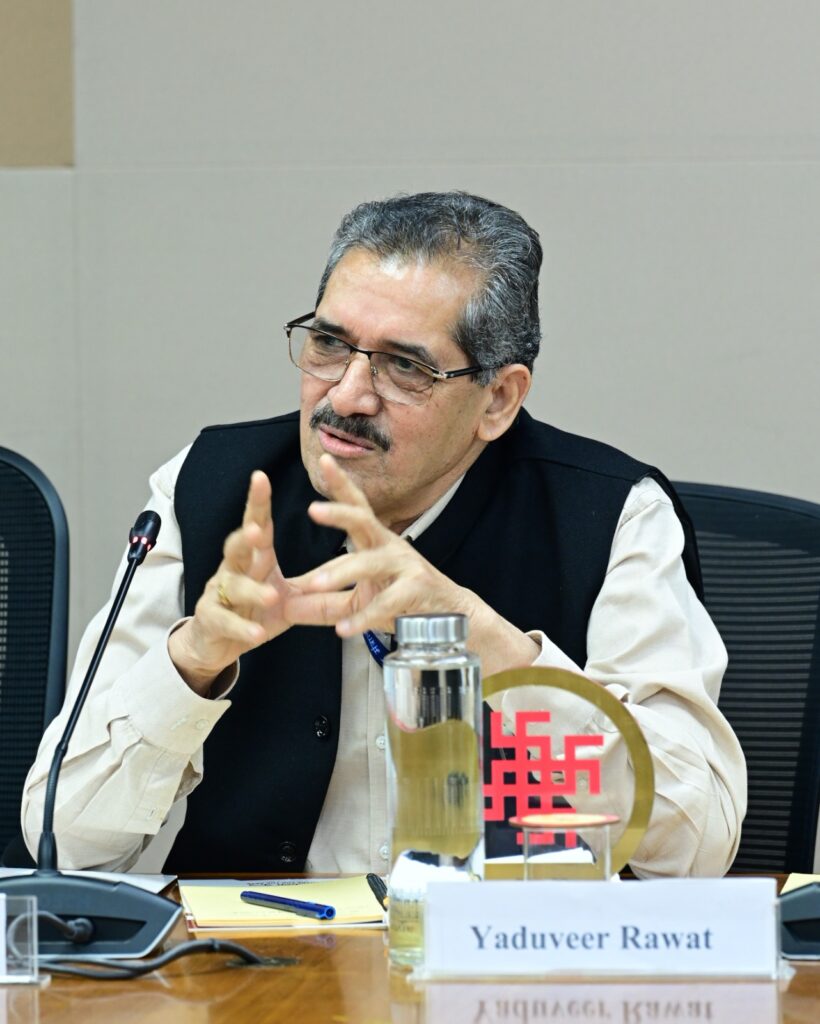
The concept of the conference was inspired by the broader civilisational perspective of Dr. Sachchidanand Joshi, Member Secretary, IGNCA, on the Sindhu Sarasvati Civilisation and the need to examine its cultural and intellectual legacy through an interdisciplinary and evidence based approach. The conference drew scholarly interventions from Prof. Vasant Shinde, Former Vice Chancellor, Deccan College, Pune; Prof. Alok Tripathi, Director, Centre for Archaeology and Museology, Assam University; Prof. Nagaraj Paturi, Former Vice Chancellor, INDICA; Dr. Sanjay Kumar Manjul, Additional Director General, ASI; Dr. Karuna Shankar Shukla, Archaeologist; Dr. Puneet Gupta, Harappan Epigraphist & Oncologist; and Dr. Mayank Shekhar, Mission Director, National Mission on Cultural Mapping. The round table was graced by the esteemed presence of Prof. Yadubir Singh Rawat, Director General, Archaeological Survey of India, who highlighted the significance of scholarly dialogue on the subject.
The discussions moved beyond the familiar narrative of a civilisation that appeared, flourished and disappeared, bringing excavation records, material culture, river systems, inscriptions, settlement patterns, linguistic questions and living traditions into conversation. At the centre of the deliberations was the question of whether the Sindhu Sarasvati Civilisation can be adequately understood through inherited geographical and chronological categories or whether the evidence calls for a wider examination of civilisational continuity.
The deliberations were informed by the broader civilisational perspective articulated by Prof. Sachchidanand Joshi, particularly the need to view India’s ancient cultural and intellectual traditions beyond the geographical and political boundaries of the modern nation state. Dr. Sachchidanand Joshi, in the context of Shalatur, the birthplace of Panini, observes that the boundaries of ancient Indian civilisation need to be understood distinctly from those of the modern nation state. Shalatur is in present day Pakistan. He believes that the reference to Panini is not merely an introduction to a historical personality, but also an opportunity to understand how modern nations view and interpret their ancient civilisational heritage.
He observes that the period of Panini predates the political boundaries of modern India and Pakistan by several centuries. His ‘Ashtadhyayi’, besides being an extraordinary work on Sanskrit grammar, is also a testimony to the wider Indian intellectual world in which diverse traditions of language, philosophy, education, politics, social organisation and knowledge were developing. The significance of Panini, he maintains, lies not merely in the present location of his birthplace, but also in the fact that his work provides an important source for understanding ancient Indian society and its cultural geography.
Prof. Joshi further notes that during Panini’s time, neither India nor Pakistan existed as nation states in the modern sense, nor did the present political boundaries exist. His linguistic and grammatical tradition continued to develop in the later Indian scholarly tradition as well. He therefore believes that limiting Panini to a single modern national identity solely on the basis of present day geography may narrow his broader historical context.
A significant question raised during the conference concerned the nomenclature of the civilisation. Scholars questioned why a civilisation that extended across a much wider cultural landscape should be understood primarily through the name of one river. Prof. Alok Tripathi, while discussing the colonial history of archaeology, pointed to the circumstances through which the civilisation came to be identified primarily as the ‘Indus Valley Civilisation’ and urged scholars to examine the historical and interpretive frameworks through which archaeological discoveries have been understood.
The discussions emphasised the need to distinguish archaeological evidence from subsequent interpretations. Prof. Tripathi noted that the objective is not to discard earlier scholarship, but to return to primary evidence and ask fresh questions of it. This also brought into focus the larger issue of how archaeological knowledge is produced, interpreted and transmitted.
Prof. Vasant Shinde’s excavation based approach underlined the importance of treating material evidence as more than isolated objects. Excavations provide the possibility of reconstructing patterns of habitation, technology, craft production, exchange and everyday life. Discussions drawing upon sites including Banawali and Rakhigarhi also highlighted continuities visible in architecture, planning and material culture. Dholavira, with its gates, passages and chambers, was discussed in relation to structural patterns that remain recognisable in village settlements today.
The question of continuity became particularly significant in the discussion on whether the Harappan civilisation should be described in terms of “collapse”. Dr. Sanjay Kumar Manjul put the proposition: “Harappa did not end. It transformed.” He drew attention to archaeological evidence, river chronology and literary references, suggesting that Mature Harappan and Vedic cultural phases may have existed at the same time rather than being understood only as separate chronological compartments.
The changing course and character of rivers, particularly the Sarasvati and Sutlej systems, also emerged as an important dimension. The decline of urban centres was discussed not simply as a single civilisational rupture, but in relation to environmental transformation, migration, changing settlement patterns and the continuation of cultural practices. Dr. Manjul also noted that only a small proportion of settlements were urban centres, while the majority were rural, making the rural landscape important to the study of cultural continuity.
The relationship between excavated objects and living cultural practices provided another dimension to the deliberations. The Dancing Girl of Mohenjo daro and the continued use of bangles were discussed as points of inquiry into aesthetic preferences, ornamentation and craft practices across time. Prof. Nagaraj Paturi pointed to similar continuities in traditional processes such as bead making and colour dyeing, suggesting that living craft traditions can provide important avenues for understanding excavated material cultures.
Dr. Puneet Gupta, in his discussion on the decipherment of the Harappan writing system, emphasised that signs cannot be understood simply by assigning meanings to individual symbols. Recurring sequences, positional patterns, directionality and the structural organisation of signs also need to be examined. His proposed BAP model approaches the script through epigraphy, linguistics and analytical methods, underlining the need for archaeology, linguistics, epigraphy and computational or statistical approaches to work together.
Another important strand of the conference concerned the interpretation of the past. Prof. Alok Tripathi placed this question within the history of colonial archaeology, noting the contributions of Indian archaeologists such as Daya Ram Sahni and Rakhal Das Banerji, while also drawing attention to the disproportionate concentration of interpretive authority within colonial institutions. The distinction between excavation and interpretation remains important, as archaeological objects may be materially certain while the meanings assigned to them remain open to scholarly debate.
The discussions therefore repeatedly returned to primary evidence: where an object was found, its archaeological context and what the material evidence actually establishes. These questions influence how civilisations enter textbooks, museums, public memory and broader historical narratives.
The distinction between History and Itihasa was another important strand of the discussions. While History is often constructed through chronology and documentary or material evidence, Itihasa brings memory, transmission, tradition and the continuing relationship between past and present into consideration. Prof. Paturi also emphasised the importance of teaching students the method of writing history rather than merely presenting established narratives as fixed conclusions, and stressed the value of engaging directly with archaeological sites alongside specialists.
Dr. Karuna Shankar Shukla’s paper further examined the nomenclature “Indus Saraswati Civilisation” and the civilisation within the larger framework of Indian or Vedic civilisation. The paper brought archaeological material, textual traditions, inscriptions and linguistic interpretations into a wider discussion of cultural continuity, referring to finds including painted pottery, terracotta seals, steatite seals, metal objects, jewellery, female dancing figures and terracotta figurines.
The discussions emphasised the need for continued scholarly examination of archaeological, epigraphic and linguistic evidence rather than treating inherited formulations as final. The larger issue emerging from the conference was whether the history of the Indian subcontinent can be adequately understood when archaeological evidence, textual traditions and living cultural practices are studied separately.
Prof. A. B. Shukla said that the Round Table seeks to examine the Sindhu Sarasvati Civilisation through archaeological, textual, linguistic and scientific evidence, explore its cultural and civilisational continuities with later Indian traditions, and discuss the nature, structure and decipherment of the Indus Script. It also aims to critically examine emerging interdisciplinary research and foster scholarly dialogue among historians, archaeologists, linguists, epigraphists and other specialists.
The Round Table reaffirmed IGNCA’s role as a platform for academic research and interdisciplinary dialogue on India’s cultural past. By bringing diverse disciplines together, the conference emphasised the importance of sustained scholarly engagement with questions that cannot be adequately addressed through a single discipline. The discussions brought excavation reports, archaeological remains, river systems, inscriptions, craft traditions, linguistic questions and cultural memory into the same intellectual frame, highlighting the need to bring these forms of evidence into dialogue for a fuller understanding of the civilisational history of the Indian subcontinent.

