













IFFI 2026: Indian Panorama Selects 45 Films; ‘Dhurandhar’ and ‘Becoming’ to Open the Showcase
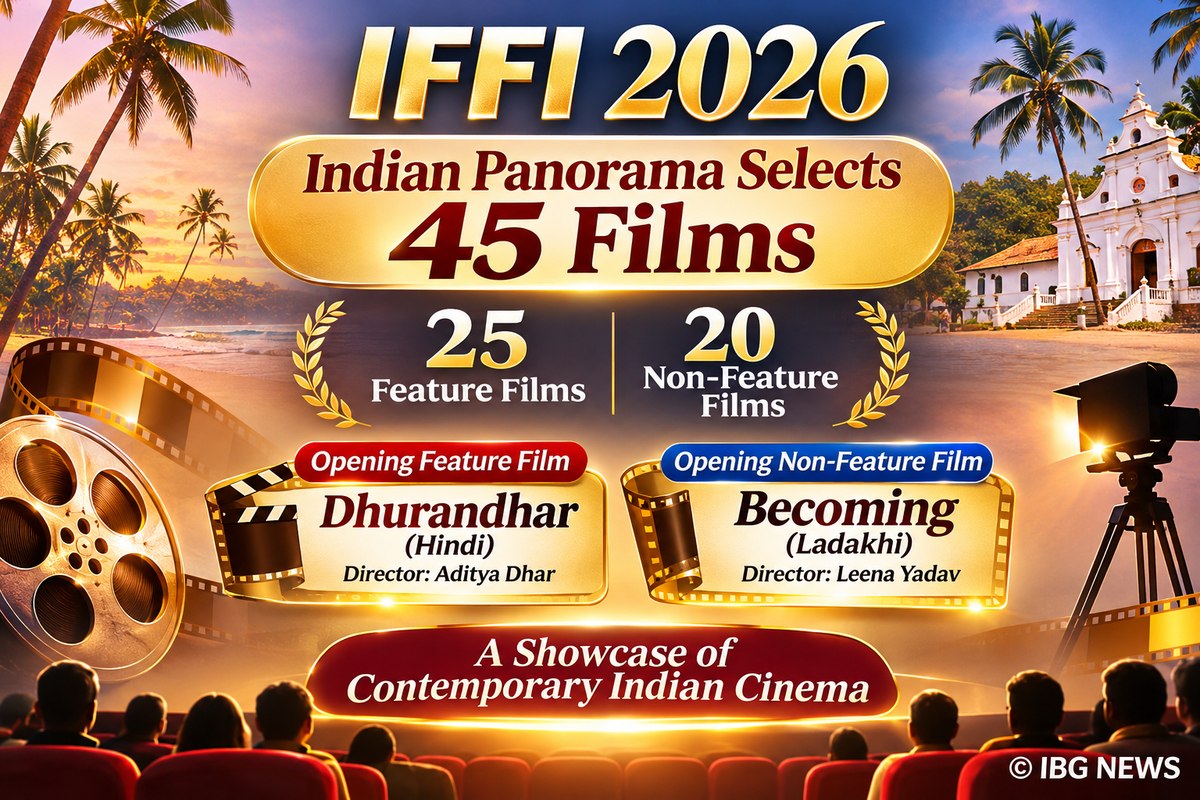
Goa, November 14, 2026: The Indian Panorama, one of the flagship segments of the International Film Festival of India (IFFI), has announced its film selection for 2026, featuring 25 feature films and 20 non-feature films from across the country. The selection highlights the diversity of contemporary Indian cinema, bringing together stories in multiple languages and a wide range of cinematic styles.
Aditya Dhar’s Hindi feature film ‘Dhurandhar’ has been selected as the opening film of Indian Panorama 2026, while ‘Becoming’, a Ladakhi-language non-feature film directed by Leena Yadav, will open the non-feature film section.
The feature-film selection was made from 404 contemporary Indian entries, while the non-feature category received 358 submissions. The final selection reflects the range of creative expression, storytelling and filmmaking practices emerging from different parts of India.
Indian Panorama aims to identify and showcase films demonstrating cinematic, thematic and aesthetic excellence, while promoting the art of filmmaking. Separate juries were constituted to evaluate feature and non-feature entries, each led by an appointed chairperson.
25 feature films selected
The 12-member Feature Film Jury was chaired by National Film Award-winning director and producer Madhur Bhandarkar. The selected package comprises 20 films in the Indian Panorama Feature Film section and five in the Mainstream Cinema section.
The 20 films selected for the Indian Panorama Feature Film section are:
| Film | Language | Director |
|---|---|---|
| Paro – The Untold Story of Bride Slavery | Hindi | Gajendra Ahire |
| Laalo – Krishna Sada Sahaayate | Gujarati | Ankit Bhupatbhai Sakhiya |
| The Kerala Story 2 Goes Beyond | Hindi | Kamakhya Narayan Singh |
| Krishnavataram | Hindi | Hardik Gajjar |
| Birds on Ice | Ladakhi | Sahil Shah |
| Scroll | Tamil | Kannan S |
| Pagla Ghora | Bengali | Sekhar Das |
| Aadi Anant | Marathi | Mahesh Limaye (Shivkumar Limaye) |
| Urum | Nyishi | Duyu Tabyo |
| Banaras | Hindi | Bharatbala Ganapathy |
| Kabir Sir Ka Akhri Lesson | Hindi | Sarfaraz |
| Sing Geetham | Telugu | Singeetham Srinivasa Rao |
| Ohh My Dog | Hindi | Amit Rai |
| Ruby-Cube | Kannada | P. Sheshadri |
| Sev Micchar | Hindi | Muskan Asthana |
| Pili Channe | Tulu | Anupama Sharadhi |
| The Great Grand Superhero Aliens Ka Aagman | Hindi | Manish Saini |
| Thaai Kizhavi | Tamil | Sivakumar Murugesan |
| Surjyamukhi | Assamese | Antara G.G. Choudhury |
| Sarvam Maya | Malayalam | Akhil Sathyan |
Five films in the Mainstream Cinema section
The following five films have been selected under the Mainstream Cinema category:
| Film | Language | Director |
|---|---|---|
| Kantara: A Legend Chapter 1 | Kannada | Rishab Shetty |
| Baapya | Marathi | Samir Tewari |
| Mana Shankara Vara Prasad Garu (Pandaga Ki Vastunnaru) | Telugu | Anil Ravipudi |
| Dhurandhar | Hindi | Aditya Dhar |
| Deool Band 2 | Marathi | Pravin Vitthal Tarde |
Five films nominated for Best Debut Director Award
Encouraging emerging filmmakers and fresh creative perspectives remains an important objective of Indian Panorama. The Best Debut Director of Indian Feature Film Award recognises new talent and innovative approaches to storytelling in Indian cinema.
The Feature Film Jury has nominated five films for the award:
| Film | Language | Director |
|---|---|---|
| Chennai Love Story | Telugu | Ravi Varma Namburi |
| Pratyabartan | Bengali | Samarpan Sengupta |
| Tighi | Marathi | Jeejivisha Kale |
| Sledge | Kashmiri | Raja Shabir Mohd Khan |
| Hanuman Ansh | Hindi | Dr Vishal Chaturvedi |
The nominations bring attention to emerging directors working across different regional film industries and languages.
20 non-feature films selected
The six-member Non-Feature Film Jury was chaired by filmmaker and educationist Himanshu Sekhar Khatua. It selected 20 films from 358 contemporary Indian non-feature film submissions.
The selected films represent documentary and other non-feature filmmaking practices, reflecting the ability of filmmakers to document, investigate, entertain and engage with contemporary Indian values and experiences.
The selected films are:
| Film | Language | Director(s) |
|---|---|---|
| The Unseen Holy River – Saraswati | Hindi | Bhasker Vishwanathan |
| Becoming | Ladakhi | Leena Yadav |
| Shat-Shat Atal | Hindi | Atul Pandey |
| The Hug of Emptiness | Kannada | Pradeep Kumar Shetty K |
| Red Carpet | Assamese | Aimee Baruah |
| Demography is Destiny | Hindi | Kamakhya Narayan Singh; Anshuman Shekhar |
| Echoes of the Last Shelter | Hindi | Bharat Arora; Rajesh Bhatia |
| Win | Telugu | Praveen |
| Ulididdu Sampige Maatra | Kannada | Abhishek |
| Nirmanjali: The Chandigarh of Maciej Nowicki | English | Suraj Kumar |
| Shiksha | Marathi | Amyth Patkar |
| Naqsh-e-Daur | Kashmiri | Baba Tassaduq Hussain |
| Chandoba | Marathi | Nipun Dharmadhikari |
| Abhal-Vriksh | Marathi | Santosh Davakhar |
| Attappadi | Tamil | Vijeesh Mani |
| Save The God | Hindi | Niraj Kumar Mishra |
| Amit Atal | Hindi | Hitesh Shankar |
| Switch Off | Malayalam | Sandeep Francis |
| Chalo Indian with Eric Ji – Mizoram | English | Rajdeep Choudhury |
| Kathar Katha | Bengali | Dhritisree Sarkar |
Indian Panorama: A platform for Indian cinematic excellence
Introduced in 1978 as part of the International Film Festival of India, Indian Panorama has played an important role in presenting Indian films and showcasing the country’s cultural diversity and heritage through cinema.
Its objective is to select outstanding Indian films of the year and promote film art through non-commercial screenings. The platform also offers selected films opportunities to reach audiences beyond IFFI.
These films may subsequently be showcased at international film festivals in India and abroad, Indian Film Weeks organised under bilateral cultural exchange programmes, specialised Indian film festivals outside formal cultural exchange arrangements, and special Indian Panorama festivals held in India.
With 45 films selected across feature and non-feature categories, Indian Panorama 2026 provides a broad representation of contemporary Indian filmmaking. The inclusion of films from several regional languages also underlines the continuing contribution of India’s diverse film industries to the country’s cinematic landscape.
By Antara Tripathy
IBG NEWS

