











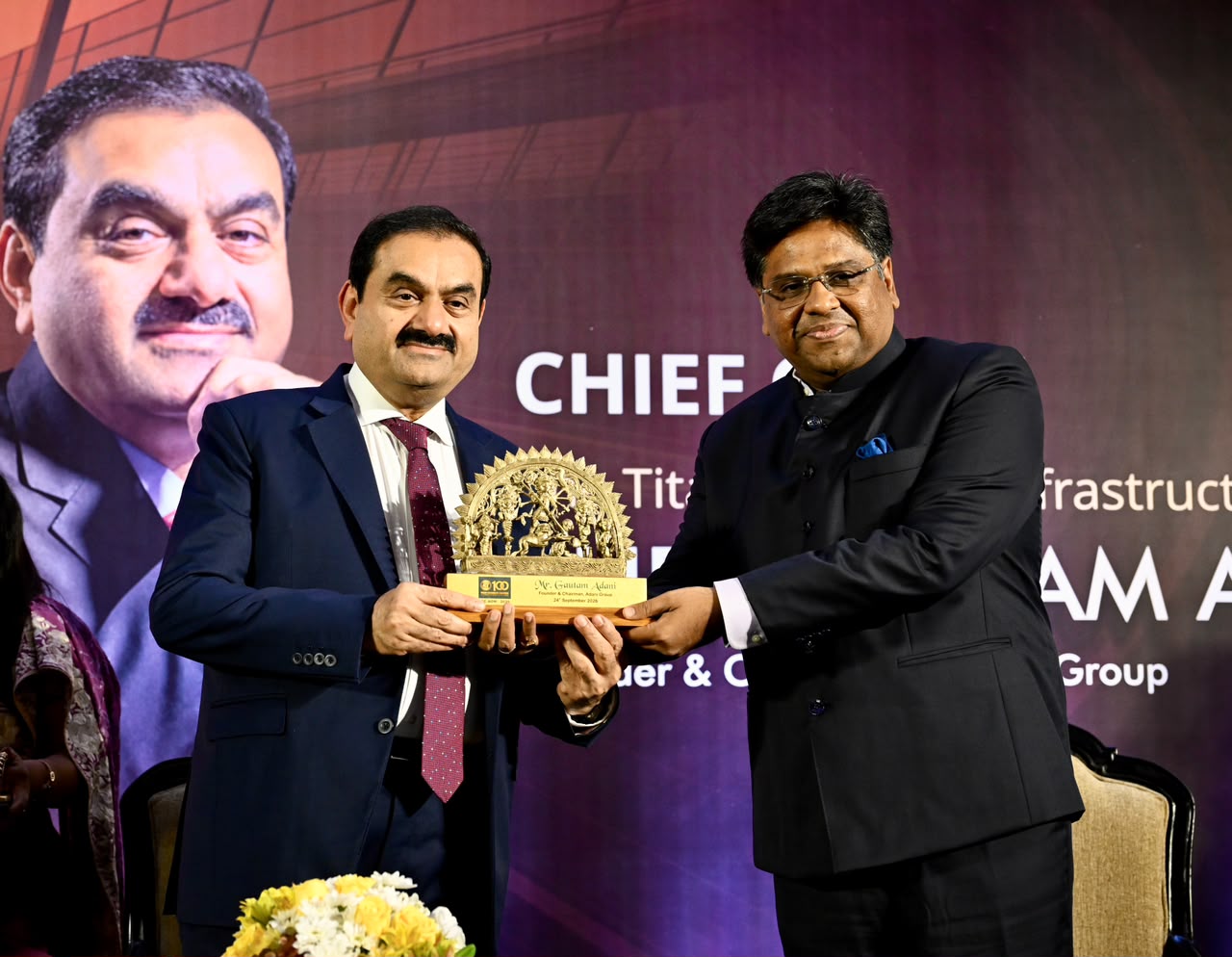
Why Adani Is Keeping an Eagle Eye on Bengal: The Deocha Pachami Dewanganj Harinsingha (DPDH) coal block, Purulia Rare Earth Excavation and export of Ashoke Nagar Crude Oil through Tajpur Deep Seaport?
From New Town healthcare to ports, power, logistics, and AI infrastructure, Gautam Adani’s Bengal strategy appears to be about something much bigger than individual projects
Some pretext to keep in mind for a big picture:
- The Deocha Pachami Dewanganj Harinsingha (DPDH) coal block (often colloquially referred to in relation to the local market areas under the Mohammad Bazar block in Birbhum, West Bengal) is a massive power-sector infrastructure venture. It holds the distinction of being India’s largest coal block and the second-largest coal block in the world. Can this be the next fuel station for Adani Power?
- The Purulia Rare Earth and Critical Mineral Project marks West Bengal’s official entry onto India’s strategic critical mineral map. Extensive exploration spearheaded by the Geological Survey of India (GSI) has officially confirmed significant reserves of Rare Earth Elements (REE) and highly sought-after Rare Metals (RM) across multiple blocks in the rocky terrains of the Purulia district.
- Deep Seaports in the eastern part of India will open up The Kaladan Multi-Modal Project is a central government-funded geopolitical initiative designed to bypass the narrow Siliguri Corridor (“Chicken’s Neck”) to connect mainland India to the Northeast for Adani Logistics.
By Suman Munshi | IBG NEWS
Kolkata, September 24, 2026:
Why is Gautam Adani suddenly putting so much emphasis on West Bengal?
The answer may lie not in any single hospital, port, power project or data centre, but in the way all of them can eventually connect.
At the Indian Chamber of Commerce in Kolkata on Wednesday, Adani laid out an investment intention exceeding ₹1 lakh crore in Bengal over the coming decade. The sectors he identified were remarkably broad: ports, logistics, electricity generation, transmission and distribution, roads, bridges, ropeways, green cement and hyperscale data centres.
On the same day, healthcare entered that expanding Bengal canvas through the proposed 2,000-bed Adani Arogya Mandir at New Town.
Viewed separately, these are different businesses.
Viewed together, however, they reveal the outlines of a much larger strategy.
Bengal Is More Than a Consumer Market
For an infrastructure conglomerate, West Bengal possesses an unusual geographical advantage.
To one side are the mineral and industrial regions of Jharkhand, Odisha and Chhattisgarh. In another direction lies the Northeast. To the south is the Bay of Bengal, opening maritime access towards Southeast Asia and the wider Indo-Pacific.
Adani himself placed considerable emphasis on this geography during his ICC address. His argument was that Bengal should be viewed not merely as another market but as a strategic node connecting several economic regions.
That distinction is crucial.
A company selling consumer products may primarily ask how many customers Bengal has.
An infrastructure company asks a different set of questions:
What can Bengal connect? What can move through it? What can be powered from it? And what larger economic network can be built around it?
That appears to be closer to the Adani calculation.
The Mundra Lesson May Explain the Bengal Ambition
To understand why Bengal could interest Adani so deeply, it is useful to examine the philosophy he described in his Kolkata speech.
Mundra did not remain simply a port.
As roads and railway connections expanded, industries gained access to the port. Power infrastructure supported industrial development. Industrial activity generated cargo. Logistics facilities connected those activities further.
In Adani’s description, Mundra eventually evolved into an interconnected economic ecosystem covering around 40,000 acres.
That experience appears relevant to Bengal.
The important question may therefore not be:
“Which Adani project is coming to Bengal?”
A more revealing question is:
“Can several Adani businesses eventually reinforce one another in Bengal?”
That would represent an entirely different scale of corporate strategy.
Port + Logistics + Power + Industry + Data
Consider the sectors identified in the ₹1 lakh crore investment roadmap.
Ports and logistics complement each other.
Industrial development requires transportation and electricity.
Power generation becomes more valuable when accompanied by transmission and distribution networks.
Hyperscale data centres demand enormous quantities of dependable electricity as well as high-quality digital connectivity.
Roads and bridges improve movement between industrial and logistics centres.
Green cement adds another industrial layer.
Put these pieces together and Bengal begins to resemble a potential integrated eastern infrastructure platform, rather than simply a destination for unrelated investments.
Adani’s ICC address strongly emphasised this network philosophy. Discussing the group’s logistics development elsewhere in India, he described an integrated system involving 15 ports connected with roads, railways, warehouses, airports, fulfilment centres and industrial parks.
The significance for Bengal is not that an identical system has already been built here—it has not.
The significance is that this is the business model Adani himself chose to highlight while explaining his vision.
The East May Be the Next Big Bet
There is another dimension.
For decades, much of India’s industrial acceleration has been associated with western and southern corridors.
Adani’s speech effectively challenged the idea that this pattern should continue indefinitely. He argued that eastern India must become increasingly important in India’s next stage of economic expansion and placed Bengal prominently within that proposition.
For a conglomerate specialising in infrastructure, entering before that transformation fully materialises could carry strategic value.
Infrastructure economics often works differently from ordinary retail business.
A retailer can enter when customers arrive.
An infrastructure operator frequently has to build before the demand reaches its peak.
That was another recurring idea in Adani’s speech: waiting until demand is obvious can mean arriving after the strategic opportunity has already been captured.
This may explain the “eagle eye” on Bengal better than any single investment announcement.
AI Makes Electricity More Important, Not Less
One particularly interesting component of the Bengal announcement is hyperscale data centres.
At first glance, data centres may appear disconnected from ports, roads or electricity distribution.
In reality, the opposite is increasingly true.
Artificial-intelligence computing requires immense data-processing capacity. Large data centres, in turn, require enormous and dependable electricity supplies.
Adani specifically discussed this convergence of digital infrastructure and energy infrastructure in Kolkata, saying the group had anticipated increasing data-centre demand before the present AI expansion became fully visible.
This potentially gives the Bengal strategy another layer.
If substantial data-centre capacity is eventually created in the state, electricity generation, transmission, distribution, fibre connectivity, land, cooling infrastructure and specialised technical services all become part of the same ecosystem.
That is why the inclusion of both power infrastructure and hyperscale data centres in the Bengal roadmap deserves attention.
New Town Brings the Human Side of Infrastructure
The proposed Adani Arogya Mandir introduces a very different dimension.
Adani described the New Town project as a 2,000-bed medical institution and said half its beds would be dedicated to people unable to afford quality healthcare.
Healthcare does not fit into the ports-and-logistics equation in the same direct way.
But it broadens Adani’s Bengal footprint from economic infrastructure into social infrastructure.
A major medical institution can bring doctors, nurses, technicians, researchers, students, suppliers and supporting businesses into its orbit. If medical education and research develop alongside hospital services as announced, the project could eventually operate as an institutional ecosystem rather than simply a hospital.
Its real impact, however, should be judged after the project becomes operational and measurable outcomes become available.
Why Bengal Cannot Simply Be Called “Another Gujarat”
Perhaps one of the most revealing portions of Adani’s address came near the end.
He recalled Mundra as his first “karmabhoomi” and expressed the hope that Bengal could become his second.
But he simultaneously rejected the idea that Bengal should become another Gujarat. His stated proposition was that Bengal should develop around its own geography, intellectual resources, industrial history and identity.
That is an important distinction.
Mundra may provide the lesson.
Bengal would provide a different geography.
The economic architecture would therefore have to be different.
There Is Also a Cultural Strategy
Another unusual feature of the announcement is the inclusion of Bengal’s cultural assets.
Adani referred to support for the revitalisation of Kumartuli Ghat, a curated programme around Durga Puja and Bengal’s artists, and conservation of the historic Writers’ Building.
These are not conventional infrastructure projects.
Their inclusion suggests an effort to establish a broader institutional presence in Bengal that touches commerce, healthcare and cultural heritage.
Whether these initiatives ultimately deliver their intended results will depend on execution, conservation standards and collaboration with relevant institutions.
But ₹1 Lakh Crore Is Still a Roadmap, Not a Completed Investment
This is where enthusiasm must be separated from evidence.
An announcement of an investment intention exceeding ₹1 lakh crore is significant.
It is not equivalent to ₹1 lakh crore already invested in West Bengal.
Between an announcement and a functioning project lie land acquisition, statutory approvals, financing, environmental and regulatory clearances where applicable, engineering, construction, market conditions and operational execution.
The real Adani-Bengal story will therefore unfold over years, not days.
The appropriate measures will eventually be straightforward:
How much capital was actually deployed?
How many projects were completed?
How many sustainable jobs were created?
What infrastructure capacity was added?
What measurable improvement did consumers and businesses experience?
Those outcomes will matter more than the headline number.
Why the Eagle Eye Is on Bengal
Put all the pieces together and a clearer picture emerges.
Adani appears to see Bengal simultaneously as:
a gateway to Northeast India,
a neighbour to eastern India’s mineral and industrial belt,
a maritime platform on the Bay of Bengal,
a future logistics hub,
an energy market,
a possible hyperscale data-centre destination,
a healthcare investment opportunity,
and an entry point into India’s next eastern growth cycle.
That combination is unusual.
And it explains why the group’s interest should not be interpreted through one project alone.
The larger strategic possibility is an interconnected economic architecture in which ports move goods, logistics connect markets, roads improve movement, power supports industry, data centres support the digital economy and healthcare expands the group’s social-infrastructure presence.
Adani’s own speech repeatedly returned to the idea that infrastructure becomes more valuable when individual assets form networks.
The IBG NEWS Perspective
The real question for Bengal, therefore, is not whether Gautam Adani has noticed the state.
He clearly has.
The more consequential question is what he sees from that eagle-eyed view—and how much of that vision ultimately becomes reality on Bengal’s soil.
If the proposed investments materialise at scale, Bengal could acquire new infrastructure across logistics, energy, healthcare and the digital economy. If implementation falls short, the ₹1 lakh crore figure will remain primarily an ambitious corporate declaration.
For now, September 24, 2026 may be remembered as the day when Gautam Adani publicly articulated something larger than an investment list: his case for why Bengal could become a major eastern pillar in the Adani Group’s long-term infrastructure strategy.
Reported & Analysed by Suman Munshi
IBG NEWS
***This report has been independently structured and written for IBG NEWS from the underlying facts and Gautam Adani’s September 24 ICC keynote address. ***