













Protein found in Zebrafish can regenerate aged discs in human vertebrae
By PIB Delhi
A protein found in the backbone of zebrafish that plays a positive role in disc maintenance and promotes regeneration in aged discs between vertebrae can have potential therapeutic implications to promote regeneration in degenerated human discs.
In humans, discs degenerate naturally, leading to many related health concerns, including low back, neck, and appendage pain. Currently, only symptomatic treatments for disc degeneration are available, including pain relievers or anti-inflammatories. In severe cases, disc replacement or disc fusion surgery is performed. Thus, there is an urgent need to develop a treatment either to suppress disc degeneration or to promote disc regeneration in humans. Medical examinations have given insights into the stages of degenerating human discs, but limited information is available about the cellular and molecular processes playing a role in the maintenance of the discs. Most importantly, no medical procedures or treatments have been known to suppress disc degeneration or induce disc regeneration.
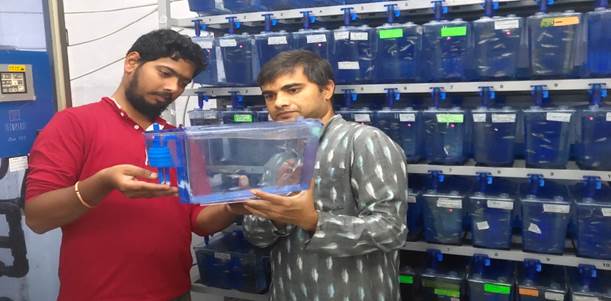
A study by Agharkar Research Institute (ARI), Pune, an autonomous institute of the Department of Science and Technology, discovered that a protein called Cellular communication network factor 2a (Ccn2a) secreted from intervertebral disc cells induces disc regeneration in aged degenerated discs by promoting cell proliferation and cell survival by modulating the pathway called the FGFR1-SHH (Fibroblast growth factor receptor-Sonic Hedgehog) pathway.
The study which used Zebrafish as a model organism is the first in vivo study showing that it is possible to induce disc regeneration in a degenerated disc by activating an endogenous signaling cascade. The scientists also found that the Ccn2a-FGFR1-SHH signaling cascade takes a positive role in disc maintenance and augmenting disc regeneration. The study published in the journal Development used genetic and biochemical approaches and is likely to help design a novel strategy to suppress disc degeneration or induce disc regeneration in degenerated human discs.
Publication