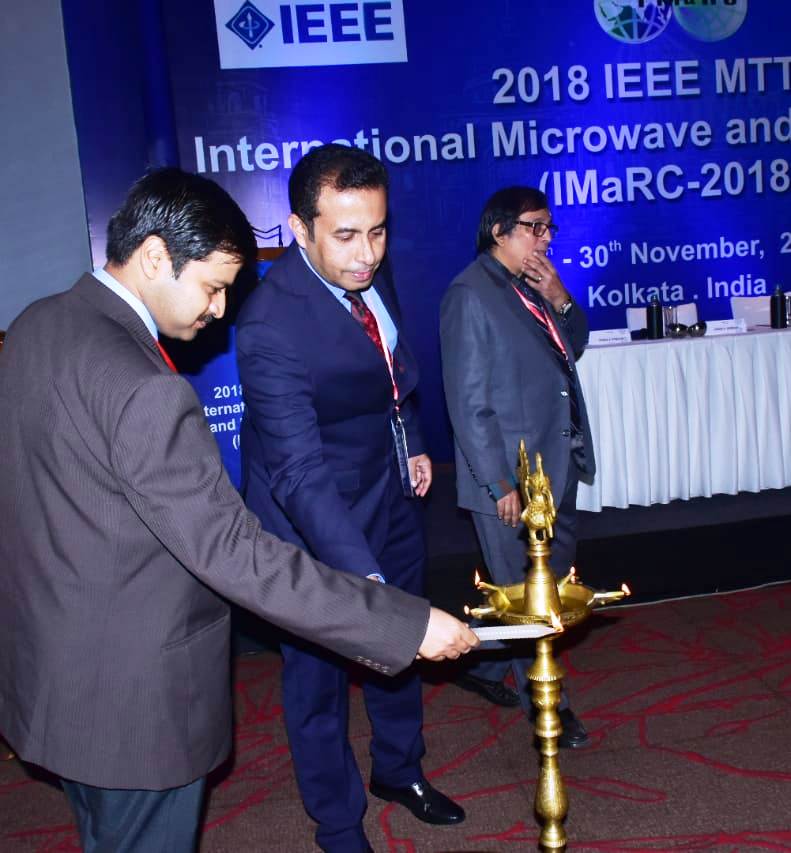
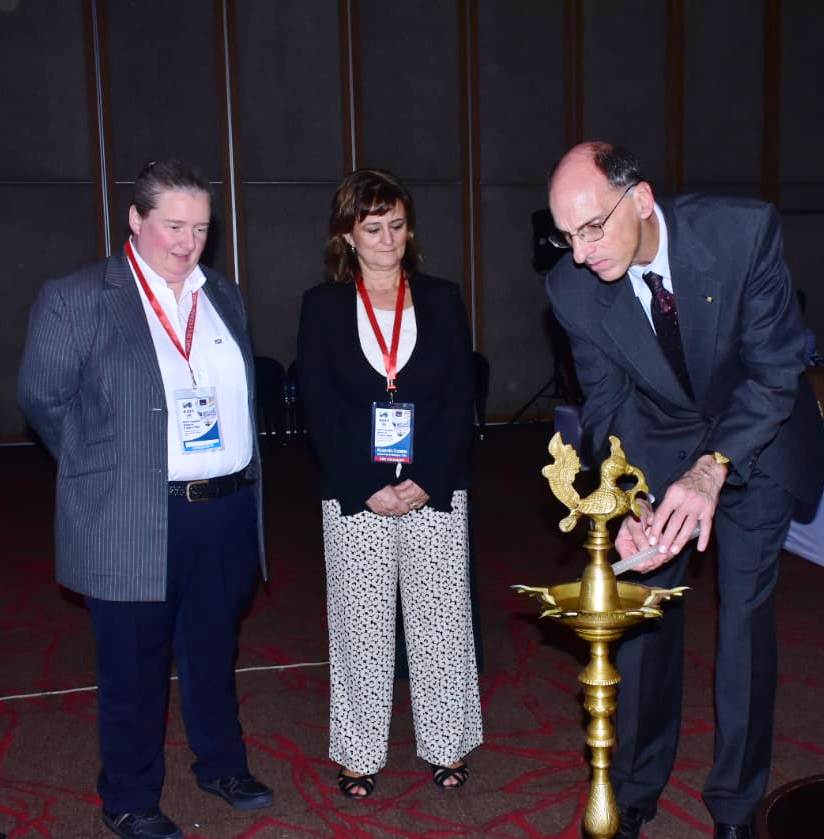
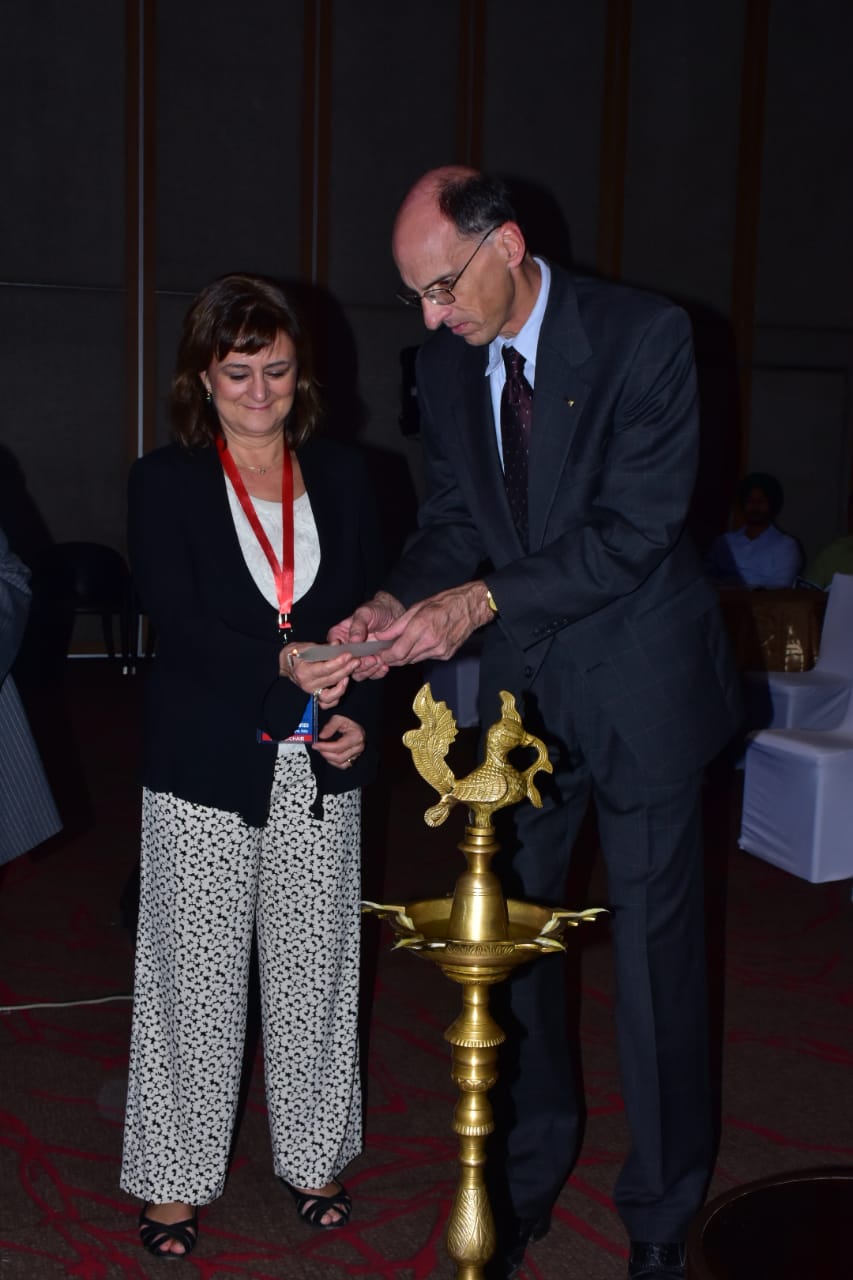
International Microwave and RF Conference (ImaRC) held at Kolkata
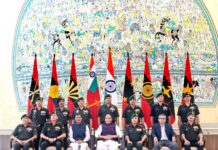
Under the aegis of IEEE Microwave theory and techniques Society ( MTT-S), International Microwave and RF Conference (ImaRC) was inaugurated at the Novotel Hotel in Kolkata recently. The 2 days conference is held annually to provide a platform for International community of micro wave engineers to present interact o their latest technological achievements in microwave and RF components, circuits, systems and modelling methods.
Led by George Panchak of NASA Glen Research Centre and Jawad Y Siddique, University of Calcutta with support of delegates from ISRO, IIT Kharapur, University of Jadavpur, Istanbul University, IIT Delhi, IIT, BHU, University of Bologna, Italy, IIT Guwahati, IIT Kanpur
The genesis of the IMaRC series of conferences can be traced back to the India Initiative adopted by the IEEE Microwave Theory and Techniques Society (MTT-S) in 2005, under the guidance of the President of the Society in 2005, Late Professor K. C. Gupta. This led to several MTT-S delegations visiting India in 2006, 2008, and 2009, including discussion with MTT-S membership in India, and participation in local conferences. These visits resulted in a number of accomplishments during 2008-2012, including the establishment of numerous new MTT-S chapters in IEEE India Section, a surge in the membership of the MTT-S in India, and the creation of a Sister-Society relationship with a technical society in India having similar field of interest (FOI). With that backdrop, one of the projects undertaken was to establish an annual conference in India within the FOI of the MTT-S. The IMaRC series of annual conferences is the result of that effort. Following were identified as the principal goals of the conference:
Providing the researchers in India the opportunity to present their results at a conference of the stature of a state-of-the-art international conference in the microwave field.
Creating a forum for the presentation of selective, high quality research work in India.
Helping develop the skills of local researchers at preparing their results for dissemination through international conferences and journals
The conference continues to enjoy its stature as the foremost conference in India in its FOI, and maintains its tradition of emphasis on high quality in paper selection presentation. IMaRC continues to draw premier research results and presenters from India and abroad, through several means:
It adheres to an international standards of peer-review, by inviting world-class researchers from around the world to serve on the paper review selection, with a majority of reviewers in a review panels drawn from outside India.
It is selective in its acceptance of papers for presentation, accepting only about two-thirds of the already self-selected submissions.
It facilitates the retrieval of presented research reports both through the IEEE Xplore data base, and by publishing an extended version of best of the submitted papers in a Special Issue of the IEEE Trans. Microwave Theory & Techniques.
It continues to be actively managed by the Meetings and Symposia Committee of the MTT-S, which appoints the conference Executive Committee and the annual Steering Committees, and designate MTT-S representatives serving as the Chairs of technical paper selection and managing committees of IMaRC.
The conference is accompanied with an exhibition that brings the latest developments in instrumentation, software, and turn-key systems to the attention of the attendees. There are also a number of concurrent activities to encourage the participation and training of students, and humanitarian applications of the RF and microwave technologies, and several IEEE MTT-S volunteer meetings are co-located with IMaRC functions.
International Microwave and RF Conference (ImaRC) held at KolkataInternational Microwave and RF Conference (ImaRC) held at KolkataInternational Microwave and RF Conference (ImaRC) held at Kolkata
The Co-Chairs in a joint statement said, In this sixth edtion of IMARC, we have invited everybody concerned with heartfelt warmth to the city of Kolkata. Kolkata is known as the city of joy. It is undoubtedly the scientific and literary capital of India, which proudly produced as many as five Nobel laureates. But what is not known to most of the scientists and technologists world over is the glorious role the city played in the history of communication engineering, especially in the field of microwaves. In fact, world’s first microwave and millimeter engineer, Sir J.C. Bose, performed his pioneering experiments here. A frequency as high as 60 GHz was chosen by him to demonstrate the optical properties of electromagnetic waves in late nineteenth century and thereby he established beyond any doubt the electromagnetic nature of light. Few decades earlier, Dr. W.B. O’Shaughnessy made epoch making contributions to telegraphy in this city only. Even today, it is the abode of many leading communication scientists of the country. It is only befitting that the next edition of IMARC be held here after successful completion of the earlier ones. In 2017, we had 13 invited and 113 contributed papers distributed between 10 workshops and Technical sessions, with the acceptance rate being around 40%.
Used to determine whether a user is included in an A / B or Multivariate test.
18 months
_ga
ID used to identify users
2 years
_gali
Used by Google Analytics to determine which links on a page are being clicked
30 seconds
_ga_
ID used to identify users
2 years
_gid
ID used to identify users for 24 hours after last activity
24 hours
_gat
Used to monitor number of Google Analytics server requests when using Google Tag Manager
1 minute
__utma
ID used to identify users and sessions
2 years after last activity
__utmt
Used to monitor number of Google Analytics server requests
10 minutes
__utmb
Used to distinguish new sessions and visits. This cookie is set when the GA.js javascript library is loaded and there is no existing __utmb cookie. The cookie is updated every time data is sent to the Google Analytics server.
30 minutes after last activity
__utmc
Used only with old Urchin versions of Google Analytics and not with GA.js. Was used to distinguish between new sessions and visits at the end of a session.
End of session (browser)
__utmz
Contains information about the traffic source or campaign that directed user to the website. The cookie is set when the GA.js javascript is loaded and updated when data is sent to the Google Anaytics server
6 months after last activity
__utmv
Contains custom information set by the web developer via the _setCustomVar method in Google Analytics. This cookie is updated every time new data is sent to the Google Analytics server.
2 years after last activity
_gac_
Contains information related to marketing campaigns of the user. These are shared with Google AdWords / Google Ads when the Google Ads and Google Analytics accounts are linked together.
90 days
Marketing cookies are used to follow visitors to websites. The intention is to show ads that are relevant and engaging to the individual user.
A video-sharing platform for users to upload, view, and share videos across various genres and topics.
This cookie stores your preferences and other information, in particular preferred language, how many search results you wish to be shown on your page, and whether or not you wish to have Google’s SafeSearch filter turned on.
10 years from set/ update
YSC
Registers a unique ID to keep statistics of what videos from YouTube the user has seen.
Session
DEVICE_INFO
Used to detect if the visitor has accepted the marketing category in the cookie banner. This cookie is necessary for GDPR-compliance of the website.
179 days
LOGIN_INFO
This cookie is used to play YouTube videos embedded on the website.
2 years
VISITOR_PRIVACY_METADATA
Youtube visitor privacy metadata cookie
180 days
GPS
Registers a unique ID on mobile devices to enable tracking based on geographical GPS location.
1 day
VISITOR_INFO1_LIVE
Tries to estimate the users' bandwidth on pages with integrated YouTube videos. Also used for marketing