












How Ujjwala Transformed Women’s Lives and India’s Kitchens
Pradhan Mantri Ujjwala Yojana: The Clean Energy Revolution That Transformed India’s Kitchens
Pradhan Mantri Ujjwala Yojana: From Smoke to Dignity for India’s Women
By Prof Jasim Mohammad
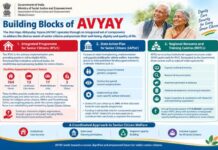
The Pradhan Mantri Ujjwala Yojana (PMUY) was launched by Prime Minister Shri Narendra Modi on May 1, 2016. It was actually a feminist movement aimed at improving women’s status, safeguarding health, and facilitating clean energy adoption in rural and tribal India. For generations, women in rural India and tribal areas have brought toxic fumes into their homes by spending many hours each day preparing meals over smoky chulhas. PMUY was a policy response to this silent suffering; the initiative aimed to replace hazardous traditional fuels with clean LPG connections for Below Poverty Line (BPL) households. PMUY was intended to equip women with dignity, safety, and a sense of contribution to India’s development.
Ujjwala’s design was innovative and inclusive. Initiated by the Ministry of Petroleum and Natural Gas, financial aid of ₹1,600 was available for every LPG connection, which could be used to cover the costs of the cylinder, pressure regulator, safety hose, and inspection. The unique element of the scheme was that the connection had to be issued in the name of an adult woman in the household, acknowledging her as the designated decision-maker and beneficiary of the connection. This gendered targeting made Ujjwala a measure of potential empowerment of women, including women within the energy landscape of transitioning India. The scheme was administered through Oil Marketing Companies (OMCs) using Aadhaar and Jan Dhan bank accounts to maintain transparency through direct benefit transfers.
Before Ujjwala, the energy landscape of India was riddled with deep inequality. Approximately three-fourths of rural households, based on Census 2011, relied on solid fuels–firewood, dung cakes, crop residue–for cooking. The WHO had long warned that more than 4 lakh premature deaths among, mainly, women and children were caused by household air pollution due to these fuels. Using firewood was detrimental to health and robbed women of time and opportunity. The hours seekers spent collecting wood daily were hours users did not allocate toward education, creating income, and resting. Ujjwala was therefore much more than energy; it was about justice, equity, and a reclaiming of time for millions of women.
Ujjwala’s health-related aspects have been among the most transformational outcomes. Utilizing LPG in the kitchen eliminates exposure to fine particulate matter (PM2.5), as well as carbon monoxide—both considered key pollutants that cause chronic respiratory disease, eye ailments, and cardiovascular conditions. Studies by both TERI and the Council on Energy, Environment and Water have documented improved household air quality and reduced respiratory diseases amongst Ujjwala beneficiaries. For rural women who spent years cooking in smokey kitchens, this was a life-changing improvement—no longer coughing or having sore eyes, but breathing freely in their cleaned homes.
Moreover, Ujjwala has shown that economic and social ripples are equally as impactful. In many villages, women no longer spend three to five hours per day gathering firewood. Time saved equals more opportunity, which equals empowerment. Women are more engaged in household decision-making and more engaged in local economic activities.
For women in rural India, the LPG cylinder became a signifier of modernity and of liberation from drudgery.
Ujjwala has provided an intangible, yet potent, transformation; namely, dignity. In a country where poverty can be ultimately mapped on to the built environment–specifically, the home and kitchen–the gas stove came to represent progress. Women took great pride in their connection cards for the LPG, which they logistically displayed everywhere, because it was proof that they had become a part of India’s growth story. The scheme made kitchens sites of dignity rather than toil and gave women, for the first time, a sense of being seen and valued by the state.
The environmental dividends of Ujjwala have also been astounding. By transitioning away from traditional biomass and utilizing LPG, deforestation is reduced, black carbon emissions are decreased, and local air quality is improved–changes which align with India’s climate commitments outlined in the Paris Agreement. According to government estimates the scheme has mitigated millions of tonnes of carbon dioxide emissions annually. Thus, in addition to a program intended to alleviate the daily burdens of women, it has inadvertently become a silent ally in climate action across the globe. What makes Ujjwala exceptional, in comparison to other welfare programs, is its unmatched scale and pace. Within a span of three years, the scheme not only achieved its extraordinarily ambitious objective of 8 crore LPG connections, but also completed what has been recognized as a logistical accomplishment unprecedented in India’s welfare history. Aadhaar-facilitated verification, digital payments and the Direct Benefit Transfer (DBT) mechanism helped ensure the implementation was efficient and largely free from corruption. Ujjwala became emblematic of the Modi government’s aims of *Sabka Saath, Sabka Vikas*, showing that social inclusion and proper governance were entirely possible.
The entire DBT system was a key to the success of the Ujjwala program. Women received subsidies directly to their bank accounts, cutting out middlemen and increasing financial inclusion. The digital payment infrastructure, called the JAM trinity (Jan Dhan, Aadhaar, Mobile), added another layer of transparency while directly advancing women’s empowerment. It also served as a small step toward re-establishing trust between citizens and the government.
Despite its successes, the Ujjwala program still faces real obstacles. The price of filling-up a cylinder remains a deterrent for many low-income families, especially when global prices of LPG increase. As a result, we find that a significant share of Ujjwala beneficiaries continue to use a combination of LPG and traditional fuels, a practice called “fuel stacking.” This compromises the health and environmental advantages of the program. In an effort to address this, the government provided a subsidy for refueling and facilitated a new generation of the program called *Ujjwala 2.0* that provides the first refill at no cost, with the hope that a free refill will encourage sustained use.
Behavior is also still a factor. In some villages, preference for cooking on wood fires and associated cultural norms still persist. Many rural households feel that the food cooks better with wood fires, or that firewood cooking is cheaper than LPG. In addition, for many women collecting firewood is often a social activity. Therefore, in part because of these entrenched habits, the government and the oil companies began awareness campaigns with a particular emphasis on “Ujjwala Didis” and local influencers. Changing behavior is a slow process involving sustained social engagement and behavior change, and not just a subsidy.
The economic ripple effects of Ujjwala have also been significant. LPG networks have expanded rapidly, leading to job creation—from making cylinders to producing and delivering cylinders and distributing cylinders through retailers. The rural economy has developed with thousands of dealerships and service points, often run by the local youth or women entrepreneurs. Thus, Ujjwala has evolved from a simple social welfare program to an economic catalyst for local markets and infrastructure in various communities.
More broadly, Ujjwala signifies a normative shift in India’s welfare philosophy—from entitlement to empowerment. Instead of relying on blanket subsidy programs, it believed in providing targeted, measurable interventions that would have a direct impact on people’s daily lives. Ujjwala demonstrated how welfare programs could align with dignity and replace dependency with self-reliance. Ujjwala has inspired subsequent initiatives such as *Saubhagya* to provide access to electricity and *Jal Jeevan Mission* to provide safe drinking water, which offer a similarly inclusive model as Ujjwala.
Through the 2021 rollout of Ujjwala 2.0, the government opened the scheme to migrant workers and urban poor, many of whom did not have a permanent address / permanent residence, and may not have documentation. The new scheme provisions of self-declared residency requirements rather than proof of address made the scheme flexible and responsive to the needs of mobile people. The change from Ujjwala to Ujjwala 2.0 exhibited a greater degree of maturity within the welfare model—a model that learns, accommodates, and adapts to improve outcomes.
Politically, Ujjwala became one of the most visible and emotionally charged symbols of the welfare governance of the Modi government. In numerous villages, the arrival of a gas cylinder was thought of as a direct consideration of the Prime Minister. The pictorial representation of a woman proudly standing beside the new LPG connection became synonymous with Modi’s pledge to ensure development reached the last mile (i.e., any area that wasn’t served, regardless of location). The political success of Ujjwala translated into growing political engagement of women voters in the electoral arena demonstrating that effective governance can change political engagement.
On a global scale, Ujjwala has been recognized as a pioneering policy that agrees with multiple UN Sustainable Development Goals—especially those related to health, gender equality, clean energy, and climate action. International organizations, such as the World Bank and the International Energy Agency, have acknowledged Ujjwala as one of the most successful clean cooking programs in the developing world. Through Ujjwala, India showed that energy transitions on a massive scale can happen in a developing economy while maintaining social justice.
The governance architecture behind Ujjwala is equally notable, as the Socio-Economic Caste Census (SECC) database, real-time dashboards, and online monitoring helped make it one of India’s premier transparent welfare schemes. Each gas connection was traceable from registration to delivery, with leakage reduced drastically and accountability assured. It demonstrated how technology can optimize programs while improving efficiency and equity in public policy.
Real stories of change lie behind these numbers. Women in Jharkhand say they can now cook without coughing; girls in Uttar Pradesh are attending school rather than foraging for firewood; and families in Rajasthan are publicly displaying their LPG gas cylinders as indicators of progress. These many instances exemplify a shift from enduring to exercising agency, and from surviving to dignified living.
As the scheme moves into its second decade, the agenda must move from access to continued use. Affordability, stable LPG prices, and use of alternative clean fuels such as biogas and electric cookers in place of firewood may help entrench the initiative further.Collaboration with local self-help groups and panchayats can sustain awareness and behavior change over time.
(Author is Professor in Comparative Literature and Chairman Centre for NaMo Studies www.namostudies.com Email: modistudies@gmail.com)
Professor (Dr.) Jasim Mohammad
Managing TrusteeCentre for NaMo Studies (CNMS), Bharat{ A global Centre for Research & Development} www.namostudies.com Email: modistudies@gmail.com
Former Head & Group Editor, Roznama Rashtriya Sahara
(National Urdu Daily) & Aalami Sahara TV at Sahara News Network
Donor & former Media Advisor, Aligarh Muslim University (AMU