














Vyana Geo-Economic Forum Launches National Strategic Dialogue on Security and Economic Resilience
Military Commanders, Economists and Strategic Experts Call for Integrated National Security Framework at Kolkata Seminar
By Suman Munshi | IBG NEWS
Kolkata, July 19: In an era marked by geopolitical uncertainty, technological disruption, supply-chain vulnerabilities and evolving warfare, India’s national security can no longer be viewed solely through the lens of military preparedness. It must also encompass economic resilience, industrial capability, technological self-reliance and strategic policymaking.
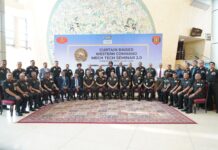
Against this backdrop, the Vyana Geo-Economic Forum (VGEF) formally launched its national policy platform by hosting its inaugural seminar titled “National Security and Economic Resilience: India’s Strategic Imperatives in the Emerging Global Order” at Kolkata on July 18,2026. The seminar brought together some of India’s most distinguished retired military commanders, economists, defence experts, capital market professionals, and strategic thinkers for an extensive exchange of ideas on India’s preparedness for future challenges.
The event witnessed an impressive gathering of senior serving officers from the Eastern Command, veterans, business leaders, policymakers, academics, and members of civil society. Chief among the dignitaries was Lt Gen Gambhir Singh, Chief of Staff, Headquarters Eastern Command, whose presence underscored the growing relevance of integrating economic policy with national security planning.
A New Strategic Think Tank for a Changing World
The seminar also marked the formal launch of the Vyana Geo-Economic Forum, an independent policy platform dedicated to promoting informed discussions on geopolitics, geo-economics, national security and strategic policy.
The Forum has been established under the chairmanship of Lt Gen Tarun Kumar Aich (Retd), with Abhenav Khettry serving as its Founding Director.
Speaking during the inaugural session, Lt Gen Tarun Kumar Aich (Retd) stressed that military power and economic strength are inseparable pillars of national resilience.
“National security and economic strength are deeply interconnected and cannot be viewed in isolation. The objective of this forum is to bring together experts from defence and economics to identify practical pathways for strengthening India’s strategic resilience.”
He described the enthusiastic participation of military leaders, economists and industry experts as a strong beginning for what VGEF hopes will become a continuing national dialogue on India’s strategic future.
Event Proceedings
According to the official programme, the seminar commenced with registration, followed by welcome and opening addresses before progressing through three thematic sessions interspersed with interactive question-and-answer discussions.
Session I
India’s Defence Preparedness & Strategic Deterrence in the Emerging World Order
Moderator
- Lt Gen Raj Shukla (Retd)
Panelists
- Lt Gen Subrata Saha (Retd)
- Lt Gen Dushyant Singh (Retd)
- Air Marshal Nagesh Kapoor (Retd)
The panel examined:
- India’s changing strategic environment
- Lessons emerging from recent military operations including Operation Sindoor
- National security calculus
- Defence modernisation
- Strategic deterrence
- Atmanirbhar Bharat in defence manufacturing
- Emerging technologies transforming future warfare
The speakers emphasised that India’s future security architecture must combine military modernisation with indigenous defence production, technological innovation and continuous capability enhancement to maintain credible deterrence.
Session II
Economic Security as National Security
Moderated by Karan Datta, the second session shifted attention towards the economic foundations of national power.
Panelists included:
- Dr Ajit Ranade
- Sugata Ghosh Dastidar (IDAS)
- Siddharth Srivastava (Noted Fund Manager)
Discussions revolved around:
- India’s geo-economic challenges
- Supply-chain resilience
- Strategic industries
- Defence expenditure
- Technological competitiveness
- Defence exports
- Opportunities for private industry participation
Experts argued that future conflicts may be won as much through resilient industrial ecosystems, technological leadership and financial stability as through military capability. They highlighted India’s expanding defence manufacturing sector as a major contributor to long-term economic security.
Session III
Fireside Conversation
One of the day’s highlights was an engaging fireside conversation between:
- General Manoj Pande (Retd), former Chief of Army Staff
- Sweta Singh, Senior Media Personality
The discussion focused on:
- Multi-domain warfare
- Emerging global security threats
- Theatre commands
- Military leadership
- Strategic reforms
- Future operational preparedness
General Pande underscored the need for institutional reforms, jointness among the armed forces and preparedness for technology-driven conflicts where cyber, information, space and artificial intelligence will increasingly shape battlefield outcomes.
Key Recommendations
The seminar concluded with a broad strategic framework aimed at strengthening India’s long-term resilience.
Major recommendations included:
- Enhancing national deterrence capability
- Building resilient supply chains
- Protecting critical infrastructure
- Strengthening energy security
- Expanding government-industry collaboration
- Improving preparedness for multi-domain warfare
- Increasing India’s competitiveness in the evolving global order
Participants broadly agreed that India’s journey toward becoming a developed nation requires the simultaneous strengthening of economic institutions, defence capability, industrial competitiveness and technological leadership.
Beyond Traditional Security
A recurring theme throughout the seminar was the recognition that modern warfare increasingly extends beyond conventional battlefields.
Experts observed that cyber attacks, economic coercion, technology denial, supply-chain disruptions, misinformation campaigns and financial vulnerabilities now represent critical components of national security.
India’s response, they argued, must therefore integrate defence planning with economic policymaking, industrial strategy and innovation ecosystems.
Strategic Importance for Eastern India
Hosting the inaugural seminar in Kolkata carries considerable symbolic and strategic importance.
Eastern India has become increasingly significant within India’s Act East policy, Indo-Pacific strategy, logistics corridors and regional economic integration. With the Eastern Command headquartered in Kolkata and the region serving as a gateway to South and Southeast Asia, the city offers an appropriate setting for conversations linking defence, diplomacy and economic development. (The Indian Express)
Looking Ahead
The Vyana Geo-Economic Forum announced that this seminar marks only the beginning of a continuing series of strategic engagements. The Forum intends to regularly convene experts from defence, academia, industry, economics and policymaking to develop evidence-based recommendations addressing India’s evolving geopolitical and geo-economic challenges.
Its long-term objective is to contribute meaningfully to national policy discourse while supporting India’s aspiration to emerge as a resilient, secure and globally influential nation.
IBG NEWS Analysis
The VGEF inaugural seminar reflects an important evolution in India’s strategic thinking. Rather than treating defence, economy and technology as separate domains, the discussions recognised them as mutually reinforcing pillars of national power. As global competition increasingly spans military capability, semiconductor manufacturing, critical minerals, artificial intelligence, cyber resilience, and secure supply chains, forums such as VGEF could provide valuable platforms for shaping policy through interdisciplinary dialogue.
For a nation pursuing the vision of Viksit Bharat 2047, integrating strategic deterrence with economic resilience may become one of the defining policy imperatives of the coming decades.