















India Disconnects Over 88 Lakh Fraudulent Mobile Connections in Major Crackdown on Cyber Frauds
By Suman Munshi
IBG NEWS
New Delhi, July 23, 2026: The Government of India has significantly intensified its fight against cyber fraud and telecom-related financial crimes by leveraging artificial intelligence, big data analytics and citizen participation. The Department of Telecommunications (DoT) has taken decisive action against fraudulent mobile connections while strengthening collaboration with regulatory agencies and law enforcement bodies.
According to information presented in the Rajya Sabha by Union Minister of State for Communications and Rural Development Dr. Chandra Sekhar Pemmasani, the DoT has adopted multiple technology-driven initiatives to identify and eliminate telecom resources being misused for cybercrime.
AI-Based System Detects Suspicious Mobile Connections
One of the government’s flagship initiatives is the Artificial Intelligence and Big Data Analytics Tool (ASTR), developed by the Department of Telecommunications to identify suspicious or fraudulently obtained mobile connections.
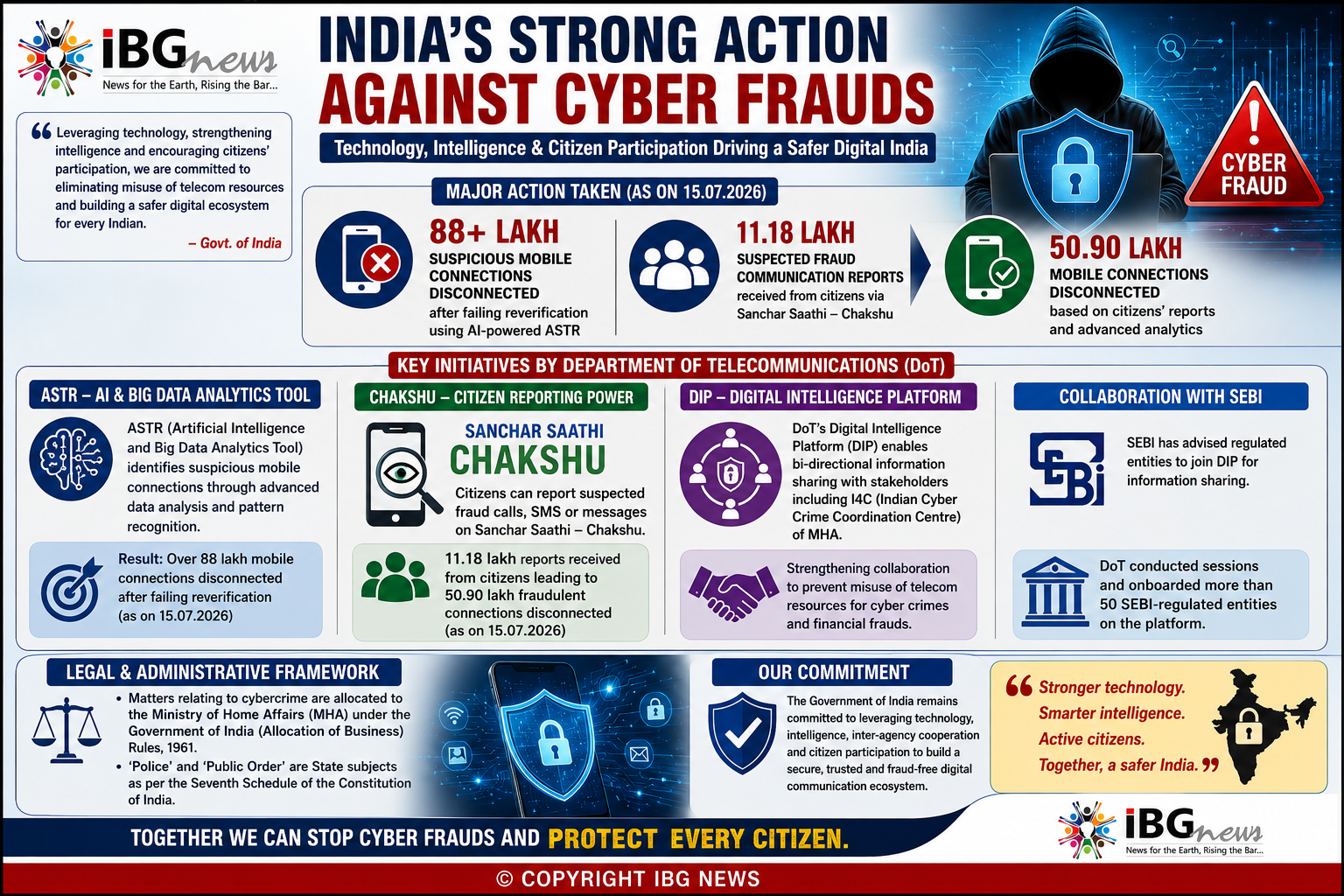
Following extensive verification and re-verification drives, more than 88 lakh mobile connections had been disconnected as of July 15, 2026, after subscribers failed the mandatory re-verification process. The move is aimed at preventing the misuse of telecom services for cyber frauds, identity theft and financial scams.
Officials believe that eliminating fake or improperly verified mobile numbers is a crucial step in disrupting criminal networks that rely on anonymous telecom connections.
Citizens Playing a Key Role Through ‘Chakshu’
The government has also encouraged public participation through the Chakshu facility available on the Sanchar Saathi portal.
The platform allows citizens to report suspected fraudulent calls, SMS messages and other suspicious communications. Instead of acting only on individual complaints, the DoT analyses the collective data received from the public to identify larger fraud patterns and organised misuse of telecom infrastructure.
As of July 15, 2026, citizens had submitted 11.18 lakh reports of suspected fraud communications through Chakshu. Based on these reports and subsequent analysis, the Department disconnected 50.90 lakh additional mobile connections found to be linked to fraudulent activities.
Officials said the crowdsourced intelligence has become a valuable resource in identifying cyber fraud networks operating across different regions of the country.
Digital Intelligence Platform Strengthens Coordination
Recognising that cybercrime investigations involve multiple agencies, the Department of Telecommunications has also developed the Digital Intelligence Platform (DIP) to facilitate real-time information sharing among stakeholders.
The platform enables two-way exchange of intelligence between telecom service providers, government departments and enforcement agencies, including the Indian Cyber Crime Coordination Centre (I4C) under the Ministry of Home Affairs.
The initiative is intended to improve coordination in detecting and preventing cyber-enabled financial crimes and misuse of telecom resources.
SEBI-Regulated Entities Join the Initiative
To further strengthen the cyber security ecosystem, the Securities and Exchange Board of India (SEBI) has advised entities regulated by it to join the Digital Intelligence Platform.
The Department of Telecommunications has conducted awareness and training sessions for financial institutions and market intermediaries. As a result, more than 50 SEBI-regulated entities have already been onboarded onto the platform for secure information sharing and faster response to emerging cyber threats.
The collaboration is expected to enhance the protection of investors and reduce the risk of financial frauds involving telecom-based cybercrime.
Centre and States Share Responsibility
The government clarified that under the Government of India (Allocation of Business) Rules, 1961, matters relating to cybercrime fall under the jurisdiction of the Ministry of Home Affairs (MHA). At the same time, Police and Public Order remain State subjects under the Seventh Schedule of the Constitution.
However, through technological initiatives such as ASTR, Chakshu and the Digital Intelligence Platform, the Department of Telecommunications continues to play a critical role in preventing the misuse of telecom infrastructure and supporting coordinated action against cyber fraud across the country.
The government reiterated its commitment to strengthening India’s digital ecosystem by combining advanced technology, inter-agency cooperation and citizen participation to make communication networks safer and more secure.

