













WHO Places Health at the Heart of Climate Action as COP31 Opens with Dedicated Health Day
Antalya, November 9, 2026: The World Health Organization (WHO) has called for stronger global action to address the growing health consequences of climate change as the 31st Conference of the Parties (COP31) to the United Nations Framework Convention on Climate Change (UNFCCC) begins its health-focused programme in Antalya, Türkiye.
The opening Health Day, jointly developed by the COP31 Presidency and WHO, brings together government ministers, national delegations, technical specialists and civil society representatives to explore the links between climate change, environmental degradation, air pollution, energy and public health.
The initiative marks the beginning of two weeks of discussions aimed at ensuring that public health considerations receive greater attention in international climate policies, financing and implementation strategies.
WHO Calls for Action Beyond Climate Commitments
The programme features four high-level panel discussions and a ministerial roundtable, with particular emphasis on developing resilient, sustainable and responsive healthcare systems capable of withstanding climate-related challenges.
According to WHO’s 2025 Health and Climate Change Global Survey, countries have access to substantial scientific knowledge and practical solutions for addressing climate-related health risks. However, translating this knowledge into effective programmes remains a challenge, particularly because of inadequate implementation and financing.
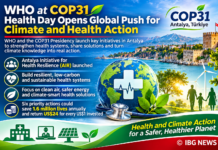
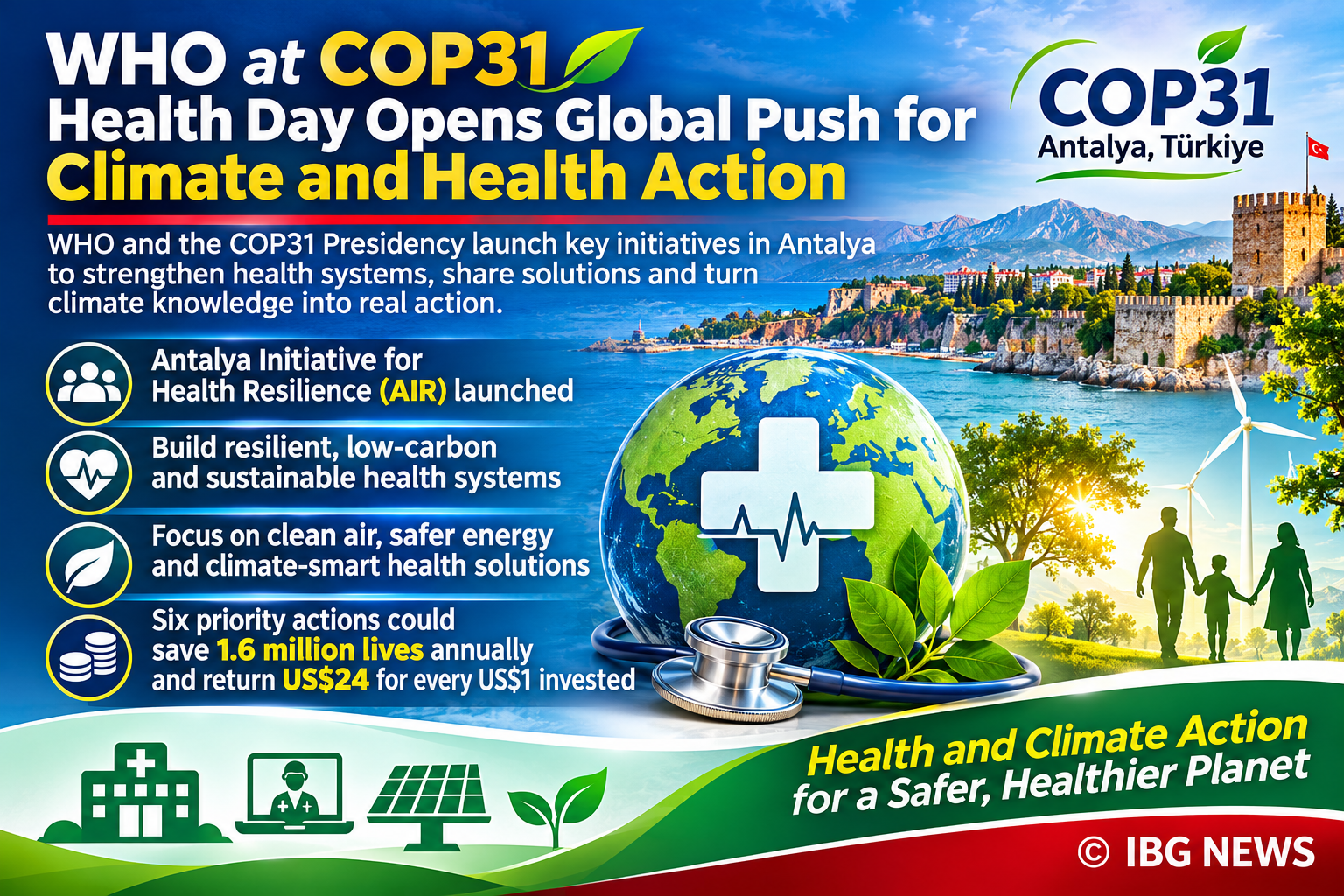
To address this gap, the COP31 Presidency has introduced the Antalya Initiative for Health Resilience (AIR), a voluntary international initiative designed to facilitate knowledge-sharing, exchange of successful practices and the development of practical policy measures.
Dr Diarmid Campbell Lendrum, Head of WHO’s Climate Change, Energy and Air Quality Unit, emphasised that public health provides a compelling reason for accelerating climate action. He highlighted the importance of moving beyond scientific understanding towards practical implementation, supported by adequate financial resources and political commitment.
Climate Change Is Increasing Global Health Risks
WHO has reiterated that climate change is no longer exclusively an environmental concern but an increasingly serious public health emergency.
Its key messages at COP31 focus on three priorities: recognising the existing health consequences of climate change, strengthening healthcare systems against climate-related threats, and placing health benefits at the centre of climate mitigation and adaptation policies.
The scale of the challenge is significant:
- Approximately 3.5 billion people live in areas or circumstances highly vulnerable to climate change.
- More than 90% of deaths associated with climate-related disasters over the past two decades occurred in developing countries.
- Air pollution, including pollution caused by fossil fuel combustion, contributes to approximately 7 million deaths globally every year.
The burden is particularly severe in small island developing states, water-stressed regions, coastal communities, conflict-affected areas and agricultural populations.
Pregnant and breastfeeding women, newborns, children, older persons, Indigenous communities and outdoor workers are among the groups facing disproportionate risks.
COP31 Health Day Focuses on Resilient Healthcare
Health has been identified as Priority Theme 8 under the COP31 Presidency’s Action Agenda, with a particular focus on dynamic and resilient health systems.
The Health Day programme addresses several interconnected areas, including:
- Building climate-resilient healthcare infrastructure.
- Using digital health technologies to support climate action.
- Developing climate-sensitive medical technologies.
- Strengthening humanitarian responses to climate emergencies.
- Improving financing mechanisms for climate-related health programmes.
On November 10, the WHO-supported Alliance for Transformative Action on Climate and Health (ATACH) will organise a dedicated day of activities at the COP31 Health Pavilion.
The initiative will encourage participating countries to advance the implementation of the Belém Health Action Plan, adopted at COP30, and renew, report and strengthen their commitments through ATACH.
Antalya Initiative Seeks to Turn Scientific Knowledge into Results
The newly launched Antalya Initiative for Health Resilience (AIR) is intended to help countries learn from practical experiences and successful health-resilience programmes implemented elsewhere.
Rather than creating another binding international agreement, AIR operates as a voluntary and non-binding knowledge-sharing platform. It will facilitate the exchange of case studies, peer learning, technical experiences and policy recommendations, with ATACH supporting the continuation of these activities beyond COP31.
WHO has also highlighted the economic advantages of investing in climate-related health interventions.
In a technical analysis published on November 4, 2026, the organisation reported that implementing six prioritised climate and health interventions could potentially prevent 1.6 million deaths annually and generate an estimated return of US$24 for every US$1 invested.
WHO is urging governments and international financial institutions to recognise health as an explicit eligible area for climate financing. It has also called for closer coordination among ministries responsible for health, finance, environment and energy to ensure that climate-related health risks are reflected in national budgets and climate policies.
Another important area of attention is reducing black carbon emissions. This short-lived climate pollutant contributes to air pollution and near-term global warming. WHO plans to present an advance preview of its forthcoming report on the health impacts of black carbon during COP31.
Health Must Become a Central Element of Climate Negotiations
As COP31 progresses, WHO intends to participate in all 12 thematic days of the conference through the Health Pavilion, technical discussions, high-level meetings and collaborative programmes with international partners.
The organisation’s broader objective is to ensure that health considerations are incorporated into national climate planning, international negotiations and climate financing decisions.
The success of COP31’s health agenda will ultimately depend on whether countries translate earlier commitments into measurable outcomes, strengthen healthcare resilience and allocate sufficient resources to protect vulnerable populations.
Through the Antalya Initiative for Health Resilience and ATACH, WHO hopes to create a stronger framework for international cooperation, helping countries move from climate-health commitments towards tangible improvements in public health.
The message emerging from Health Day is clear: protecting the planet and protecting human health are inseparable objectives, and climate action must increasingly be measured by its benefits for people’s lives and well-being.
Source: World Health Organization (WHO), Departmental Update, November 6, 2026.
By Antara Tripathy
Editor, IBG NEWS

