















Traditional Crafts of Northeast India Take Centre Stage at IGNCA Exhibition
Shri Chanchal Kumar Stresses Preservation of Indigenous Craft Traditions as Pillar of India’s Cultural Heritage
By Antara Tripathy | IBG NEWS
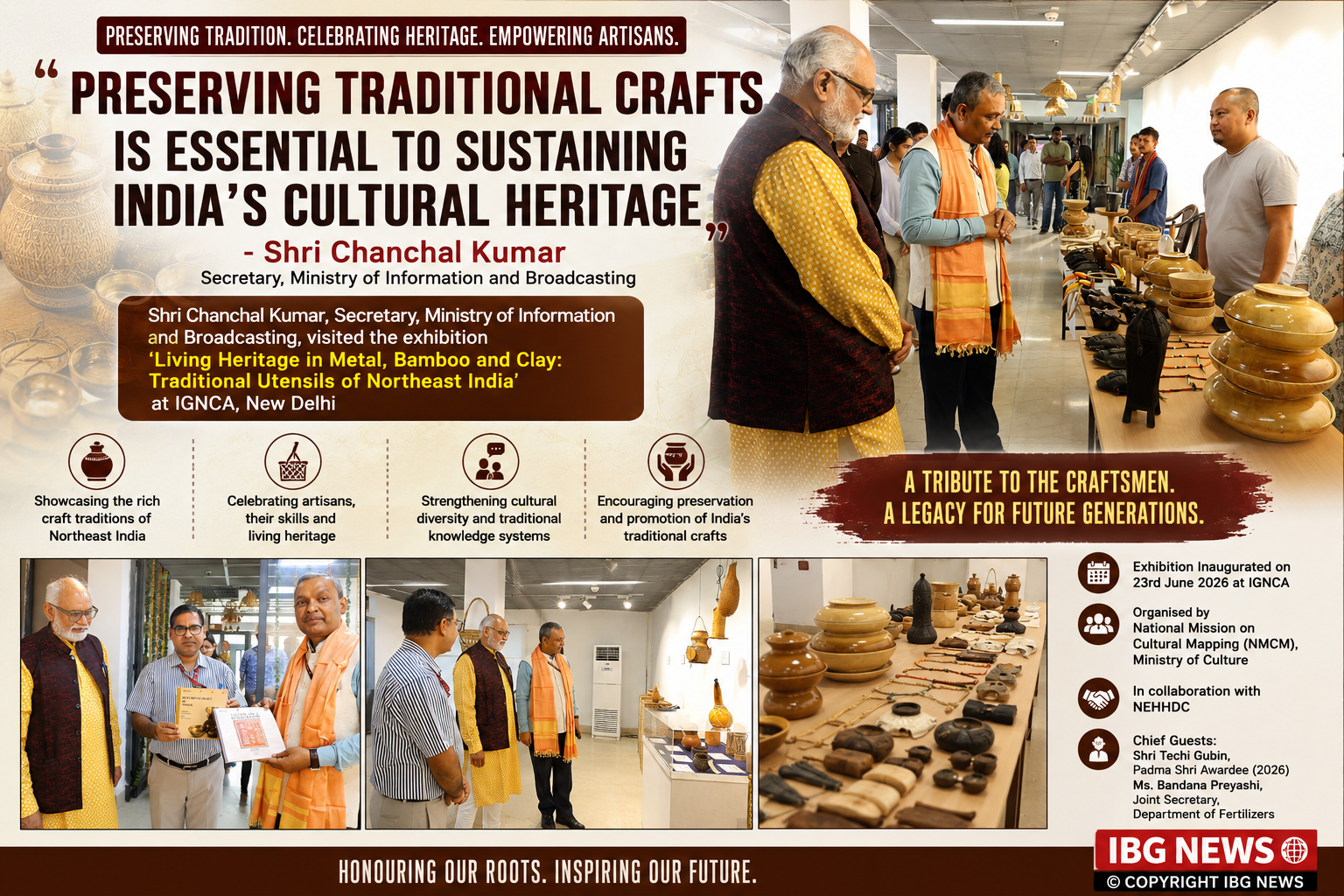
New Delhi, July 2, 2026: Highlighting the importance of safeguarding India’s rich artistic legacy, Shri Chanchal Kumar, Secretary, Ministry of Information and Broadcasting, emphasised that preserving traditional crafts is vital to sustaining the country’s diverse cultural heritage. He made these remarks during his visit to the exhibition “Living Heritage in Metal, Bamboo and Clay: Traditional Utensils of Northeast India” at the Indira Gandhi National Centre for the Arts (IGNCA) in New Delhi.
The exhibition, organised by the National Mission on Cultural Mapping (NMCM) under the Ministry of Culture in collaboration with the North Eastern Handicrafts and Handlooms Development Corporation Limited (NEHHDC), celebrates the rich craftsmanship, folk traditions, and cultural identity of India’s Northeastern states through an exceptional display of handcrafted utensils made from metal, bamboo, clay, and wood.
Celebrating the Cultural Wealth of the Northeast
Inspired by Prime Minister Narendra Modi’s vision of the Northeast as “Ashtalakshmi,” the exhibition showcases the region’s remarkable cultural diversity, traditional knowledge systems, and artisanal excellence.
During his visit, Shri Kumar was welcomed by Dr. Sachchidanand Joshi, Member Secretary, IGNCA, who guided him through the exhibition. Dr. Mayank Shekhar, Mission Director of NMCM, along with the Mission’s research team, was also present.
Exploring the galleries, Shri Kumar appreciated the carefully curated collection, which includes the renowned Longpi black pottery of Manipur, Larnai pottery of Meghalaya, Assam’s traditional bell-metal craftsmanship, and an impressive range of bamboo basketry and wooden artefacts representing different communities across the Northeast.
Interaction with Master Artisans
A key highlight of the visit was Shri Kumar’s interaction with participating artisans, who demonstrated centuries-old crafting techniques through live workshops. He praised their dedication to preserving traditional skills that have been passed down through generations and acknowledged their contribution to safeguarding India’s intangible cultural heritage.
Having previously served as Secretary of the Ministry of Development of North Eastern Region (DoNER), Shri Kumar described the exhibition as an important platform for showcasing the region’s rich artistic traditions before a wider audience.
He observed that every handcrafted object reflects the history, identity, and ecological wisdom of the communities that created it, making such exhibitions invaluable in promoting India’s cultural diversity.
Showcasing Living Heritage
The exhibition highlights how traditional utensils crafted from locally available materials such as metal, bamboo, clay, and wood continue to represent the close relationship between nature, community life, and indigenous knowledge systems across the Northeastern states.
Beyond their functional value, these artefacts illustrate sustainable lifestyles, regional craftsmanship, and centuries-old cultural practices that remain relevant in contemporary society.
Encouraging Continued Cultural Preservation
Commending the efforts of the National Mission on Cultural Mapping, Shri Kumar encouraged the organisation to continue documenting, preserving, and promoting India’s living cultural heritage through similar initiatives.
He noted that traditional crafts not only preserve India’s cultural identity but also create livelihood opportunities for artisans while inspiring younger generations to value indigenous knowledge and craftsmanship.
About the Exhibition
The exhibition was inaugurated on June 23, 2026, at IGNCA in the presence of Shri Techi Gubin, eminent social worker and Padma Shri Awardee (2026), and Ms. Bandana Preyashi, Joint Secretary, Department of Fertilizers.
By bringing together traditional utensils crafted in metal, bamboo, clay, and wood, the exhibition offers visitors a unique opportunity to explore the vibrant cultural heritage of Northeast India while recognising the enduring legacy of its artisan communities.
The exhibition continues to serve as a significant platform for promoting India’s traditional crafts and reinforcing the importance of preserving the nation’s diverse cultural traditions for future generations.

