









“A solution must be found to break free from colonial influence”. Shri Rambahdur Rai
· Conclusion of the three-day seminar on the transformation of Sanskrit libraries.
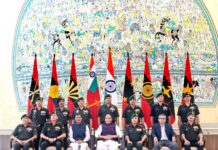
28th March, New Delhi: Under the aegis of the Indira Gandhi National Centre for the Arts (IGNCA) and the Central Sanskrit University, the three-day seminar on ‘Transformation of Sanskrit Libraries in the Context of the National Education Policy 2020 for a Developed India @2047’ concluded on 28 March with thought-provoking discussions. The seminar aimed to promote the digitisation, preservation, and integration of modern research methodologies in Sanskrit libraries. The chief guest of the valedictory session was Shri Rambahadur Rai, Chairman of IGNCA, while the guest of honour was Prof. Shriprakash Singh, Director of the South Campus, University of Delhi. The session was presided over by Dr. Sachchidanand Joshi, Member Secretary of IGNCA. On this occasion, Prof. (Dr.) Ramesh Chandra Gaur, Dean (Administration) and Director & Head of Kala Nidhi at IGNCA, Prof. R.G. Murali Krishna, Registrar of the National Sanskrit University, and Dr. P.M. Gupta, University Librarian, was also present.
Delivering the valedictory address, Shri Rambahadur Rai asserted the profound role of Sanskrit as the fountainhead of the Indian knowledge system. Expressing concern over the state of Sanskrit libraries, he observed that their maintenance lacks a scientific approach. In this context, he cited an incident from Sampurnanand Sanskrit University, Varanasi, to illustrate the challenges faced in their preservation. He further pointed out the inadequate arrangements for safeguarding Sanskrit manuscripts and warned against their misuse.


Quoting the eminent philosopher J. Krishnamurti, Shri Rai posed a thought-provoking question-are we truly conscious of our intellectual heritage? He identified three critical challenges: first, the preservation of this heritage; second, fostering awareness of its significance; and third, devising strategies to free library classification systems from the lingering influence of Western and colonial frameworks.
Dr. Sachchidanand Joshi, Member Secretary of IGNCA, in his address, spoke about the role of librarians and stated that the transformation of Sanskrit libraries will only be possible when librarians themselves undergo transformation. He emphasised that readers will visit libraries only when they find a welcoming and engaging environment. Highlighting the significant responsibility of librarians, Dr. Joshi asserted that if the resolve is firm and unwavering, no obstacle can hinder progress.
The Director of the South Campus, University of Delhi, Prof. Shriprakash Singh, stated that Sanskrit is the carrier of our culture. He also mentioned that our history is filled with invaders who sought to destroy the elements that uphold our cultural heritage. He discussed the reasons behind the decline of the Sanskrit language and highlighted that Babasaheb Bhimrao Ambedkar had advocated for the establishment of a Sanskrit Commission, but it could not materialise.
While addressing the gathering, Prof. (Dr.) Ramesh C. Gaur, Dean (Administration) and Director & Head of Kala Nidhi division at IGNCA, stated that this seminar is unique in many ways. It has been organised to deliberate on the current state of Sanskrit libraries. He emphasised the need for National Sanskrit Consortia and the necessity of networking, where all Sanskrit libraries can connect and collectively advance their heritage. This seminar will serve as a roadmap in this regard.
Prof. R.G. Murali Krishna, Registrar of the National Sanskrit University, emphasised the significance of libraries. At the conclusion of the programme, Dr. P.M. Gupta extended gratitude to the guests, speakers, participants, and attendees.
Notably, the inaugural session of this three-day seminar was graced by Dr. Sukanta Majumdar, Union Minister of State for Education, as the chief guest. The guests of honour included Shri B.R. Shankaranand, National Organising Secretary of the Bharatiya Shikshan Mandal, and Prof. Shantishree Dhulipudi Pandit, Vice-Chancellor of Jawaharlal Nehru University. The session was presided over by Dr. Sachchidanand Joshi, Member Secretary of IGNCA, while the seminar was chaired by Prof. (Dr.) Ramesh Chandra Gaur, Dean (Administration) and Director & Head of Kala Nidhi, IGNCA. Prof. Srinivasa Varakhedi, Vice-Chancellor of the Central Sanskrit University, served as the principal patron, while Dr. P.M. Gupta, University Librarian, was the convenor of the seminar.
Over the course of three days, the seminar featured discussions on the following themes:
· Library Automation to Resource Discovery: Opportunities and Challenges for Sanskrit Libraries
· Sanskrit and Indic Digital Repository: Issues and Challenges
· Indian Knowledge Tradition and a Developed India
· INFLIBNET Library Information and Services
· Library Cooperation and Networking
· Preservation and Conservation of Library Materials
· Demonstration of Koha Library Automation Software
· OJS Demonstration and Platform Installation
· The Role of NEP 2020 in Transforming Sanskrit Libraries for a Developed India
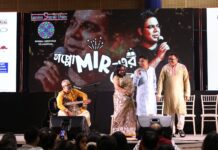
In addition to these discussions, the seminar also featured classical dance and cultural performances. Renowned Odissi dancer Vani Madhav and her troupe presented a mesmerising dance performance, while folk music performances enriched the event. The seminar fostered new perspectives and strategies for integrating Sanskrit libraries with digital technology, contributing towards strengthening India’s traditional knowledge systems.