










Balochistan at the Crossroads: Resources, Geopolitics, and the Debate Over Self-Determination

By Suman Munshi
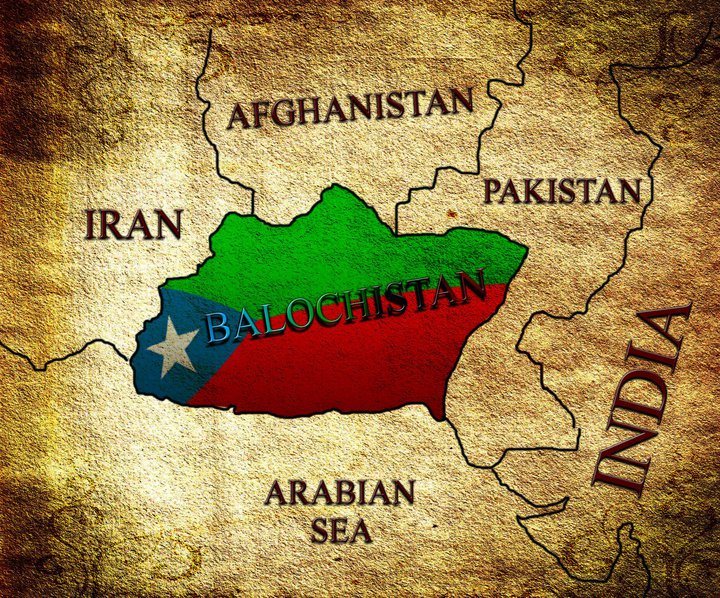
Balochistan—an expansive region stretching across parts of Pakistan, Iran, and Afghanistan—has increasingly drawn attention in geopolitical discussions due to its strategic location, vast natural resources, and ongoing political debates about autonomy and self-determination.
While currently administered mainly as Pakistan’s largest province by land area, Balochistan occupies a unique position at the intersection of South Asia, Central Asia, and the Middle East. Its long coastline along the Arabian Sea and its enormous mineral wealth make it one of the most strategically significant regions in the broader Asian geopolitical landscape.
A Region Shaped by Geography and History
Historically, much of the Baloch territory was governed by the Khanate of Kalat, a semi-independent princely state that existed for centuries before political changes during the mid-20th century.
Following the end of colonial rule in South Asia and shifting regional political arrangements, Baloch lands became divided among Pakistan, Iran, and Afghanistan. Today, the largest portion lies within Pakistan’s Balochistan Province.
For many observers, this historical context continues to influence contemporary political debates surrounding governance, autonomy, and regional identity.
Vast Natural Resources Beneath the Baloch Plateau
Balochistan is widely considered one of the most resource-rich regions in South Asia. Geological surveys indicate that the area holds a significant share of Pakistan’s mineral reserves, including copper, gold, coal, natural gas, and chromite.
Major Natural Resource Estimates
| Resource | Major Sites | Approximate Reserves |
|---|---|---|
| Copper | Reko Diq Mine, Saindak | ~15–18 million tonnes |
| Gold | Reko Diq region | ~35–41 million ounces |
| Copper-Gold Ore | Reko Diq | ~5.9 billion tonnes |
| Coal | Duki, Mach, Chamalang | ~217 million tonnes |
| Natural Gas | Sui Gas Field | ~13–14 trillion cubic feet |
| Chromite | Muslim Bagh | ~2–3 million tonnes |
| Iron Ore | Dilband | ~200 million tonnes |
| Marble & Limestone | Lasbela, Khuzdar | Hundreds of millions of tonnes |
The Reko Diq mine is considered one of the largest undeveloped copper-gold deposits in the world, with mineral resources estimated to be worth tens of billions of dollars.
These deposits are increasingly important globally because copper and strategic minerals are essential for renewable energy technologies, electric vehicles, and advanced electronics.
Strategic Maritime Importance
Beyond its mineral wealth, Balochistan’s geography adds enormous strategic value. The region hosts Gwadar Port, a deep-sea port near the entrance to the Persian Gulf—one of the world’s busiest energy corridors.
Gwadar is a central component of the China–Pakistan Economic Corridor, which connects western China to the Arabian Sea through a network of highways, railways, and energy infrastructure.
Because nearly one-third of the world’s oil shipments pass through nearby sea lanes, control and development of this port have major implications for regional trade and global maritime logistics.
Possible Trade Partnerships in a Hypothetical Independent Scenario
Although Balochistan remains part of existing states, analysts sometimes explore the hypothetical implications of a sovereign Baloch state. In such discussions, the region’s geographic position and resource wealth suggest potential economic partnerships.
Central Asian Republics
Landlocked countries such as Kazakhstan, Uzbekistan, and Turkmenistan could benefit from shorter trade routes to the Arabian Sea through Gwadar, reducing transportation costs for energy exports.
India
For India, improved access to Central Asian markets and mineral imports could create new economic opportunities if alternative trade corridors became available.
Gulf States
Countries such as United Arab Emirates, Saudi Arabia, and Qatar might find opportunities in logistics hubs, energy storage facilities, and port-based industrial zones along the Arabian Sea.
China
China has already invested heavily in infrastructure through CPEC. Continued access to Gwadar and the region’s mineral resources could remain important for Beijing’s broader Belt and Road Initiative.
Western Economies
The United States and the European Union increasingly seek secure sources of critical minerals such as copper. Balochistan’s deposits could play a role in global supply chains for renewable energy and advanced technologies.
The Debate Over Self-Determination and Security
The political future of Balochistan remains a subject of intense debate. Governments in Pakistan, Iran, and Afghanistan emphasize the importance of national sovereignty and territorial integrity, often describing armed insurgent groups as militant organizations.
However, some Baloch activists and political groups frame their demands in terms of self-determination, regional autonomy, and resource control. They argue that local communities should have greater influence over political decisions and economic development in the region.
Supporters of this perspective often refer to the principle of self-determination recognized in international frameworks such as the United Nations Charter.
At the same time, governments stress that development initiatives, political participation, and constitutional reforms are the appropriate paths for addressing regional grievances.
Opportunities and Challenges Ahead
Despite its enormous potential, Balochistan faces several longstanding challenges:
- Limited infrastructure in remote areas
- Economic disparities
- Security concerns in certain districts
- The need for greater integration into regional trade networks.
Experts note that unlocking the region’s economic potential would require sustained investment, improved governance, and regional cooperation among neighboring countries.
Conclusion
Balochistan’s vast natural resources, strategic coastline, and location at the intersection of major trade routes ensure that it will remain central to discussions about South Asia’s geopolitical future.
Whether through economic development, greater autonomy, or deeper regional integration, the region’s trajectory will likely influence trade corridors, energy supply chains, and political dynamics across South Asia and the Middle East for decades to come.
*** Data collected from public domain***