













There is a need to imbibe the ideals of Lord Ram in our lives – Shri Champat Rai
Sanatan Puri Ayodhya transcends concerns of past and future – Acharya Mithilesh Nandini Sharan
– Grand conclusion of Ayodhya Parv
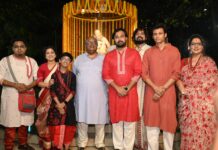
5th April , New Delhi: The three-day Ayodhya Parv, organized by the Ayodhya Nyas in collaboration with the Indira Gandhi National Centre for the Arts (IGNCA), concluded in a dignified and graceful manner. The valedictory session was graced by Shri Champat Rai, General Secretary of the Shri Ram Janmabhoomi Teerth Kshetra Trust, and Shri Ram Bahadur Rai, Chairman of IGNCA. Also present on the stage were the convener of Ayodhya Parv and former Member of Parliament from Faizabad, Shri Lallu Singh, Secretary of Ayodhya Nyas Shri Rakesh Singh, and senior journalist Shri Rajendra Pandey.
On this occasion, Shri Champat Rai stated that India’s fundamental identity has been rooted in prosperity, sensitivity, and social harmony. Despite foreign rule, society preserved its self-respect, and after independence, continuous efforts have been made to restore the nation to its natural ethos, in which saints and the Ram Janmabhoomi movement played a significant role. He noted that the movement arose from the concern of how to awaken society, and the construction of the temple is a result of that awakening.
He further said that Ayodhya has undergone significant transformation over time. Through Ayodhya Parv, meaningful efforts have been made to present the cultural expanse of the 84-kosi parikrama before society. Today, the need is not limited to temple construction, but to imbibe the ideals and values of Lord Rama in our lives. He also highlighted that with the efforts of Shri Lallu Singh, works such as the development of the 84-kosi parikrama route have progressed. The transformation of Ayodhya, he emphasized, is not merely physical development but a continuous process of social and cultural awakening.
Shri Ram Bahadur Rai remarked that the Supreme Court’s verdict on the Ram Temple came later, while Ayodhya Parv began earlier. He emphasized that the continuity and innovation of Ayodhya Parv make it unique. He said that the awakening seen in present-day Ayodhya will form the foundation of the Ayodhya of the future. Whether it is urban planning or spirituality, Ayodhya Parv serves as a platform where people can express their thoughts—this, he said, is its core purpose. Senior journalist Shri Rajendra Pandey described Shri Lallu Singh as a cultural ambassador and shared insights into the background of Ayodhya Parv.
Earlier in the day, discussions were held on the theme ‘Future Ayodhya – Governance and Society’, focusing on the city’s future form, its cultural and administrative dimensions, and the role of society. Speakers included Acharya Mithilesh Nandini Sharan of Siddhapeeth Shri Hanumannivas, former Chief Secretary of Uttar Pradesh Shri Manoj Singh, and Shri Chandrashekhar Pran, President of Panch Parmeshwar Vidyapeeth. They emphasized the need to develop Ayodhya as an ideal cultural and spiritual city, balancing tradition and modernity.
Acharya Mithilesh Nandini Sharan said it is a matter of great fortune that Shri Ram Lalla is now enthroned at His rightful place, calling it the result of generations of merit and sacrifices. He stated that Ayodhya’s future is known only to Lord Rama Himself. Ayodhya, he said, is a Sanatan Puri (Sanatan City) that transcends concerns of past and future. He reflected on how Ayodhya has existed in the past, is present today, and raised the question of what form it will take in the future for coming generations. He emphasized that Ayodhya is known because of Lord Rama, not merely because of the temple. The temple holds value because it preserves the eternal memory of Rama. Ayodhya, he said, is defined by that timeless memory safeguarded by our ancestors. It is a place of refuge for those who renounce everything—a city not of struggle to acquire, but of inner fulfillment that does not let one feel diminished even after renunciation.
In the evening, a cultural performance titled ‘Shri Ram Vijay’, directed by Dulal Roy, captivated the audience. Presented with the support of Sangeet Natak Akademi, Guwahati, the performance brought to life various episodes from the Ramayana, creating a deeply devotional atmosphere.
The conclusion of Ayodhya Parv is not merely the end of an event, but a milestone in an ongoing journey that connects Ayodhya’s past with the present and charts a direction for its future. Over the three days, scholars, artists, researchers, and devotees from across the country participated enthusiastically in the festival.


