








“We Are Moving Away from Our Traditions” – Dr. Sachchidanand Joshi
“Northeast India Should Be Included in School Curricula” – Padma Shri Techi Gubin
· Rare Exhibition on the Living Cultural Traditions of Northeast India Opens at IGNCA
· An Opportunity to Explore the Unique World of Traditional Metal, Bamboo and Clay Utensils
· Two Significant Monographs Released
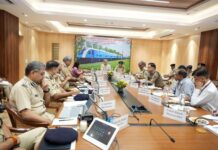
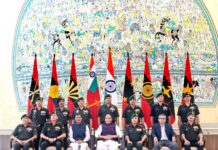
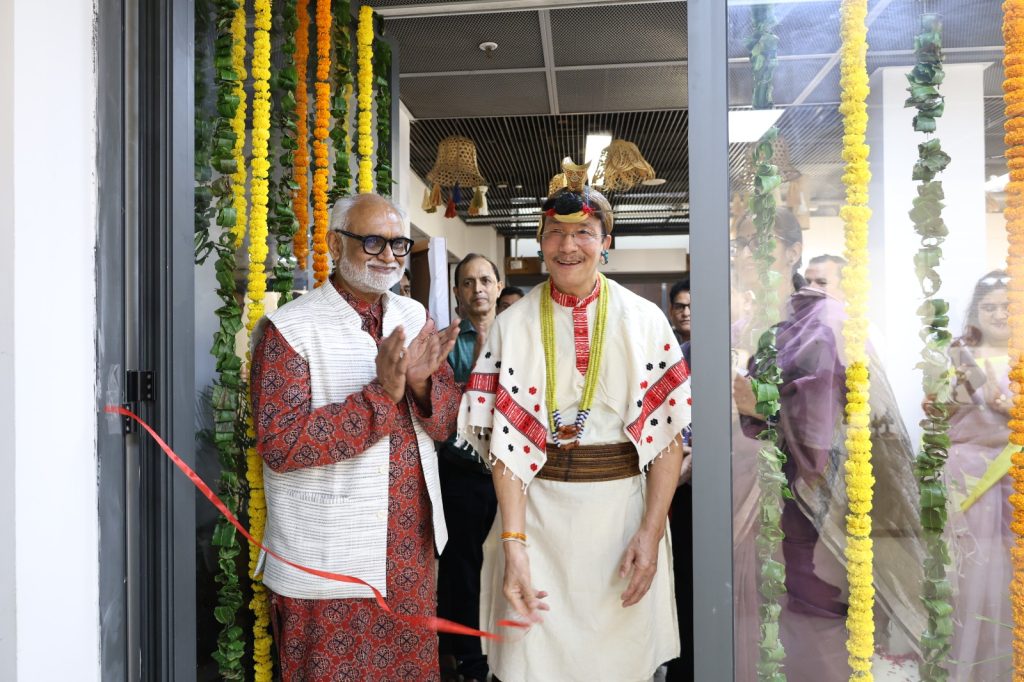
23rdJune, New Delhi: The Indira Gandhi National Centre for the Arts (IGNCA) inaugurated a rare and distinctive exhibition, ‘Living Heritage in Metal, Bamboo and Clay: Traditional Utensils of Northeast India’, presenting a remarkable glimpse into India’s folk life, traditional craftsmanship, and cultural traditions. Organised by the National Mission on Cultural Mapping (NMCM), an important initiative of the Ministry of Culture, in collaboration with the North Eastern Handicrafts and Handlooms Development Corporation Limited (NEHHDC), the exhibition was inaugurated by Padma Shri awardee and noted social worker Shri Techi Gubin and Dr. Sachchidanand Joshi, Member Secretary, IGNCA. The inaugural ceremony was graced by the presence of Ms. Bandana Preyashi, Joint Secretary, Department of Fertilisers, Government of India; Prof. (Dr.) Ramesh Chandra Gaur, Dean, IGNCA and In-charge, NMCM; Dr. Mayank Shekhar, Director, NMCM; and Shri Mahendra Joshi of NEHHDC. The exhibition is being held at Darshanam I and II Galleries (Ground Floor), IGNCA, Janpath, New Delhi, and will remain open to visitors until 2 July 2026. Following the inauguration, the Agragami Dance and Cine Group brought the cultural traditions of Northeast India to life through a vibrant cultural presentation.
On the occasion, two important monographs—Bell-Metal Craft of Assam and Chiteri Art of Bundelkhand—were also formally released. These publications represent significant contributions to the research, documentation, and preservation of India’s traditional arts and crafts.
Speaking on the occasion, Shri Techi Gubin said that it was a privilege for him to be part of the event. After viewing the exhibition, he remarked that metal has traditionally been regarded as a precious material and, in many parts of Northeast India, has long been associated with prosperity and affluence. Recalling a personal experience from his childhood, he noted that metal utensils were not commonly seen in everyday life during those days; instead, large clay vessels were widely used within households. While such practices have gradually diminished over time, he observed that skilled artisans possessing the knowledge of these traditional crafts still exist, making it possible to revive and sustain these practices for future generations.
Continuing his address, Shri Gubin spoke about the remarkable versatility of bamboo and the multitude of objects that can be created from it. Referring to the exhibition on bell metal, bamboo, and clay traditions of Northeast India, he said that such initiatives play an important role in educating people about the vast corpus of cultural traditions found across the country. He further suggested that, in a similar manner, the artistic and craft traditions of central and other regions of India should also be showcased in the Northeast, fostering a meaningful cultural exchange that would enhance mutual understanding and appreciation of diverse regional traditions. He also emphasised the need to introduce students across different states of the country to the authentic cultural traditions and distinctive aspects of Northeast India through educational curricula, thereby encouraging a deeper awareness of the region’s cultural richness.
Dr. Sachchidanand Joshi expressed his delight at the successful organisation of the exhibition and congratulated the entire IGNCA team. In a lighter vein, he remarked that the experience would have been even more memorable had the traditional utensils on display also carried regional delicacies, observing that in India, affection often travels through food. He noted that food has a unique ability to foster harmony and strengthen bonds among communities.
Reflecting on the exhibition’s theme, Dr. Joshi observed that traditional utensils and even their indigenous names are gradually disappearing from Indian households, signalling a growing distance from long-established cultural practices. He emphasised that India’s ancestors developed highly evolved empirical and scientific systems of cooking and utensil-making, carefully designed to preserve nutritional value and support well-being. While contemporary society continues to experiment with new methods and materials, he stressed the importance of reconnecting with traditional knowledge systems, adding that the exhibition serves as an important step in bringing people closer to their cultural roots.
He also spoke about IGNCA’s ambitious initiatives, informing the audience that the Government of India has approved 491 crore for the Gyan Bharatam project and 55 crore for the Brihattar Bharat project. Emphasising that culture permeates every aspect of life, he remarked that it is not confined to institutions or artefacts alone but remains an integral part of everyday existence.
Addressing the gathering, Ms. Bandana Preyashi reflected on her earlier engagements with cultural initiatives during her administrative career and observed that Northeast India cannot be viewed as a culturally homogeneous region; rather, it is characterised by a rich diversity of traditions, practices, and communities. Referring to the exhibition, she described the focus on traditional utensils as a unique and insightful concept, remarking that utensils often narrate the trajectory of civilisational growth, social transformation, and even decline. She further noted that for the people of Northeast India, culture is not confined to a particular day, occasion, or institution; it is deeply embedded in their daily lives and lived experiences. Describing the region’s cultural landscape as vibrant and colourful, she emphasised that culture flows naturally through the social fabric of the Northeast and continues to find expression in its crafts, customs, and community traditions. Such exhibitions, she remarked, provide an important opportunity to appreciate these enduring cultural practices and their continuing relevance in contemporary society.
Prof. (Dr.) Ramesh Chandra Gaur spoke about the exhibition and the various initiatives of IGNCA and the National Mission on Cultural Mapping (NMCM). He informed the audience that NMCM has developed one of the country’s largest cultural databases, documenting cultural resources across more than six lakh and twenty-four thousand villages. Describing the exhibition as a reflection of India’s living rural traditions, he remarked that Northeast India is a precious jewel in the nation’s cultural landscape. Emphasising the importance of documentation, he noted that preserving and recording cultural knowledge is essential for future generations and helps make the richness of India’s traditions accessible to a wider audience.
In his introductory remarks, Dr. Mayank Shekhar observed that traditional utensils are an integral part of community life and serve as repositories of collective knowledge passed down through generations. He noted that the utensils featured in the exhibition reflect sustainable practices, with environmental considerations embedded in their design and use. Emphasising the significance of the initiative, he described the exhibition as an important effort towards documenting and preserving traditional knowledge systems and craft practices.
In today’s industrialised and machine-driven age, the exhibition highlights the living traditions of Northeast India, where metal, bamboo, and clay have long been integral to community life. These traditional utensils embody not only utility but also collective memory, ecological wisdom, and cultural practices. More than artefacts, they are living expressions of communities where craftsmanship, hand-making, and harmony with nature continue to endure, making the exhibition a meaningful platform for cultural dialogue.