














West Bengal Receives Proposal for Comprehensive Geriatric Care Framework; State-Level Task Force Suggested
By Suman Munshi, IBG NEWS
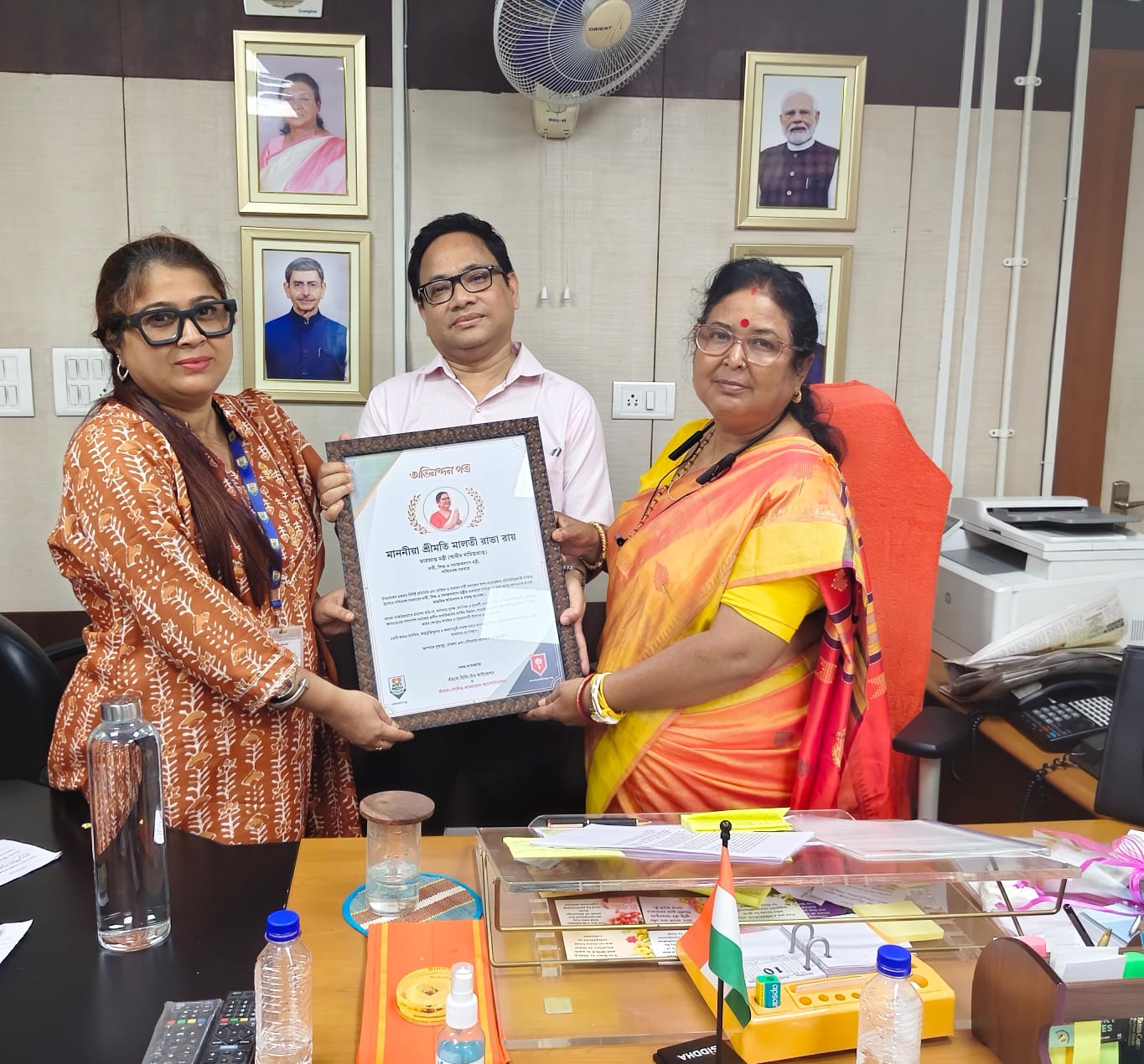
Kolkata, September 9, 2026: A comprehensive proposal aimed at strengthening geriatric healthcare, social security, community assistance and long-term care services for senior citizens in West Bengal was presented to Smt. Malati Rava Roy, Hon’ble Minister of State (Independent Charge), Department of Women & Child Development and Social Welfare, Government of West Bengal, during a cordial meeting at Bikash Bhavan.
The delegation, comprising Dr. Dhires Kumar Chowdhury and Mrs. Kajari Sen, also proposed the creation of a dedicated State-Level Geriatric Care Task Force to coordinate and advise on initiatives concerning the welfare and care of the state’s growing elderly population.
During the meeting, Dr. Chowdhury’s Bengali book “Sustho Bardhyaker Chabikathi”, which focuses on the fundamentals of geriatric care, was also discussed. The Minister appreciated the publication and described the initiative as timely and useful in helping ordinary people understand the basic aspects of caring for older adults.
The delegation further extended an invitation to the Minister to attend GSICON 2026, a three-day International Conference of Geriatrics and Gerontology. Smt. Malati Rava Roy accepted the invitation to participate as a Special Guest at the inaugural ceremony scheduled for September 18, 2026, at the Newtown Convention Centre, Kolkata.
A small felicitation was also organised for the Minister during the meeting.
Growing Need for a Coordinated Elderly Care System
The proposal points to the changing demographic and social circumstances affecting senior citizens in West Bengal and across India. Longer life expectancy has brought significant social and health benefits, but it has also increased the demand for sustained support for elderly people, particularly those dealing with multiple health and social challenges.
Among the concerns highlighted are chronic illnesses, physical frailty, reduced mobility, dementia and cognitive problems, loneliness, social isolation, financial insecurity and dependence on others for everyday activities.
The changing nature of family structures is another important factor. Migration, smaller households and professional responsibilities can make it increasingly difficult for families to provide continuous care to older members who require substantial assistance.
Against this backdrop, the proposal advocates a collaborative model involving government agencies, healthcare professionals, social welfare organisations, NGOs, trained caregivers, educational institutions, local authorities and communities.
State-Level Geriatric Care Task Force Proposed
One of the central recommendations is the establishment of a State-Level Geriatric Care Task Force for Senior Citizens in West Bengal under the appropriate guidance of the Department of Women & Child Development and Social Welfare.
The proposed body could function as an advisory and coordinating platform to assess the requirements of older citizens and help improve geriatric and elderly care programmes across the state.
Its potential areas of work include assessing unmet needs among senior citizens, suggesting community-based care strategies, supporting the development of geriatric care guidelines, advising on long-term care services and recommending appropriate standards for caregiver training.
The proposed Task Force could also facilitate cooperation between healthcare and social welfare systems, assess the implementation of elderly welfare programmes, identify gaps at district and community levels and recommend improvements based on field-level experiences.
Another suggested focus would be the development of age-friendly and dementia-sensitive communities, along with stronger cooperation among government departments, professional organisations and voluntary agencies.
The proposed body could bring together government representatives, geriatric specialists, healthcare professionals, social welfare experts, psychologists, nursing professionals, NGOs, skill-development organisations and other stakeholders.
Community Support for Vulnerable Senior Citizens
The proposal also calls for a structured community-level support network to identify elderly people who may be particularly vulnerable, including those living alone or without adequate family support.
Trained volunteers and community workers could potentially conduct periodic wellbeing checks, assist senior citizens in accessing government welfare programmes, facilitate connections with healthcare and emergency services and provide basic social and emotional assistance.
Such a network could also help identify situations involving neglect, abuse or abandonment and connect affected individuals with appropriate support mechanisms.
Building a Trained Geriatric Care Workforce
Another major recommendation focuses on addressing the shortage of trained caregivers.
The proposed framework emphasises the need for organised training covering areas such as elderly personal care, daily living assistance, safe movement, fall prevention, nutrition, communication, dementia-sensitive care, emotional support and basic emergency response.
Training could also help caregivers recognise warning signs requiring professional medical attention while ensuring that elderly people receive care in an ethical, respectful and dignified manner.
The proposal suggests collaboration with recognised training institutions, professional bodies and credible NGOs to develop appropriate caregiver capacity-building programmes.
Besides improving elderly care, such initiatives could create new employment and livelihood opportunities for trained young people and women.
Mobile Geriatric Services for Underserved Communities
The proposal recommends exploring mobile and outreach-based geriatric healthcare services, particularly for elderly people who face difficulties travelling to hospitals and healthcare centres.
Frailty, disability, poverty, mobility limitations and inadequate family support can all become barriers to accessing medical services.
Mobile initiatives could potentially provide basic health screening, identify high-risk elderly individuals, spread awareness about healthy ageing and fall prevention, promote dementia awareness and provide guidance on medication adherence.
Families and caregivers could also receive health education, while patients requiring specialised treatment could be referred to appropriate healthcare institutions.
The proposal gives particular importance to rural, remote and economically disadvantaged communities.
Community Day-Care and Engagement Centres
The proposed framework also recognises that institutional residential care is not necessary for every senior citizen.
Community-based day-care and engagement centres could provide opportunities for companionship, recreation, cultural participation and social interaction. They could also host health-awareness programmes, wellness activities, counselling, digital-literacy sessions and intergenerational programmes.
Such facilities could additionally serve as information points where senior citizens and their families can learn about social-security benefits and available welfare schemes.
The broader objective would be to encourage active ageing while reducing loneliness and social isolation.
Improving Long-Term and Residential Care
The proposal further highlights the need for safe and dignified care options for elderly people who require residential or continuing assistance.
With family structures changing, the state may need to examine ways of strengthening different forms of long-term care, including government-supported old-age homes, assisted-living facilities, short-stay and respite-care arrangements and dementia-sensitive services.
Collaboration between government authorities and credible service organisations could potentially expand care capacity while maintaining appropriate standards relating to dignity, transparency, accountability and quality of service.
Towards a More Integrated Elderly Care Policy
The recommendations collectively seek to move elderly care beyond a purely medical approach by combining healthcare with social protection, community participation, caregiver development and long-term support.
A coordinated framework, if implemented effectively, could help identify vulnerable senior citizens earlier, connect them with appropriate services and create stronger support systems at the community and district levels.
The proposal ultimately calls for a more structured and sustainable approach to ageing in West Bengal—one that places health, dignity, security, companionship and quality of life at the centre of senior-citizen welfare.

