

















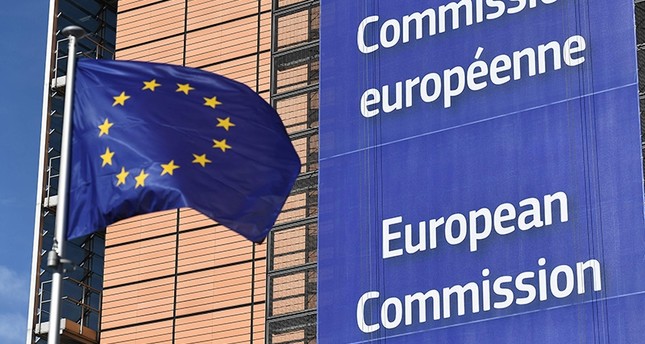

European Commission Makes Sanofi’s Flu Vaccine Commitments Legally Binding Amid Competition Concerns
Brussels: The European Commission has made legally binding a set of commitments offered by French pharmaceutical company Sanofi to address preliminary concerns over potentially misleading communications about a competing influenza vaccine in Germany and France.
The case centres on Fluad, an enhanced influenza vaccine marketed by CSL Seqirus for older adults, and Sanofi’s competing vaccine, Efluelda. The Commission was concerned that communications allegedly disseminated by Sanofi may have unfairly undermined confidence in Fluad among healthcare professionals.
The decision requires Sanofi to implement corrective communications and observe restrictions on certain promotional statements until March 2030.
Commission Raises Concerns Over Vaccine Communications
According to the Commission’s preliminary assessment, Sanofi may have held a dominant position in the market for enhanced influenza vaccines in Germany and France.
The Commission examined communications allegedly used between 2024 and at least autumn 2025. It expressed concern that some messages may have questioned the scientific evidence supporting Fluad, inaccurately represented national vaccination recommendations, or suggested that German medical professional organisations continued to have unresolved scientific objections to the vaccine.
The Commission said these communications could potentially have weakened competition in the two national markets, raising concerns under Article 102 of the Treaty on the Functioning of the European Union (TFEU), which prohibits the abuse of a dominant market position.
These were preliminary competition concerns, rather than a final finding that Sanofi had infringed EU antitrust law.
Sanofi Agrees to Corrective Measures
Under the commitments, Sanofi must refrain from using specified statements in promotional material directed at healthcare professionals in Germany and France through March 2030.
The restrictions cover communications that undermine or contradict national vaccination recommendations, portray Fluad negatively, imply that Fluad has a weaker evidence base than Efluelda, or improperly suggest that Efluelda offers superior safety or effectiveness.
Sanofi must also avoid supplying such messaging to key opinion leaders for use in their professional interactions concerning the two vaccines.
In Germany, most promotional material relating to Efluelda must include a sufficiently comprehensive and legible reference to the latest national vaccination recommendations.
Public Clarifications and Outreach to Healthcare Professionals
Sanofi will publish a clarification on its German and French websites for 24 months. The statement will explain that the applicable national vaccination recommendations treat Fluad and Efluelda as equivalent in protecting older adults against influenza, with both supported by robust evidence.
The company must also send the clarification to healthcare professionals in Germany who were previously targeted by the alleged campaign, as well as to relevant key opinion leaders identified under the commitments.
Following a market consultation conducted between July and August 2026, Sanofi amended its initial proposal to extend its corrective outreach to previously targeted key opinion leaders in Germany.
The Commission concluded that the revised commitments adequately addressed its preliminary competition concerns and made them legally binding. A monitoring trustee will oversee implementation and report regularly to the Commission.
Background to the Investigation
The Commission opened a formal antitrust investigation on 26 June 2026 and issued a preliminary assessment outlining its concerns. It subsequently invited interested parties to comment on Sanofi’s proposed commitments through a market-testing process that ran until 21 August 2026.
Under Article 9(1) of Regulation 1/2003, the Commission may accept commitments offered by an investigated company and make them legally binding when they adequately address identified competition concerns.
Such a decision does not, in itself, establish that an infringement occurred. However, failure to comply with binding commitments can result in penalties, including a fine of up to 10% of worldwide annual turnover or periodic penalty payments, subject to the applicable legal provisions.
Implications for Competition and Public Health
The decision highlights the importance of accurate, balanced scientific communication in the pharmaceutical sector, particularly where competing vaccines are used to protect vulnerable populations.
Healthcare professionals and patients need reliable information about vaccine evidence, safety and national recommendations to make informed decisions. The Commission’s intervention also underscores that competition rules can apply when promotional practices by a potentially dominant company risk influencing professional choices through misleading or unfair comparisons.
The full case documentation and commitments are available through the European Commission’s competition case register under Case AT.40998.
Source: European Commission
IBG NEWS | International News Desk

