








The Republic of Balochistan: An Open Letter to the UN Security Council
To,
President of the United Nations Security Council
United Nations Headquarters
405 East 42nd Street
New York, NY 10017
United States of America
Dated: 23 September, 2026, Page: 1/3
Subject: The Historical Status of Balochistan, the Current Situation, and the Request for Recognition of the Republic of Balochistan as an Independent State
Respected President of the Security Council,
Distinguished Members of the Security Council,
The Republic of Balochistan wishes to draw the attention of the United Nations Security Council and all its distinguished member states to the historical, political, legal, humanitarian, geographical, and present-day ground realities concerning Balochistan.
We wish to make it clear that according to the position of the Republic of Balochistan, Balochistan was neither historically a part of Pakistan, nor can its present status be considered the result of the consent of the Baloch people, nor does the Baloch nation voluntarily recognize its political association with Pakistan. The people of Balochistan, the elected legislative representation of Balochistan at that time, and the Baloch leadership never approved any free, voluntary, and sovereign agreement of mutual consent with Pakistan through which the entire Baloch territory and its people were permanently incorporated into Pakistan.
Therefore, the Republic of Balochistan calls upon the Security Council and all Member States of the United Nations to undertake an impartial examination of the historical and political question of Balochistan and, while recognizing the right of the Baloch people to self-determination, seriously consider the question of Balochistan’s status as an independent state, so that Balochistan may work together with the international community to contribute to peace, security, stability, trade, and sustainable development in the region.
Ground Realities in Contrast to Pakistan’s Narrative
The Republic of Balochistan is concerned that Pakistan’s military and Inter-Services Intelligence (ISI) may be withholding fundamental information concerning the history and current situation of Balochistan from certain members of the Security Council. For a prolonged period, Pakistani diplomatic sources, state institutions, and Pakistan-influenced media have attempted to suppress the Baloch independence movement through the use of terrorism-related terminology.
We appeal to the Security Council not to regard the official narrative of any one state concerning Balochistan as the final truth, but instead to obtain information directly from Baloch political representatives, the local population, independent researchers, historical documents, international experts, and sources on the ground.
Balochistan has never been a part of Pakistan. In 1947, the state status of Kalat, its legislative assembly, its relations with Pakistan, and the subsequent question of accession constituted a complex and disputed political process. According to a study by the Library of Congress, both legislative chambers of Kalat rejected proposals for accession to Pakistan in 1947 and February 1948, while following the advance of Pakistani forces in March 1948, the Khan of Kalat was compelled, under armed pressure, to sign documents of accession, a development that was unanimously rejected by the sixty million people of Balochistan.
The Current Ground Situation
The Republic of Balochistan maintains that a prolonged armed conflict has been taking place in Balochistan between Pakistani state institutions and Baloch resistance forces, and that the current situation has reached a stage where presenting the political issue solely as a matter of internal security or counter-terrorism does not fully reflect the realities on the ground.
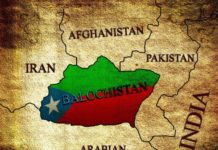
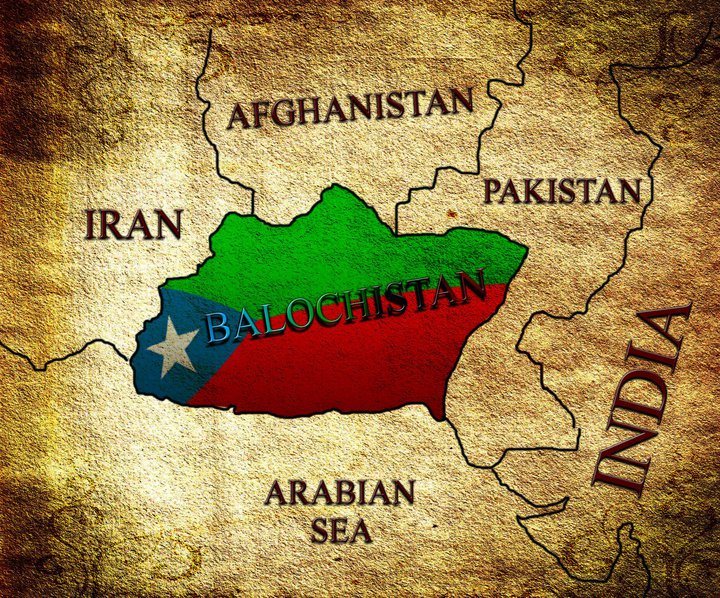
The Republic of Balochistan maintains that the presence and influence of Baloch armed forces have increased significantly across extensive areas of Balochistan, while the movement of Pakistani occupying forces has also become restricted in 85% of Balochistan’s areas. Balochistan is not merely an internal Pakistani issue; it is an extremely important geographical region situated between South Asia, Central Asia, the Middle East, and the Indian Ocean.
Balochistan’s approximately two-thousand-kilometre-long coastline, together with the geographical significance of Gwadar, Pasni, Jiwani, Chabahar, and other coastal areas, makes the region important for trade and connectivity between the Indian Ocean, the Gulf, the Middle East, and South and Central Asia. Balochistan possesses vast potential in minerals, oil and gas, copper, gold, chromite, coal, marble, other mineral resources, and renewable energy.
The Republic of Balochistan maintains that these resources should be utilized for the development, education, healthcare, employment, infrastructure, and regional economic cooperation of the local population. This can be achieved when Balochistan is recognized as an independent state and these resources are developed through the genuine representatives and leadership of the Baloch people, rather than leaving them at the mercy of occupying Pakistan.
The Republic of Balochistan also expresses grave concern over the policies pursued by Pakistan over the past several decades that have contributed to militancy and proxy conflicts in the region. In 2025, Pakistan’s Defence Minister, Khawaja Muhammad Asif, stated in an interview with a media house that Pakistan’s past role in supporting and training armed groups for the United States and the West constituted the country’s “dirty work” and described it as a mistake. Such statements further demonstrate the need for an impartial international examination of Pakistan’s state sponsorship of extremism in the region and Islamabad’s history of proxy warfare.
In this context, Balochistan calls upon the United Nations to work toward ending armed conflicts, cross-border operations, and bombardments and acts of aggression by Pakistan’s military and air force against civilian populations in Afghanistan, Balochistan, and other parts of the region, and to call upon Pakistan to immediately withdraw its forces from Balochistan and the adjoining areas of Afghanistan.
The Republic of Balochistan wishes to assure the international community that Balochistan is prepared to utilize its resources for global peace and shared prosperity. Balochistan, owing to its natural resources, extensive coastal areas, important trade routes, and strategic geographical location, can become a potential partner for the global economy.
An independent and stable Balochistan is prepared to establish special partnerships with the United Nations, international financial institutions, and developing countries for the promotion of education through international cooperation, global health initiatives, employment and human development, addressing climate change, water and infrastructure development, addressing refugees and humanitarian crises, port development and trade connectivity, responsible development of mineral resources, renewable energy regional trade and sustainable economic development.
We call upon the Security Council to:
First: Undertake an independent and impartial examination of the historical status of Balochistan.
Second: Seriously consider the question of internationally recognizing Balochistan as an independent state.
Third: Establish independent international monitoring of the human rights situation in Balochistan.
Fourth: Investigate all military operations, airstrikes, drone attacks, forced displacements, and other human rights violations against the civilian population of Balochistan carried out by Pakistan’s foreign and external military forces.
Fifth: Establish an international diplomatic mechanism for a peaceful political resolution of the conflict between Pakistan and Balochistan and encourage Pakistan to withdraw its forces from Balochistan.
Concluding Appeal
Distinguished President and Members of the Security Council,
Balochistan has not come before the United Nations with an appeal for hatred or war against any nation. We have come with an appeal for a political solution based on history, the right to recognition as an independent country, human dignity, regional peace, and the principles of international law.
We do not ask the world simply to accept our claim; we ask the world to come to Balochistan and see for itself, listen directly to the Baloch people, examine the historical documents for itself, and give all parties equal opportunities before reaching its own determination.
The Republic of Balochistan believes that a peaceful, stable, and independent Balochistan can become an important centre for peace, trade, energy, connectivity, and economic development between South Asia, Central Asia, the Middle East, and the Indian Ocean.
THE REPUBLIC OF BALOCHISTAN