














India Announces ₹15,000 Crore Development Assistance Package for Nepal During Prime Minister Balendra Shah’s State Visit
Historic Visit Strengthens Bilateral Cooperation in Connectivity, Energy, Infrastructure, Education and Regional Development
By Suman Munshi, Chief Editor, IBG NEWS
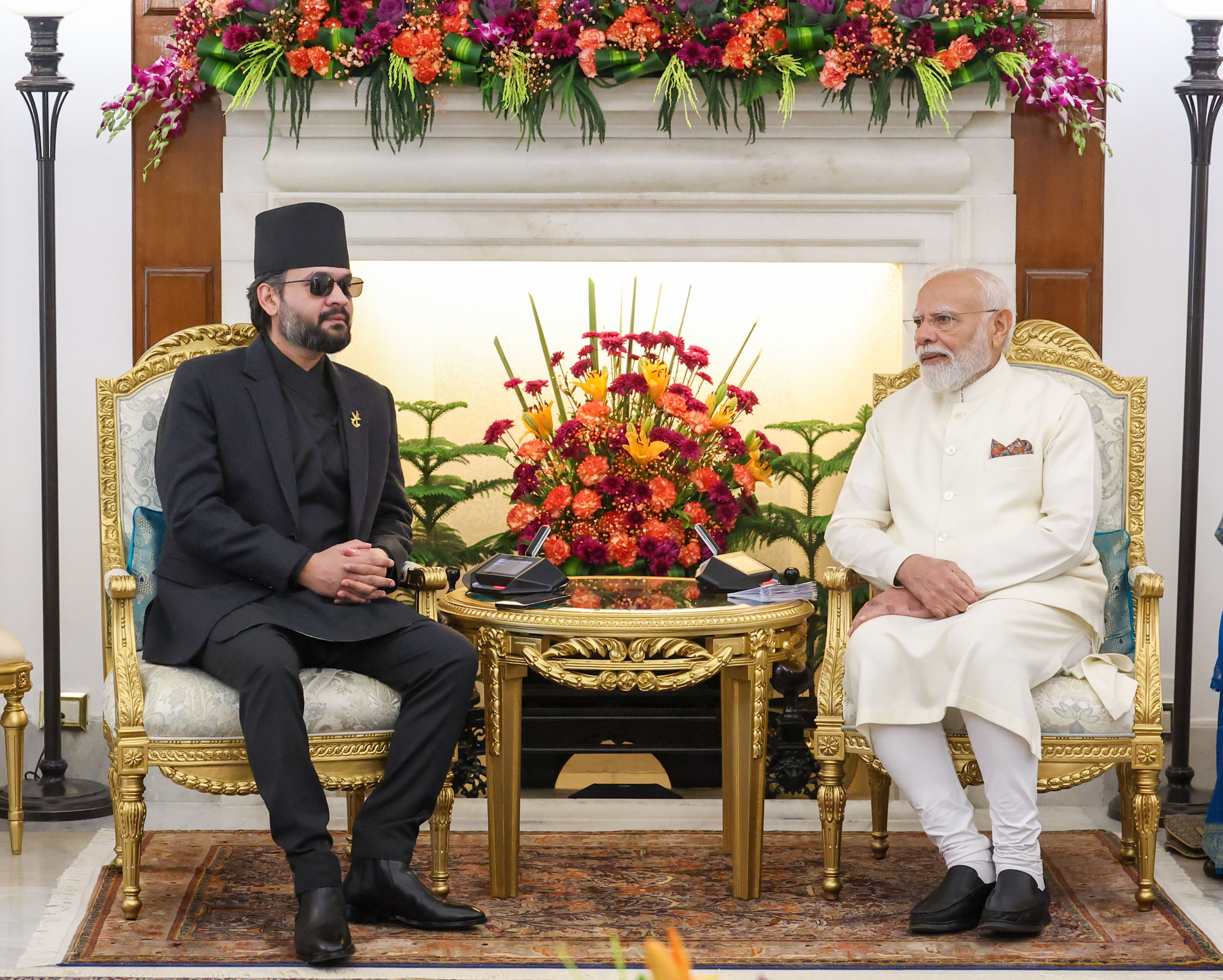
New Delhi, November 23, 2026: India and Nepal have taken significant steps towards strengthening their longstanding bilateral partnership, with Prime Minister Narendra Modi announcing a development assistance package worth ₹15,000 crore (NPR 24,000 crore) for Nepal during the first State Visit of Nepalese Prime Minister Balendra Shah to India.
Prime Minister Shah visited India from November 22 to 23, 2026, at the invitation of Prime Minister Modi. The visit marked his first official visit to India since assuming office and was accompanied by a high-level Nepalese delegation.
During the visit, Prime Minister Shah received a ceremonial welcome at Rashtrapati Bhavan and paid tribute to Mahatma Gandhi at Rajghat. He also called on President Droupadi Murmu. External Affairs Minister Dr. S. Jaishankar separately met the visiting Nepalese Prime Minister.
Prime Minister Modi held bilateral discussions with Prime Minister Shah and hosted a luncheon in his honour. The talks covered a wide range of bilateral, regional and international issues, reaffirming the shared commitment of both countries to deepen cooperation.
₹15,000 Crore Development Assistance for Nepal
A major outcome of the visit was India’s announcement of development assistance amounting to ₹15,000 crore, equivalent to NPR 24,000 crore.
The package comprises:
- ₹3,500 crore in grant assistance for post-disaster reconstruction and new infrastructure projects in Nepal.
- ₹11,500 crore through a Rupee-denominated Line of Credit for projects in the energy sector.
The specific projects and implementation arrangements will be finalised through consultations between the two governments.
Prime Minister Shah expressed appreciation for India’s humanitarian and technical assistance following the devastating Rasuwa-Bhotekoshi floods, which caused significant loss of life and extensive property damage in Nepal. Prime Minister Modi reiterated India’s commitment to supporting Nepal’s development as a close neighbour and trusted partner.
Joint Vision for a Viksit Bharat and Samunnat Nepal
The two Prime Ministers adopted a Joint Vision Statement titled “Viksit Bharat and Samunnat Nepal”, setting out an ambitious roadmap for a future-oriented India-Nepal partnership.
The vision covers traditional areas of cooperation, including economic development, connectivity, energy, water resources and people-to-people relations. It also identifies emerging areas such as climate resilience, disaster management, sports, start-ups, digital services, space technology and innovation.
Both leaders welcomed progress in ongoing development projects, including High Impact Community Development Projects and the construction of Nepal’s National Police Academy with Indian assistance. They also welcomed the announcement of an Agro-Industrial Park in Chitwan, to be developed with grant assistance from India.
Major Push for Railway, Road and Port Connectivity
Connectivity emerged as one of the most important areas of cooperation during the discussions.
Prime Minister Modi announced a new transit-trade connectivity facility for Nepal through Deendayal Port at Kandla in Gujarat. Access to Paradip Port in Odisha will also be made available once the necessary infrastructure is established.
The two countries agreed to strengthen cross-border infrastructure through new railway lines, bridges, Integrated Check Posts (ICPs) and petroleum pipelines.
A major development was the inauguration of the Sarayu-Kamala Express rail service between Ayodhya and Janakpur. The service is expected to improve passenger connectivity and encourage religious and cultural tourism along the Ramayana Circuit, further strengthening the civilisational links between the two countries. Both sides also agreed to explore similar connectivity initiatives for Buddhist and Shiv-Shakti tourism circuits.
The leaders announced the completion of the Field Location Survey for the proposed Raxaul-Kathmandu electrified broad-gauge railway line. They also agreed to collaborate on developing Nepal’s East-West Railway.
In another important infrastructure initiative, the two Prime Ministers virtually laid the foundation stone for a new Integrated Check Post at Banbasa. They welcomed progress on ICPs at Bhairahawa, Sunauli and Dodhara-Chandani, while noting that three ICPs between the two countries are already operational.
A new motorable cross-border bridge connecting Dharchula in India with Darchula in Nepal was also inaugurated. The bridge is expected to improve direct connectivity between India and western Nepal.
On civil aviation, both sides agreed to make the existing one-way B345 Kathmandu-Bhairahawa-Lucknow route bidirectional. Technical consultations will determine the implementation arrangements and address other aviation proposals under discussion.
Expansion of Petroleum Infrastructure
India and Nepal also advanced cooperation in the petroleum sector.
The leaders dedicated Phase II of the Motihari-Amlekhgunj petroleum pipeline to the people of Nepal. They also virtually laid the foundation stone for a petroleum terminal at Jhapa in Nepal.
Both Prime Ministers emphasised the need to begin work at the earliest on the proposed Siliguri-Jhapa petroleum pipeline. They further agreed to explore cooperation in developing cross-border gas pipelines.
Energy Cooperation and Hydropower Development
Hydropower and electricity trade featured prominently in the bilateral discussions.
Both countries welcomed progress under the India-Nepal Joint Vision Document for Power Sector Cooperation and the Long-Term Power Trade Agreement. They also acknowledged the active participation of Indian companies in Nepal’s hydropower sector and agreed to facilitate the timely completion of ongoing projects.
The two leaders virtually laid the foundation stone for the 669 MW Lower Arun Hydroelectric Project, marking another important step in bilateral energy cooperation.
They also directed the Pancheshwar Development Authority and the Joint Committee on Water Resources to expedite the preparation of the Detailed Project Report (DPR) for the Pancheshwar Multipurpose Project and move towards its implementation.
Both sides agreed to accelerate DPR-related work on the Saptakoshi and Sunkoshi multipurpose projects. These initiatives are intended to promote the shared utilisation of water resources and help reduce the impact of floods.
Progress was also noted in the formation of joint ventures for two high-capacity cross-border electricity transmission lines: Inaruwa (Nepal)-New Purnea (India) and Dododhara (Nepal)-Bareilly (India).
Education, Technology and Capacity Building
India will establish an offshore IIT campus in Nepal as part of its expanding development and capacity-building partnership. The initiative is expected to strengthen Nepal’s higher education ecosystem and contribute to employment generation.
The two leaders also welcomed growing cooperation in technology, start-ups, digital services and financial connectivity. They recognised the importance of facilitating easier access to banking and telecommunications services for citizens of each country living across the border.
Eight MoUs Signed to Deepen Institutional Cooperation
During the visit, India and Nepal exchanged eight Memoranda of Understanding covering a broad range of institutional and sectoral cooperation.
The agreements include:
- Forensic Science and Research: Academic and research collaboration between the National Forensic Sciences University, Gandhinagar, Gujarat, and the Crime Investigation Department of Nepal Police.
- Police Training: Cooperation between Rashtriya Raksha University, India, and the National Police Academy, Nepal.
- Civil Service Capacity Building: Training cooperation between India’s National Centre for Good Governance and Nepal Administrative Staff College.
- Traditional Medicine: Cooperation in Ayurveda and other traditional systems of medicine.
- Satellite Communication: An agreement between ISRO and Nepal’s Ministry of Information and Communication for establishing a SATCOM network using the South Asia Satellite.
- Sustainable Urban Development: Technical cooperation between the governments of India and Nepal.
- Health and Medicine: Cooperation between India’s Ministry of Health and Family Welfare and Nepal’s Ministry of Health and Food Safety.
- Livestock and Fisheries: Bilateral cooperation in livestock and fisheries development.
These agreements are expected to broaden institutional engagement and strengthen technical, academic and administrative cooperation.
Outstanding Border Issues and Diplomatic Engagement
The two Prime Ministers reviewed progress in joint field activities concerning the maintenance and repair of boundary pillars. They directed their respective Foreign Secretaries to continue working towards resolving outstanding boundary issues.
The discussions reflected the importance both countries attach to maintaining stable and constructive relations while addressing sensitive matters through diplomatic channels.
Invitation to Visit Nepal
At the conclusion of the visit, Prime Minister Balendra Shah thanked Prime Minister Modi for the warm hospitality extended to him and his delegation. He formally invited the Indian Prime Minister to visit Nepal.
Prime Minister Modi accepted the invitation, with the dates of the proposed visit to be finalised through diplomatic channels.
A Renewed Partnership for Regional Prosperity
The November 2026 State Visit has reinforced the strategic importance of India-Nepal relations, placing particular emphasis on development finance, cross-border infrastructure, energy security, education, technology and cultural connectivity.
The scale of the announced financial assistance, alongside new railway, road, petroleum and hydropower initiatives, signals an effort to translate the traditional friendship between the two neighbours into concrete development outcomes.
With deep-rooted historical, cultural and people-to-people connections, India and Nepal remain closely linked through geography, trade and shared regional interests. The adoption of the “Viksit Bharat and Samunnat Nepal” vision provides a framework for expanding this partnership into emerging areas of cooperation while strengthening its traditional foundations.
The visit reaffirmed the commitment of both governments to advance a relationship based on mutual trust, respect, friendship and shared aspirations for prosperity.
Source: Joint Press Release issued following the State Visit of the Prime Minister of Nepal to India, Press Information Bureau, Government of India, November 23, 2026.


