











Balochistan Expresses Solidarity with Sindh’s Political Awakening, Calls for Self-Determination
Statement issued in the name of the Republic of Balochistan criticises Pakistan’s centralised power structure, raising concerns over water rights, land, resources and provincial autonomy
By Suman Munshi | IBG NEWS
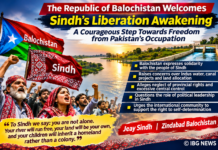
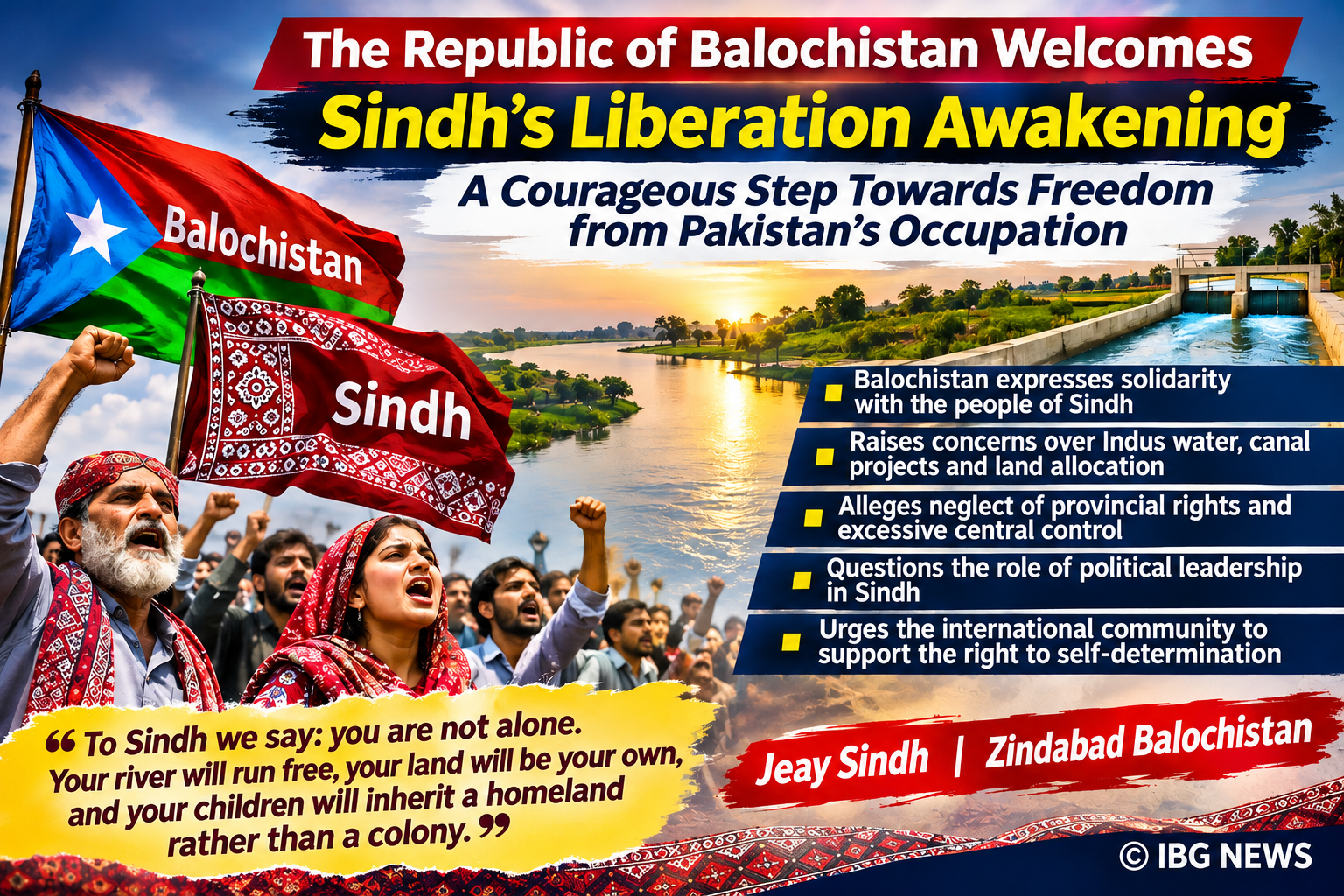
23 November 2026: A statement issued in the name of the “Republic of Balochistan” has expressed solidarity with the people of Sindh, describing their growing protests and political mobilisation as part of a wider struggle for identity, resource rights and political self-determination.
Addressing the people of Sindh, the statement conveys support from the Baloch community and draws parallels between the political grievances of Sindh and Balochistan. It argues that the concerns raised by the Sindhi population extend beyond individual infrastructure projects and reflect deeper questions about provincial autonomy, control over natural resources and the distribution of political power in Pakistan.
The statement was published on 23 November 2026 through the social media account associated with the Republic of Balochistan.
Indus River and Water Distribution at the Centre of the Dispute
A major focus of the statement is the Indus River, which remains central to Sindh’s agriculture, economy, livelihoods and ecological balance.
The organisation has criticised proposed canal projects, changes in water distribution and corporate agricultural schemes, alleging that such initiatives could further reduce the availability of water for downstream communities and place additional pressure on the Indus Delta.
The controversy surrounding water allocation is not new. Pakistan’s 1991 Water Apportionment Accord established a framework for distributing Indus River waters among the country’s provinces. However, disagreements over implementation, water availability and proposed infrastructure projects have continued to generate political tensions, particularly in Sindh.
The statement argues that cancelling one proposed canal project would not resolve the underlying problem unless Sindh has a meaningful role in decisions concerning its river, agricultural land and natural resources.
Provincial Autonomy and Political Representation
Beyond water management, the statement raises questions about the concentration of political and administrative authority at the federal level.
It alleges that decisions affecting Sindh and Balochistan are frequently taken without sufficient consideration of the interests and consent of the people living in those provinces. It also criticises what it describes as the dominance of Pakistan’s military and central administrative establishment.
These are political allegations and reflect the position of the issuing organisation. They should be distinguished from independently established findings about Pakistan’s constitutional and administrative institutions.
The statement presents greater political autonomy and the right of communities to determine their future as essential elements of addressing the grievances of both Sindh and Balochistan.
Historical Political Grievances and the Bhutto Legacy
The statement also refers to the political history of the Bhutto family, particularly the execution of former Prime Minister Zulfikar Ali Bhutto during military rule and the subsequent violent deaths of his children, Shahnawaz, Murtaza and Benazir Bhutto.
It invokes these events as examples of the political insecurity and unresolved questions that, in its view, have shaped Sindh’s relationship with Pakistan’s power structure.
The deaths and political circumstances surrounding members of the Bhutto family remain significant subjects in Pakistan’s political history. However, the statement’s broader suggestions about responsibility and political motives should be understood as the organisation’s interpretation rather than established conclusions.
Criticism of Sindh’s Political Leadership
The organisation has also directed criticism towards sections of Sindh’s political leadership.
According to the statement, some political representatives who claimed to speak for the people benefited from proximity to federal power while ordinary citizens continued to face difficulties involving drinking water, justice, economic opportunities and access to public services.
It argues that public dissatisfaction should not be limited to opposition against particular infrastructure projects, but should also address questions of political accountability and the representation of local interests.
Appeal to the International Community
The statement calls upon the international community to pay attention to the political aspirations of the Sindhi and Baloch populations.
It frames their demands in terms of the right to self-determination and argues that communities should have a meaningful say in decisions concerning their political future, territory and natural resources.
The organisation concludes by reaffirming its solidarity with the people of Sindh through the slogans “Jeay Sindh” and “Zindabad Balochistan”.
A Wider Debate Over Federalism and Resource Rights
The statement brings renewed attention to several interconnected issues within Pakistan: the distribution of river water, the management of agricultural land, environmental protection, provincial autonomy and the balance of authority between federal and provincial institutions.
The continuing disagreements over the Indus water system and proposed canal infrastructure demonstrate the importance of transparent consultation and cooperation among the provinces.
While the Republic of Balochistan’s statement advances a position centred on political self-determination, the wider debate also involves constitutional arrangements, economic development, environmental sustainability and the protection of local communities’ interests.
IBG NEWS Perspective: The concerns surrounding Sindh and Balochistan deserve examination through credible evidence, constitutional principles and the perspectives of the affected populations. Sustainable solutions require transparent resource management, meaningful provincial participation, political accountability and peaceful dialogue. The grievances expressed by a political organisation should be reported accurately while keeping allegations, interpretations and independently verifiable facts clearly distinguished.
Original statement: Republic of Balochistan – X post, 23 November 2026
Background reference: Pakistan Water Apportionment Accord, 1991.